MAE HONG SON – Pai’s relaxed pace, valley views, and countryside sights make it an appealing break in northern Thailand, but getting there takes some planning. The mountain road from Chiang Mai winds through hundreds of bends, so allow several hours for the journey and consider how you handle motion sickness.
With the right timing and a stay of at least a couple of nights, you’ll have room to enjoy Pai without rushing. This guide covers transport, where to stay, what to do, and how to get around, with practical tips for driving in northern Thailand and choosing when to visit.
Key Takeaways
- Chiang Mai to Pai takes about 3.5 to 4.5 hours by minivan along Route 1095. Its 762 bends can trigger motion sickness, so book ahead during busy months.
- Stay near Pai’s center for easy walks to the bus station, restaurants, and Walking Street, or choose a countryside bungalow if you have reliable transport.
- Pai Canyon, hot springs, waterfalls, and the Tha Pai Memorial Bridge make good stops. Take care on exposed paths and slippery roads, and check Pai Canyon visitor information before you go.
- November through February usually brings clearer skies and cooler days. February through April can bring smoke, while June through October is rainy.
- Plan at least a couple of nights to explore without rushing, and review Pai’s scenery and seasonal conditions before choosing your travel dates.
Pai Travel Guide: Plan the Timing and Length of Your Stay
The best time to visit Pai depends on whether you value clear views, cooler weather, or lush green scenery. Plan for at least two nights, too. The mountain drive from Chiang Mai takes several hours each way, so an overnight stay gives you time to explore without watching the clock.
Choose a season that fits your plans
November through February is generally cooler and drier, with clearer views across the valley. It’s a popular time to visit, especially around December and January, so book transport and lodging ahead. Pack a warm layer for chilly evenings.
From mid-February through April, smoke from seasonal burning can reduce visibility and affect air quality. Conditions vary by year, but haze can obscure the mountain scenery. Check local air quality and forecasts before traveling; Pai and Mae Hong Son’s seasonal smoke patterns can help you understand what to watch for.
During June through October, rain brings greener landscapes and fuller waterfalls. However, heavy showers can leave roads and unpaved tracks slippery, which may affect scooter trips and outdoor plans. Keep your schedule flexible, and check conditions before heading out. For more context on the region, see this guide to Thailand’s green season.
Allow enough time to enjoy Pai at an easy pace
Give yourself at least two nights to see the town and nearby sights. That leaves time for an evening in the center and a full day for places such as Pai Canyon, hot springs, or waterfalls. If rain disrupts your plans, an extra night gives you room to adjust instead of squeezing every stop into one day.
A same-day return from Chiang Mai sounds convenient, but the winding drive takes several hours each way. Even with an early start, much of the day goes to transportation, leaving little time to enjoy Pai. The bends can also make the ride tiring, especially if you’re prone to motion sickness.
For a slower trip, stay longer and choose outings based on the weather. You’ll have more freedom to rest after the drive, wait out a shower, or explore at a comfortable pace.
Getting from Chiang Mai to Pai by Van, Car, or Motorbike
The most practical choice for many travelers is a shared minivan, but private transport can suit groups or people who want more flexibility. Motorbikes offer independence, yet Route 1095 demands experience and careful riding.
Take a minivan along the winding Route 1095
Shared minivans usually travel from Chiang Mai Bus Terminal 2, also called Arcade, to Pai’s bus station. The route covers about 135 km and takes roughly 3.5 to 4.5 hours, depending on traffic, weather, and stops. Prempracha and Aya Service are two operators, but schedules and pickup points can vary.
Before you book, check your ticket for the departure terminal, vehicle type, baggage rules, and fare. Treat published prices and timetables as estimates, then confirm them for your travel date with the operator or booking service. During busy periods, especially December and January, booking ahead can help you secure a seat.
Route 1095 has hundreds of bends, so the ride can be uncomfortable if you’re prone to motion sickness. Eat lightly before departure, sit near the front if a seat is available, and consider taking a motion-sickness remedy according to its directions. If your trip also includes Chiang Rai, review these Chiang Rai to Pai travel routes before planning your connections.
Compare private transfers and self-driving
A private car or taxi gives you more space and control over stops, which can help if you’re traveling with others or carrying bulky luggage. That flexibility costs more than a shared van, and the fare depends on the provider, vehicle, and pickup details. Ask for a current quote before confirming.
Riding a motorbike lets you set your own pace, but it’s a poor choice for inexperienced riders. The mountain road has tight turns and steep sections, and rain can make it more difficult to control a bike. Wear a helmet and protective gear, and ride only if you have solid experience on similar roads.
You’ll also need the proper motorcycle license and valid documentation for riding in Thailand. Check the Thai government’s guidance for foreign drivers before renting, since a standard car license may not cover a motorbike. If you’re unsure about your experience or paperwork, take a van or arrange a private transfer instead.
Where to Stay in Pai for Walkability or Quiet Countryside
Pai’s best place to stay depends on how you want to spend your time. Choose the center for easy walks to food and transport, or stay outside town for a quieter valley setting. Since many sights sit beyond the center, think about how you’ll get around before you book.
Stay near town for food, shops, and easy evenings
The town center around Walking Street is the most convenient base if you want to explore on foot. Restaurants, cafes, shops, the evening market, and Pai’s bus station are all close by, so you can arrive by minivan and settle in without arranging a ride right away. In the evening, you can browse the market or grab dinner, then walk back to your lodging.
This area suits visitors who don’t want to depend on a scooter for every errand. It also makes sense for a short stay, especially if you plan to spend time in town and arrange a tour or driver for sights farther out. For a closer look at the trade-offs, see this guide to Pai’s town center and valley stays.
Choose a valley stay for a quieter setting
Outside the center, guesthouses, bungalows, and resorts sit among fields and mountain views. They can offer more privacy and a peaceful countryside feel, with less evening activity nearby. Some properties are still close enough to walk into town, but distance varies, so check the exact location on a map rather than relying on a listing’s general description.
A stay farther out may require a scooter, hired driver, or transfer arranged through your accommodation. Songthaews and other local transport can be available, but they don’t always run on a schedule you can count on. Before booking, ask whether the property offers pickups, how guests reach town after dark, and whether the access road is manageable in wet weather.
If a nature-focused stay appeals to you, browse these slow and scenic stays in Pai for another perspective on quieter lodging. Either way, match the setting to your transport plans: a peaceful location is easier to enjoy when getting to dinner or a day trip doesn’t become a daily challenge.
What to Do in Pai, from Canyon Views to Hot Springs
Pai’s best-known sights sit outside the town center, so group them into a countryside outing instead of trying to fit every stop into a rushed afternoon. A scooter, hired driver, or organized tour can help, but choose your transport based on your riding experience and the weather.
See Pai Canyon and Tha Pai Memorial Bridge
Start at Pai Canyon for broad valley views and a short walk along its ridgelines. Some paths are narrow, exposed, and close to steep drops. Wear shoes with good grip, keep a safe distance from the edges, and turn back if a section feels uncomfortable. After rain, the paths can become slippery, so avoid scrambling along the ridges when conditions are wet.
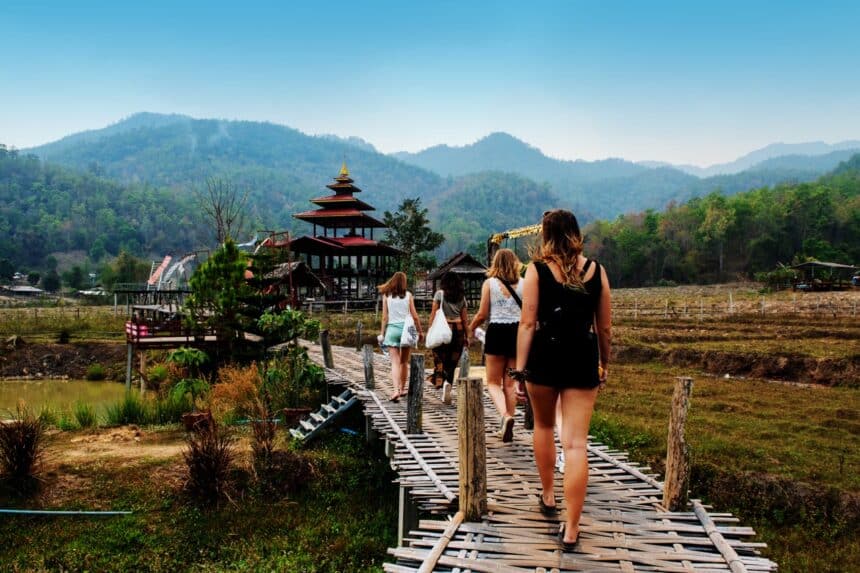
The Tha Pai Memorial Bridge makes a natural stop on a countryside ride, especially if you’re already exploring the area around the canyon. Take time to walk across and look around, then continue to another nearby sight rather than treating the bridge as a full-day destination. For a lower-impact way to plan your outings, see these responsible travel tips for visiting Pai.
Visit hot springs, waterfalls, and valley viewpoints
Tha Pai Hot Springs, a waterfall, and one or more valley viewpoints can fill a relaxed half-day. Add stops or linger longer for a full-day outing, but leave room for changing road conditions. Check local access details before setting out, since entry rules, road conditions, and fees can change. The Tha Pai Hot Springs visitor guide is one place to review route and closure information.
Rainy-season showers can bring fuller waterfall flows and greener scenery. However, wet roads and trails need extra care, especially if you’re riding a scooter or walking on uneven ground. Check the weather before leaving, slow down on slippery surfaces, and skip a stop if access looks unsafe. If you’re not comfortable riding, arrange a driver or tour instead.
Make time for Walking Street after dark
After a day outside town, head to central Pai’s Walking Street for an easy evening stroll. Food stalls offer a chance to sample local dishes and snacks, while nearby vendors sell crafts, clothing, and other small goods. The market is a relaxed way to spend an hour or two without planning a formal activity.
Opening days and vendor availability can vary with the season, so don’t build your whole evening around a particular stall or product. If the market is quiet, nearby restaurants and cafes give you other options within walking distance of the center.
Getting Around Pai Without Adding Stress
Pai’s center is easy to explore on foot, but getting to countryside sights takes more planning. Choose transport based on where you want to go and whether you’re comfortable riding on unfamiliar roads.
Walk in town, but plan rides for sights outside it
The bus station, Walking Street, restaurants, and many town guesthouses sit close together, so you can usually manage central Pai on foot. However, popular stops such as Pai Canyon, hot springs, waterfalls, and the Tha Pai Memorial Bridge lie beyond the center. Reaching several of them in one day generally means arranging a ride.
Scooter rentals are common, and a scooter gives you flexibility to set your own route. Still, ride only if you’re confident on a motorbike and hold the proper license for Thailand. Wear a helmet and protective gear, and skip the ride if you’re inexperienced or the roads are wet. The UK travel advice for Thailand notes that helmets are required by law and that riding without a valid license can affect insurance coverage.
Before heading out, group nearby stops into one outing rather than crossing town repeatedly. For example, pair Pai Canyon with the Tha Pai Memorial Bridge, then add another stop only if time, weather, and road conditions allow. Check access locally before setting off.
Use a hired driver or tour if you do not ride
Shared songthaews may serve some routes, but they don’t run as a dependable fixed-schedule network. You may need to wait, ask locally about the destination, or find another option if the timing doesn’t work. For a countryside stay, ask your accommodation about transport before booking.
If you want to visit several sights without riding, arrange a hired driver or join an organized day tour. Either option can take the pressure off unfamiliar roads and make it easier to combine stops in one trip. Confirm the itinerary, pickup point, and return time in advance, especially if you have a specific attraction in mind.
A simple plan is to choose one cluster of sights, allow time for the drive between stops, and avoid packing the day too tightly. That leaves room for a slow lunch or a change in weather without turning transport into the main event.
Frequently Asked Questions
Pai is easy to plan once you account for the mountain road and the distance between town and its countryside sights. These quick answers cover a few details that can affect your transport plans.
Can you fly directly to Pai?
Most visitors reach Pai by road from Chiang Mai, usually by minivan or car. Flight plans have changed, so don’t assume a direct service is operating just because you see an announcement; reports on proposed Chiang Mai-Pai flights show why it’s best to check current schedules directly with airlines before booking around a flight.
Should I book a minivan in advance?
Booking ahead makes sense during busy travel periods, especially December and January, when seats may be harder to find close to departure. Before you pay, confirm the departure time, pickup point, vehicle type, and fare with the operator or booking channel. Keep your confirmation handy, and allow extra time to reach the terminal.
Is Pai a good choice for a short stop?
It can work as a short stop, but the long, winding drive from Chiang Mai makes a same-day visit tiring and leaves little time in Pai. An overnight stay gives you time to rest after the ride and enjoy town at a more relaxed pace. If your schedule is tight, choose just one or two nearby activities rather than trying to cover several countryside sights.
Can I visit Pai without renting a scooter?
Yes. Stay near the center so you can walk to the bus station, restaurants, and Walking Street, then arrange a driver or tour for sights outside town. Songthaews may serve some routes, but check locally whether one is running to your destination and when it returns; don’t count on a fixed network or timetable.
What should I bring for the ride to Pai?
Have a light meal before departure and bring water for the trip. A warm layer can help during cooler months, while travelers who know they need motion-sickness medicine should pack it in an easy-to-reach bag. Follow the medicine label, and don’t take anything that could make you too drowsy or otherwise unsafe to travel.