The Bridge on the River Kwai is both a major site of wartime history and part of a railway visitors can still ride through Kanchanaburi, Thailand when service is operating. The journey offers a chance to see more than the famous bridge, but it also calls for care: this is a place of remembrance as well as an active railway.
This guide covers the railway’s history, the surviving route, memorials, transport from Bangkok, and practical planning. Since schedules and access can change, check current details before you travel. If you’re considering a Kanchanaburi day trip from Bangkok, start by understanding the history behind the line.
Key Takeaways
- The 415-kilometer Burma-Thailand Railway was built by about 60,000 Allied POWs and 200,000 Asian laborers under forced or coerced conditions. The National Museum of Australia’s railway history records more than 90,000 Asian civilian deaths and 16,000 POW deaths.
- Today’s surviving passenger line crosses the bridge at Kanchanaburi and continues toward Nam Tok when service operates. Check the State Railway of Thailand’s latest status and timetable before traveling.
- The bridge remains an active railway crossing, so stay clear of the tracks, follow staff instructions, and behave respectfully at cemeteries and memorials.
- For trip planning beyond the bridge, explore Kanchanaburi’s wartime history and natural attractions, and allow time for the area’s museums and memorial sites.
Thailand’s Bridge on the River Kwai and Death Railway Guide: The Story Behind the Journey
The bridge is the most recognizable landmark on the Burma-Thailand Railway, but the railway’s history extends far beyond Kanchanaburi. Built during World War II, the line connected Thailand with Burma, now Myanmar, and carried a heavy human cost.
Who built the railway, and why was it called the Death Railway?
Japanese forces built the Burma-Thailand Railway between October 1942 and October 1943. The roughly 415-kilometer (258-mile) line ran between Thailand and Burma as a supply route for Japanese troops. Its rapid construction relied on forced labor under brutal wartime conditions.
About 60,000 Allied prisoners of war worked on the railway, alongside roughly 200,000 Asian civilian laborers. Many civilians were forced or coerced into labor. Workers faced disease, starvation, overwork, and abuse, often in harsh conditions with inadequate food and medical care.
Commonly cited estimates record about 16,000 POW deaths and more than 90,000 civilian deaths. These figures are estimates, and totals vary by source. The National Museum of Australia summarizes the scale of loss in its account of the Burma-Thailand Railway’s history. Chiang Rai Times also covers the railway’s construction and human cost.
The name “Death Railway” reflects the deadly conditions and enormous loss of life during construction. It also helps explain why a visit is more than a scenic train ride. The bridge and surviving track are part of a history shaped by wartime occupation and forced labor.
What the famous bridge does, and does not, represent
The Bridge on the River Kwai is one section of the much longer railway. It stands near Kanchanaburi, while the wartime line continued across Thailand and into Burma. Today, passenger trains use the surviving Thai section, with Nam Tok as the reported terminus when service runs end to end.
The popular name can blur both the river and the route. Visitors may associate the entire railway with the river beside the bridge, but the line stretched far beyond that location. The bridge is an important point to see, not a complete picture of the Death Railway or the experience of the people forced to build it.
When you visit, leave time to learn about the wider route and its history. That context helps place the bridge within the larger story of the railway and the workers who endured its construction.
Follow the surviving railway from Kanchanaburi to Nam Tok
The surviving Thai railway gives visitors a way to experience more than the Bridge on the River Kwai. When the full line is operating, trains run from Kanchanaburi across the bridge, continue along the Kwai Noi past Tham Krasae and the Wang Pho Viaduct, then reach Nam Tok. The passenger line ends in Thailand; today’s trains do not continue into Myanmar.
The ride pairs river and countryside views with a route tied to the Death Railway’s wartime history. However, service beyond Kanchanaburi can be affected by closures, so check the railway’s operating status before planning the journey. For other ways to plan time in the area, see this guide to Kanchanaburi nature day tours from Bangkok.
The bridge is an active railway crossing
Trains still cross the bridge when service is running. Visitors can walk across, but the tracks remain in use, so pay attention to signs and railway staff throughout your visit.
Keep the rails clear, and move to a designated area when a train approaches. Don’t stand or linger on the tracks for photos, even if a train seems far away. Follow staff instructions and posted safety guidance, then continue your walk when the crossing is clear.
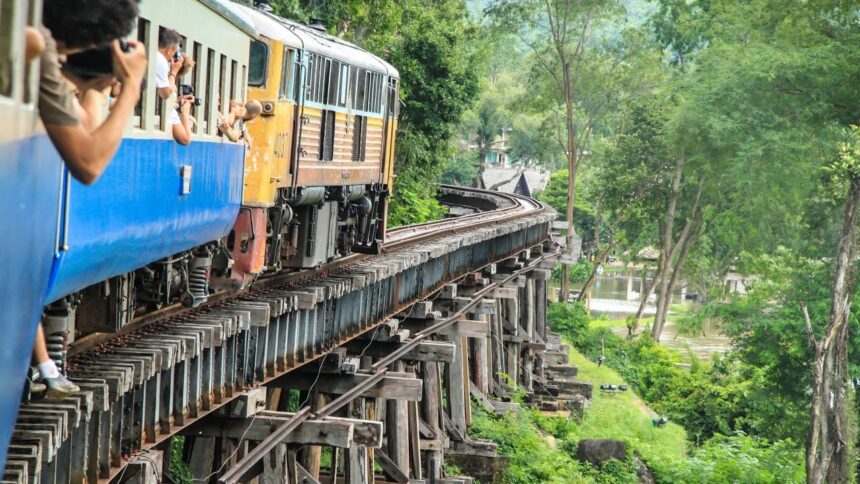
The route beyond the bridge is also part of the experience. If the line is open, the train passes through rural scenery before reaching the wooden trestle beside the Kwai Noi.
Why the Tham Krasae viaduct is a memorable stop
The Tham Krasae, or Wang Pho, Viaduct is a striking wooden trestle built along the rocky riverside. From the train, passengers see the structure curve beside the Kwai Noi, with steep terrain on one side and the river below. It is one of the best-known scenic sections of the surviving railway.
The view carries historical weight, too. This track belongs to the Death Railway built under brutal conditions during World War II, so take time to consider the human cost behind the journey. Nam Tok is the endpoint when the full Thai section is operating, but don’t assume the line will be open all the way there. After flooding disrupted the Tham Krasae stretch, a local report covered the route’s reopening; check for fresh service updates before traveling.
Visit the bridge, museums, and war memorials with care
The Bridge on the River Kwai is a working railway crossing and a place to pause and consider the people who built the line under wartime conditions. Pair a visit with a museum and the nearby cemetery to understand more of the history. For ideas on planning a wider visit, see this guide to Kanchanaburi museums and historic sites.
Start at the bridge, then add a museum for context
Walking across the bridge is generally free, but trains still use the tracks. Stay clear of the rails, watch for approaching trains, and follow railway staff instructions. Avoid stopping on the tracks for photos, and move to a safe area when a train approaches.
A museum visit adds context that the bridge alone can’t provide. The Thailand-Burma Railway Centre is a focused history stop, with exhibits about the railway and the people who built it. Check the Centre’s visitor information before your visit. Its reported hours and admission fees can change, so confirm them directly rather than relying on older listings.
JEATH War Museum is another local option. It offers a separate perspective on the wartime experience, making it a useful stop if you have time for more than one museum. Confirm its current hours and admission details before setting out. A little planning helps you spend less time guessing and more time learning about the sites.
Make time for the Kanchanaburi War Cemetery
The Kanchanaburi War Cemetery is a place for quiet reflection and remembrance. Take time to read the headstones and consider the lives represented there. The Commonwealth War Graves Commission’s cemetery information can help you learn about the site and check visitor details.
Keep your voice low, and don’t climb on graves or memorials. Follow posted rules, including any guidance about photography. The cemetery is reported to be free to visit, but check current access and opening times before you go, especially if your schedule depends on a particular day.
Choose the best way to travel from Bangkok to Kanchanaburi
The best way to get from Bangkok to Kanchanaburi depends on whether you want a railway journey, a lower-cost road trip, or control over your schedule. Trains offer a historic start, while buses and minivans usually provide more departure choices. A private car or taxi gives you the most flexibility, especially if you want to stop along the way.
Take the train for a historic start to the trip
Ordinary trains to Kanchanaburi are reported to leave from Thonburi station, also called Bangkok Noi. The journey is slower and more local than traveling by road, but it lets you ride part of the railway associated with the Bridge on the River Kwai. Departures are limited, so this option works best if the train ride itself is part of your plan.
Published timetables can show different arrival times, and ticketing arrangements may change. Before leaving, confirm the departure station, train, departure time, fare, and service status directly with the State Railway of Thailand. This is especially important if you hope to continue beyond Kanchanaburi on the surviving railway, since service conditions can change.
Use road transport when you need more flexibility
Buses and minivans are generally lower-cost options, with reported journey times of roughly 2.5 to 4 hours and fares around 94 to 120 baht for buses or 110 to 120 baht for minivans. Treat those figures as indicative only. Traffic, operator, schedule, and fare changes can affect both the trip and cost. Check the departure terminal and current fare before booking, since services may leave from different parts of Bangkok. For help getting across the city to your departure point, see this Bangkok public transport guide.
A private car or taxi costs more, but gives you greater control over when to leave and where to stop. Reported estimates of about two hours and 1,800 to 2,800 baht are only rough guides, not fixed travel times or standard prices. Ask for a current quote and confirm what it includes before setting out.
Choose the train for the historic rail experience, a bus or minivan to keep costs down, or a private ride when convenience matters most. For any train-based plan, check the SRT’s service information before you travel.
Plan a day trip or stay overnight for a slower visit
A day trip from Bangkok can cover the Bridge on the River Kwai, one museum, and the Kanchanaburi War Cemetery. The tradeoff is a long round trip and little room for delays or an extended train ride. Stay overnight if you want a less rushed visit or hope to travel farther along the surviving railway.
A practical one-day plan for the main sights
Build the day around confirmed transport times, not an itinerary copied from an older schedule. First, check your Bangkok departure and return options, then confirm museum hours and whether trains are running on the section you plan to visit. The railway’s service can change; for example, Thairath reported a temporary interruption near Tham Krasae. Treat such reports as updates, not a substitute for checking the day’s service directly.
For a road-based day trip, a sensible order is:
- Visit the bridge early, while allowing time to walk safely and watch for trains.
- Continue to one museum, such as the Thailand-Burma Railway Centre or JEATH War Museum, for historical context.
- Stop at the Kanchanaburi War Cemetery if your return schedule and opening hours allow.
This plan gives each place time without trying to fit in every nearby attraction. A train-based day trip needs even more care: don’t assume a full journey to Nam Tok will fit around any departure from Bangkok. Confirm the route’s operating status, times, and return connection before choosing this option. If the railway is only running on part of the route, adjust your plan rather than relying on an old timetable.
When an overnight stay makes more sense
An overnight stay removes some pressure from the long trip between Bangkok and Kanchanaburi. You can visit the bridge, museum, and cemetery at a steadier pace, then leave more time for reflection instead of watching the clock. It also gives you flexibility if a museum visit runs long or road traffic delays your arrival.
Staying overnight makes the most sense if the scenic journey beyond Kanchanaburi is a priority. Check rail operations before booking dates, since service toward Tham Krasae and Nam Tok may be affected by closures or other changes. Confirm the route and return options with the State Railway of Thailand, then choose lodging and local transport around those details. If the full line is operating, an overnight gives you a better chance to enjoy the railway without squeezing the ride and memorial visits into one demanding day.
Check current train service, costs, and safety before you go
Train service on the Death Railway can change, and published timetables and fares don’t always agree. Flooding or repair work may also close part of the route, including the stretch beyond Kanchanaburi. Check the day’s service before building your visit around a train ride, and verify museum hours and admission details close to your travel date.
Verify the route and ticket details on your travel date
Before leaving, check the State Railway of Thailand’s official website or ask at the station counter. Confirm the departure time, operating section, and terminus for that specific day. A train listed toward Nam Tok may not be running the entire route if a closure affects the line.
Fare information can differ between published sources, too. Ticket prices and rules may depend on the service, and some trains may require advance booking while others sell tickets at the station. Don’t treat any online fare or timetable as guaranteed. Ask about the actual fare, ticket availability, and payment rules before you set out. For broader planning, these Thailand train travel tips can help you prepare for rail journeys around the country.
Check museum opening times and admission fees directly as well, especially if your itinerary depends on visiting the Thailand-Burma Railway Centre or JEATH War Museum. If a train delay or service change would affect your return to Bangkok, leave room in your schedule for a backup option.
Stay safe around tracks and respectful at memorials
The bridge, tracks, and railway remain working infrastructure. Follow railway staff instructions and posted signs, keep off the rails, and move to a safe place when a train approaches. Avoid risky photos that require standing on the track or lingering in a train’s path. Even when the crossing looks clear, train movements can change your plans quickly.
The bridge and nearby sights also involve walking and outdoor exposure. Wear comfortable shoes with good grip, carry water, and bring sun protection such as a hat and sunscreen. These basics matter in the heat, particularly if you plan to walk across the bridge or spend time outdoors.
At the Kanchanaburi War Cemetery and other memorials, keep your voice low and follow site rules. Don’t climb on graves or memorial structures, and respect any photography restrictions. A considerate visit gives you time to take in the history without disturbing others.
Frequently Asked Questions
Train schedules, ticket rules, and service conditions can vary. These answers cover a few practical details to check before you go.
Can I buy an ordinary train ticket on the day of travel?
Ordinary services are reported to sell tickets at the station on the day, without reservations. Still, confirm ticket availability and the train’s operating section with the State Railway of Thailand before you set out, especially if you have a tight return schedule.
Are weekend excursion trains different from ordinary services?
Yes. Weekend and holiday excursion trains may have different departure points, schedules, fares, and booking requirements than ordinary services. Details can change, so check the State Railway of Thailand timetable and confirm excursion-train information before making plans.
What should I do if a train is listed to Nam Tok but part of the route is closed?
Check the actual operating endpoint for your travel date. A timetable listing alone doesn’t confirm that the train will cover the entire route, so ask the railway or station staff whether service continues beyond Kanchanaburi.
Can I visit Kanchanaburi if trains aren’t running?
Yes. You can still visit the bridge and local museums by road, even if railway service is disrupted. Check access conditions for each site before leaving, then adjust your plans if a closure affects the places you hoped to see.
Why do sources give different Death Railway casualty figures?
The totals are estimates, and sources may use different records or counting methods. For example, the National Museum of Australia reports more than 90,000 Asian civilian deaths and 16,000 POW deaths. Treat figures as estimates rather than exact counts.