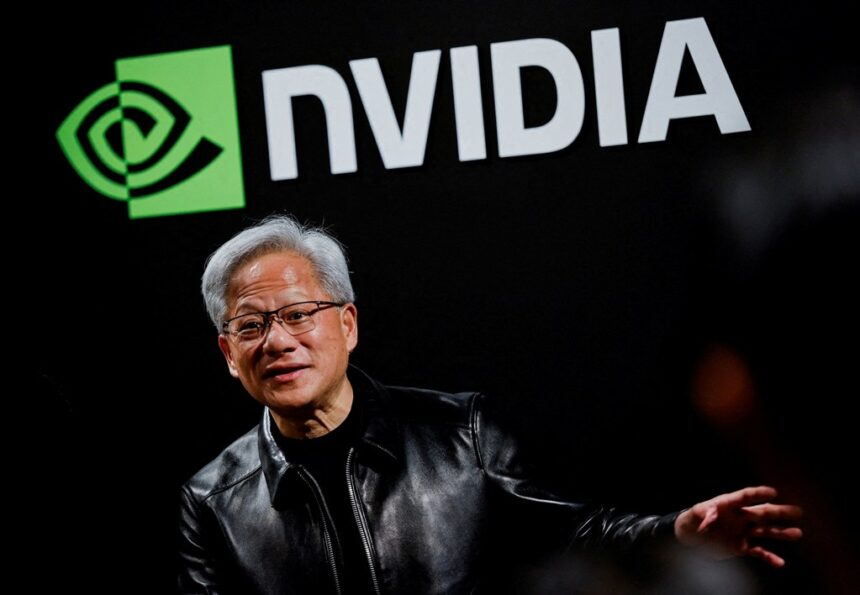
BANGKOK— Nvidia’s board of directors reinstated co-founder Jensen Huang as president, chief executive officer and board director on Monday, reversing his abrupt resignation just 11 days earlier after direct intervention from President Donald Trump. The surprise corporate U-turn sent Nvidia shares surging over 30% on Monday, adding roughly $950 billion back to the chipmaker’s market capitalization and sparking a broad rally across global technology stocks.
Huang stepped down on Nov. 12 following revelations of extramarital relationships, including one with an alleged Chinese intelligence operative and two company employees. His immediate return follows consultations between Nvidia directors and senior U.S. government officials, even as federal investigations and an internal probe remain active.
Key Takeaways• Nvidia’s board unanimously reinstated Jensen Huang as CEO on Nov. 23, 2026, ending an 11-day absence triggered by personal conduct and national security controversies. • President Donald Trump directly lobbied Nvidia’s board to restore Huang, praising the decision as proper while Nvidia shares jumped to close at $165.05. • Federal agencies, including the Securities and Exchange Commission and the Justice Department, continue active investigations alongside a new company compliance committee. |
White House Intervention and Market Whiplash
The reversal marks one of the sharpest governance turns in Silicon Valley history. On Nov. 17, newly appointed Board Chair Harvey C. Jones told investors during an earnings call that directors had no plans to bring Huang back. Days later, Trump began speaking directly and indirectly with board members, arguing that the founder’s leadership was essential to American competitiveness in artificial intelligence. “I made the deal,” Trump told reporters on Monday, adding that federal authorities had found no evidence Huang engaged in unlawful conduct.
Wall Street responded immediately to the news. Nvidia stock had lost roughly a quarter of its value after Huang’s Nov. 12 exit, sliding to $125.53 by Friday’s close. Following Monday’s announcement from the Nvidia Newsroom, the stock climbed sharply to finish at $165.05, pulling the Nasdaq Composite and S&P 500 higher. Chief Financial Officer Colette Kress, who served as interim chief executive during the 11-day gap, returned exclusively to her finance role.
Huang said he was honored to resume leading the company he founded in 1993. “I take this responsibility with the greatest humility and renewed commitment,” Huang said in a statement, thanking his family and employees for their support.
National Security Probes and Governance Fallout
Behind the market rally lies an unresolved web of regulatory and security scrutiny. The initial crisis erupted in late October after reports surfaced detailing Huang’s relationship with Alice Huang, a former executive director at Megaspeed International suspected of ties to Chinese intelligence, as well as relationships with two Nvidia staffers. An online petition calling for Huang’s return drew over 180,000 signatures, lawmakers in Washington voiced sharp alarm over national security risks and White House interference in corporate governance.
To address regulatory concerns, Nvidia’s board established a National Security and Export Control Oversight Committee on Nov. 17 and launched a search for a dedicated Chief Compliance Officer. The company confirmed on Monday that its independent investigation into the alleged Chinese intelligence operation will proceed to completion, alongside ongoing inquiries by the U.S. Securities and Exchange Commission and the Department of Justice.
Why Founder Power Overrides Board Guardrails
Huang’s rapid return highlights a structural reality in modern artificial intelligence: key-person dependency often outweighs traditional corporate governance. Nvidia designs the specialized graphics processing units that power nearly every major AI model worldwide, giving Huang unmatched influence over global supply chains and data center buildouts.
When investors priced in a future without him, nearly $1 trillion in market value evaporated within days, creating immense pressure from institutional shareholders and tech allies to restore stability.
The episode closely mirrors OpenAI’s November 2023 boardroom crisis, when directors ousted CEO Sam Altman only to reinstate him five days later under intense investor and employee backlash. Altman celebrated Huang’s comeback on social media on Monday.
Yet unlike OpenAI’s internal dispute, Nvidia’s leadership crisis sits squarely at the intersection of U.S.-China semiconductor export controls and federal law enforcement, leaving Huang’s second act under unprecedented political and regulatory watch.
Trending News:
Nvidia Embeds Its AI Stack Into the Infrastructure Layer
World Labs Lands $1 Billion Round Backed by Nvidia, AMD, and Autodesk