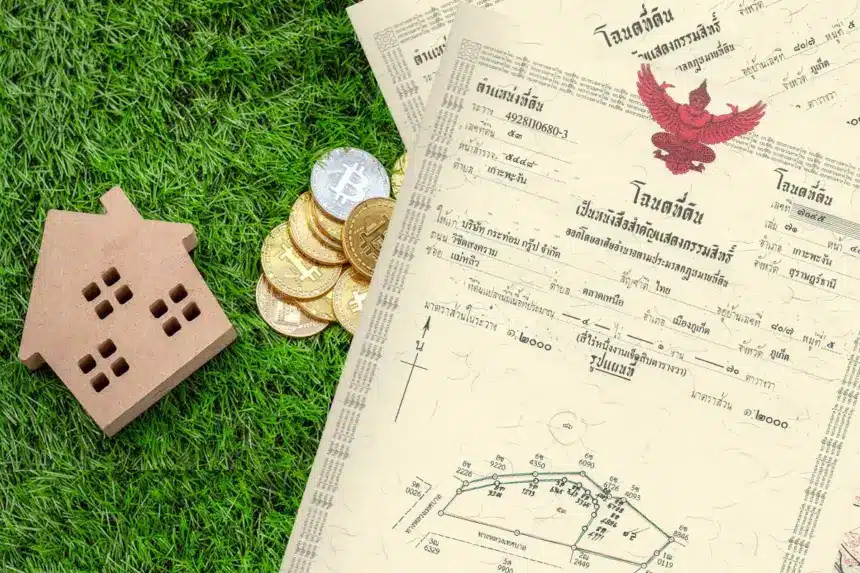
BANGKOK — Buying, selling and owning real estate across Thailand will become noticeably more expensive on Jan. 1, 2027, after the Treasury Department completed a nationwide revaluation of 37 million land plots that lifts official appraisal prices by an average of more than 16%.
Prime commercial corridors in central Bangkok, including Silom and Ploenchit roads, will surpass 1 million baht per square wah under the new schedule, according to local property reporting. Because district land offices calculate the standard 2% property transfer fee and annual land and building taxes directly from these government figures, higher baselines will push up closing costs and recurring tax bills for households, developers and foreign investors.
Key Takeaways• Official land appraisal values across 37 million Thai plots increase by an average of more than 16% on Jan. 1, 2027. • Top-tier Bangkok avenues, including Silom and Ploenchit roads, will breach the 1 million baht per square wah mark. • Higher assessed values directly raise the 2% ownership transfer fee, seller withholding taxes and annual property tax bills. |
Higher Closing Costs Hit Buyers and Sellers
At district land offices nationwide, officials do not base standard transfer fees on the private sale price agreed between buyer and seller. Instead, clerks apply the government’s published appraisal table, a framework detailed by ThaiLawOnline in its legal guidance on property assessments.
When those official numbers jump, closing statements expand immediately. A resale condominium in Bangkok appraised at 10 million baht currently incurs a 200,000-baht transfer fee at the standard 2% rate, typically split evenly between buyer and seller. If that unit’s official valuation rises 16% to 11.6 million baht in January, the transfer fee climbs to 232,000 baht without any change in the actual market sale price.
Sellers face parallel increases on income withholding taxes and either the 0.5% stamp duty or the 3.3% specific business tax. Industry analysts note that buyers and sellers with pending deals are rushing to complete registrations before Dec. 31 to lock in current rates, a trend highlighted in recent Bangkok closing cost analyses. Even homeowners with no plans to sell will see higher annual bills under the Land and Building Tax Act, which uses the exact same Treasury valuation roll.
Why Four-Year Revaluations Reshape the Market
Thailand’s Treasury Department updates official land values every four years to prevent state tax baselines from drifting too far behind real-world market prices. Under the outgoing 2023–2026 cycle, assessed prices in rapidly developing urban zones and transit corridors trailed actual transaction values by 30% to 40%, creating a wide fiscal gap that reduced municipal tax collections.
Infrastructure expansion drives much of the upward revision. New mass-transit lines in Greater Bangkok, highway upgrades in the Eastern Economic Corridor and tourism recovery in coastal provinces have lifted surrounding parcel prices since the last assessment. By pulling official baselines closer to market reality, the Finance Ministry aims to strengthen local administrative budgets that rely on annual land tax revenue.
The reset also collides with temporary government stimulus rules. Currently, Thai nationals buying residential homes priced at 7 million baht or less enjoy a reduced transfer fee of 0.01% through June 30, 2027, provided both the sale price and the official appraisal stay under that ceiling. If a Jan. 1 revaluation pushes a property’s assessed value past 7 million baht, the buyer loses the discount and faces the full 2% fee.
Central Bangkok Breaks the Million-Baht Ceiling
Nowhere is the upward climb sharper than in Bangkok’s central business district. Silom, Ploenchit and neighboring Wireless Road have long anchored the top tier of Thai real estate, hovering right at the 1 million baht per square wah threshold during the previous valuation cycle. Pushing past that mark signals sustained institutional demand for scarce freehold plots near major interchange stations and mixed-use megaprojects.
One square wah equals four square meters, meaning a single rai of land—400 square wah—along Silom or Ploenchit now carries a minimum official assessment exceeding 400 million baht. While actual private transactions in those districts frequently trade well above government estimates, the higher floor forces corporate landowners and commercial landlords to budget for steeper annual holding costs starting in 2027.