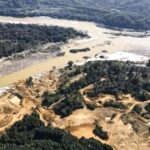
CHIANG RAI— Police in northern Laos arrested a provincial trade official after toxic cyanide runoff from an illegal gold-soaking site poisoned a local stream, killing scores of fish and prompting food and water bans in Xieng Khouang province.
Authorities linked the chemical spill in Pek district to a home-based ore processing compound 80 meters from the waterway, according to a Nov. 23 report by the Laotian Times. While second-round lab tests show stream water has returned to safe levels, officials warned residents not to eat local fish or crops.
Key Takeaways
|
Tracing the Toxic Runoff
The contamination emerged on Nov. 8 when villagers between Ban Yuan and Ban Phon Ngam Nuea spotted dead fish floating in Huay Hin Lai stream and shared photos online. District and provincial inspectors arrived the next morning, tracing the chemical plume to a drainage channel in Ban Phon Ngam Nuea.
Teams collected water samples from eight sites where dead fish surfaced and took soil samples from two suspected processing compounds. Local leaders barred residents from bathing in, drinking, or fishing from the stream. By Nov. 12, crews had collected 47 kilograms of dead fish and pulled four more water samples.
Subsequent findings detailed by the Vientiane Times confirmed initial cyanide levels exceeded national safety limits before diluting back within acceptable thresholds. Even after workers finished clearing discarded ore tailings on Nov. 17, Pek district officials stressed that clear water does not guarantee safe seafood, keeping the dietary ban in place.
Insider Suspect and National Crackdown
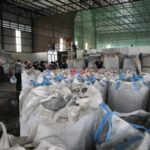
On Nov. 19, a Pek district task force confirmed the poison came from illicit gold extraction. State media reported that police raided a home belonging to an employee of the provincial Industry and Commerce Department—the agency tasked with regulating trade and mining compliance. Officers seized gold-soaking vats, chemicals, processing gear, and ore waste before detaining the suspect at the district public security office.
The arrest reflects a nationwide crackdown ordered by the Ministry of Industry and Commerce on June 18, directing officials to dismantle unauthorized mines, revoke business licenses, and prosecute state employees who shield illegal operators. Two days later, police in Xieng Khouang’s Mok district arrested six Vietnamese and two Lao nationals, seizing excavators, water pumps, and gold-separation gear.
Similar raids have hit multiple provinces. In Xaisomboun’s Anouvong district, authorities shut down an illicit gold mine and arrested seven suspects. Farther south in Savannakhet province, a raid on illegal mining and logging sites netted 11 arrests, heavy machinery, and over a kilogram of mercury.
Backyard Leaching Threatens Watersheds
Small-scale gold operators in rural Laos frequently use cyanide and mercury because both extract fine gold cheaply without industrial mills. Operators dig shallow, unlined pits near streams to wash crushed ore, leaving waterways vulnerable whenever vats overflow or tailings wash into ditches.
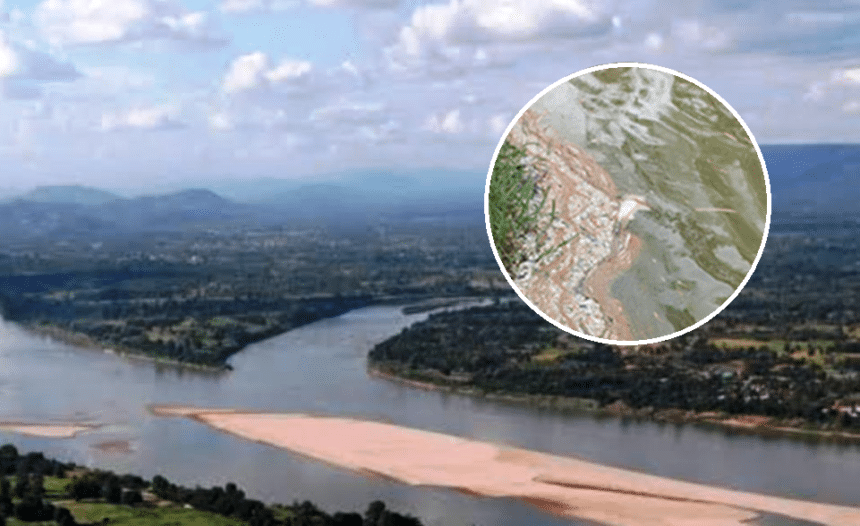
Xieng Khouang sits at the headwaters of major tributaries—including the Nam Ngiep and Nam Khan rivers—that feed the Mekong River basin. Environmental monitors warn that highland chemical spills can carry toxins downstream into farms and fisheries.
Despite a major illegal gold mining crackdown in Sangthong and nationwide task force inspections, high gold prices continue to tempt operators—and occasional rogue insiders—into running covert backyard refineries.