CHIANG RAI — Unregulated rare earth and gold mines operating inside territory controlled by Myanmar’s United Wa State Army are discharging toxic heavy metals into northern Thailand’s primary waterways while parallel patronage networks allegedly exploit Thai citizenship registries, according to investigative reporting and environmental monitoring data reviewed this year. Water samples collected across Chiang Rai province in late 2026 show arsenic levels in the Sai River surging up to 28 times above accepted safety thresholds, forcing emergency water disruptions for more than 20,000 households.
In a January 14, 2026 guest column for The Irrawaddy, veteran Thai border journalist Paskorn Jumlongrach warned that the ecological crisis along the Sai, Ruak, Kok and Mekong rivers cannot be separated from illicit cross-border governance. Paskorn reported that Chinese grey capital syndicates and Wa forces run the upstream mines under revenue-sharing arrangements with Myanmar military commanders, while allied patronage networks allegedly secure Thai national identity cards for Wa-linked settlers—leaving generations of long-term ethnic residents in northern Thailand stateless.
Key Takeaways• Toxic River Contamination: Unregulated rare earth and gold mines in Wa-controlled Shan State discharge untreated heavy metals into the Sai, Kok, Ruak and Mekong rivers, driving Sai River arsenic levels to 28 times safe limits and disrupting water supplies for over 20,000 Mae Sai households. • Collusion and Grey Capital: Journalist Paskorn Jumlongrach reports that Chinese grey capital networks operate the 24-hour upstream mines alongside the United Wa State Army under alleged profit-sharing deals with Myanmar military commanders. • Sovereignty and Citizenship Risks: Corruption-driven patronage networks have allegedly enabled individuals tied to Wa border settlements to obtain Thai national identity cards while long-standing ethnic minority communities in Thailand remain stateless. |
Toxic Runoff Threatens Northern Thai Watersheds
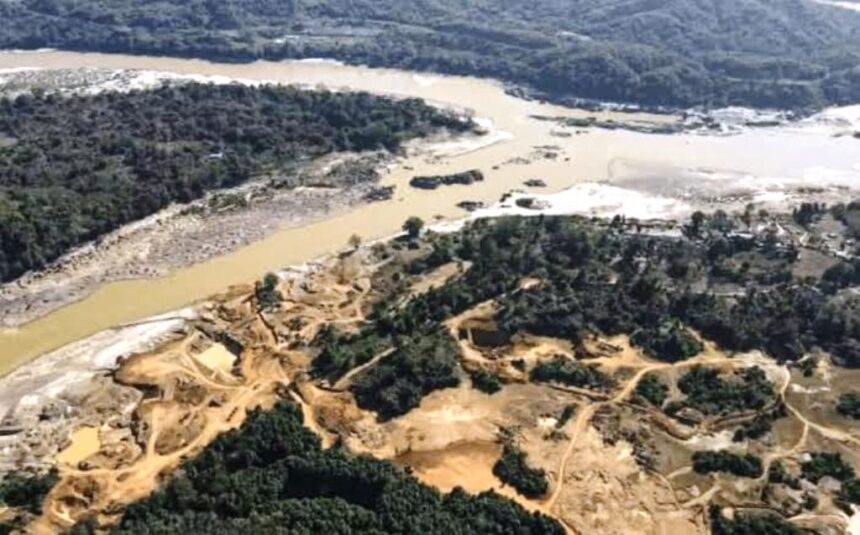
The environmental toll begins high in the mountains of southern Shan State, just across the border from Chiang Rai’s Mae Fah Luang and Mae Sai districts. Heavy earthmoving machinery works around the clock at open-pit sites directly beside river headwaters, stripping hillsides and flushing chemical-laden tailings straight into cross-border tributaries.
Field investigations documented by Mongabay and Thai environmental agencies confirm that sediment and raw water along the Kok, Sai and Ruak rivers carry elevated concentrations of arsenic, lead and other heavy metals before emptying into the Mekong River at Chiang Saen. In November arsenic levels in raw water drawn from the Sai River reached 28 times the accepted national safety standard, prompting the Provincial Waterworks Authority to suspend tap water production across multiple subdistricts.
Local families now shoulder the financial burden of a crisis originating beyond Thailand’s jurisdiction. More than 20,000 households in Mae Sai have had to purchase bottled drinking water and large storage tanks for daily washing and cooking, while farmers along the Kok and Ruak basins warn that contaminated irrigation water threatens 16,000 hectares of prime rice paddies and orchard land. Fisheries officials sampling aquatic species in the affected tributaries have also detected hazardous heavy-metal bioaccumulation, undermining local food security and river-based livelihoods.
Wa Armed Control and Chinese Grey Capital Networks
Tracing ownership of the upstream mines reveals a complex alliance between armed autonomy and illicit finance. The United Wa State Army, Myanmar’s largest non-state ethnic armed organization, maintains strict territorial control over swathes of southern Shan State along the Thai frontier, including the Mong Yawn administrative enclave established after Wa forces relocated tens of thousands of settlers southward decades ago.
According to Paskorn Jumlongrach’s analysis, the mines are neither small-scale artisanal digs nor rogue local ventures. Instead, Chinese grey capital operators supply heavy machinery, chemical leaching agents and processing logistics, partnering directly with Wa authorities to extract gold and heavy rare earth elements prized in global electronics and defense supply chains. In zones where administrative authority overlaps near Mong Hsat and Mong Yun, Paskorn reports that Myanmar military commanders grant operational approvals in exchange for shared mining revenues.
Because the extraction sites sit inside territory off-limits to Thai environmental inspectors and beyond the effective regulatory reach of authorities in Naypyitaw, operators face zero environmental compliance costs. Satellite monitoring and basin mapping show that mining footprints expanded rapidly after 2021, turning narrow mountain streams into industrial waste channels. Once ore is concentrated on site, trucks transport the extracted minerals through cross-border transit corridors toward Chinese processing hubs, leaving toxic sludge and acid runoff behind for downstream Thai communities.
Allegations of Citizenship Fraud and State Infiltration
Poisoned water is only the visible half of the border crisis. Paskorn Jumlongrach warns that profits generated by narcotics trafficking, illegal mining and cross-border grey businesses are allegedly funding systematic efforts to penetrate Thailand’s local administrative and political structures.
In his Irrawaddy column, Paskorn highlights troubling discrepancies in how Thai nationality and civil registration laws are applied along the northern frontier. He describes entrenched networks of local patronage and official bribery that have allegedly enabled individuals connected to Wa border settlements to acquire Thai citizenship and national identity cards—documents that confer freedom of movement, property ownership rights and legal insulation across the kingdom.
That alleged fast-tracking stands in stark contrast to the plight of indigenous hill tribe and ethnic minority communities who have lived inside northern Thailand for generations yet remain trapped in legal statelessness due to bureaucratic hurdles and lack of political leverage. When well-financed transnational networks can purchase legal identity, acquire land through nominees and cultivate protective relationships with local officials, the threat shifts from environmental degradation to the erosion of Thailand’s internal sovereignty.
Geopolitics and Regulatory Blind Spots
Understanding why these mines flourished—and why diplomatic remedies have stalled—requires examining the geopolitical vacuum left by Myanmar’s civil war and the global scramble for critical minerals. Following the 2021 military coup in Myanmar, central state oversight collapsed across much of Shan and Kachin states. As armed conflict disrupted traditional trade routes, both Myanmar’s military regime and autonomous ethnic armies turned to rapid resource extraction to finance weapons, administration and patronage.
Historically, the United Wa State Army built its financial base on methamphetamine and heroin production in the Golden Triangle before diversifying into casinos, real estate, agriculture and mining. In the late 1990s and early 2000s, the UWSA established its Southern Military Region directly opposite Chiang Mai and Chiang Rai provinces, creating a fortified buffer zone along the Kok and Sai headwaters. Because Bangkok has long sought to avoid direct military escalation along the northern frontier, Wa commanders have operated with substantial cross-border latitude.
At the same time, tightened environmental enforcement inside China’s southern provinces pushed dirty rare-earth in-situ leaching operations across the border into northern and eastern Myanmar. While Thai authorities attempted to intercept contaminated silt by using weirs and sluice gates such as Fai Chiang Rai along the Kok River, hydrologists warned that trapping arsenic-rich sediment behind concrete barriers in oxygen-poor riverbeds risks converting bound minerals into more soluble, acutely toxic compounds during seasonal floods—a hazard underscored when mud-laden torrents inundated Mae Sai in late 2024.
| River Basin | Primary Upstream Zone | Confirmed Contaminants | Downstream Thai Impact |
| Sai River | Mae Jok, Mong Karn & Na Yao (Shan State) | Arsenic (up to 28x safety limit), lead, heavy silt | Tap water halts for 20,000+ Mae Sai households; severe mud floods |
| Kok River | Mong Yun & southern Shan headwaters | Arsenic, heavy metals from gold & rare earth leaching | Chiang Rai irrigation & municipal water intake threatened |
| Ruak River | Golden Triangle border tributaries | Suspended toxic tailings & heavy metal runoff | Agricultural soil contamination across Chiang Saen plains |
| Mekong River | Confluence at Chiang Saen (Chiang Rai) | Transboundary arsenic & sediment accumulation | Bioaccumulation in fish; downstream health alerts in Nong Khai |
Diplomatic Friction and Demands for Accountability
Public anger across northern Thailand has forced the crisis onto the national political agenda, yet diplomatic progress remains slow. According to Al Jazeera, Prime Minister Anutin Charnvirakul ordered state agencies in November 2026 to secure alternative clean water sources and intensify tap water monitoring across Chiang Rai after health officials also detected arsenic in urine samples among residents downstream along the Mekong in Nong Khai province.
Thai Foreign Minister Sihasak Phuangketkeow raised the transboundary pollution crisis during talks in Naypyitaw on November 12, 2026, and bilateral technical discussions were scheduled for late November. Civil society coalitions, including the Kok–Ruak–Sai–Khong People’s Network, have nonetheless criticized bilateral agreements as toothless because Myanmar’s military government lacks administrative control over Wa-held mining zones, while Chinese authorities have remained silent on the role of Chinese capital and mineral buyers.
Members of Parliament in Chiang Rai and opposition lawmakers have called for tighter customs restrictions on conflict-linked rare earths, mandatory origin tracing for minerals transiting Thai ports, and comprehensive audits of district-level citizenship registries in northern border provinces. Until Bangkok confronts both the cross-border supply chains funding upstream extraction and the domestic corruption enabling illicit legal status, northern Thailand’s rivers and border governance remain exposed to the same unchecked networks.