



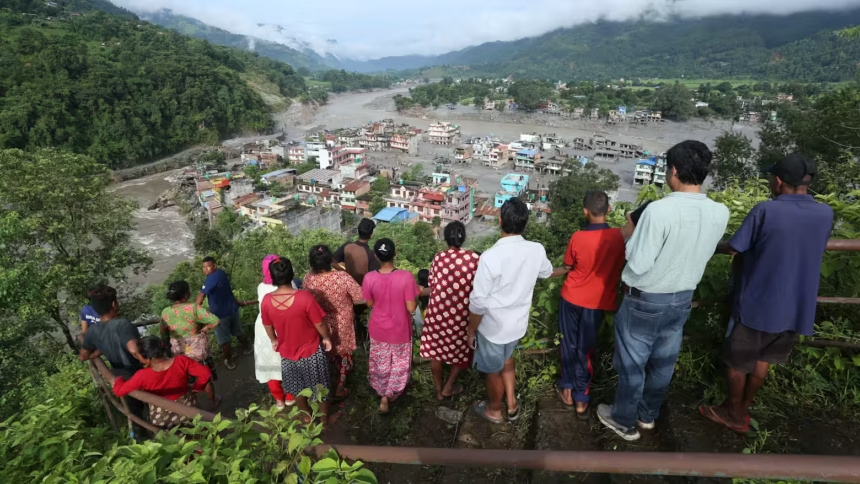
Last Updated on August 29, 2026 by Jeff Tomas
NEPAL – The Himalayas stand as the highest and most majestic mountain peaks on the entire planet. While they look beautiful and utterly unbreakable, the geological reality of this landscape is quite different.
For many decades, eager tourists and developers have treated these towering mountains like solid blocks of granite. However, deep beneath the surface, the highly fractured ground is constantly moving, shifting, and breaking apart.
The underlying reality of this famous landscape is far more dangerous than it initially appears. These towering mountains actually represent the youngest major mountain system on the planet today. They are still actively growing, shifting, and breaking apart under immense geological pressure. Consequently, a dangerous mix of climate change and aggressive human building is pushing the entire region toward a catastrophic collapse.
Key Takeaways
- The Himalayas are still rising due to massive tectonic pressure, making their bedrock heavily fractured and highly unstable.
- Rapidly melting glaciers are creating massive new lakes that severely threaten to burst and flood downstream mountain towns.
- Heavy construction of massive dams, wide roads, and large hotels is accelerating the collapse of these naturally weak ecosystems.
A Restless Mountain Range
When we look at towering mountains, we usually see comforting symbols of permanence and stability. We naturally imagine solid stones that have stood strong and motionless against the test of deep time. However, the mighty Himalayas do not fit this traditional and peaceful picture at all. They are actually geological infants, born from a massive and violent planetary collision that remains ongoing.
Millions of years ago, the Indian tectonic plate crashed directly into the massive Eurasian plate. That slow-motion collision never actually stopped, and it is still happening beneath our feet today. The Indian landmass continues to push relentlessly northward into the rest of the Asian continent. This immense, constant pressure forces the mountain peaks to rise a few millimeters every single year.
Because the massive mountains are still actively growing, the ground remains constantly under intense pressure. The bedrock beneath the topsoil is not a single, solid mass of unbreakable stone. Instead, the rocks are heavily fractured, crushed, and systematically broken by the ongoing tectonic stress.
This continuous underground movement creates a naturally weak and crumbling foundation across the entire region. Earthquakes serve as a frequent, terrifying reminder of the incredible forces at work deep below the surface. The incredibly steep slopes are barely holding themselves together on a standard, peaceful day. Consequently, even a relatively small trigger can send tons of loose earth crashing down into the populated valleys.
Living on top of a very young mountain range is an inherently dangerous choice. The soil is naturally loose, the rocks are shattered, and the terrain slopes are incredibly steep. Without the perfect environmental balance, gravity easily wins the daily battle over the fragile mountainside. Unfortunately, the delicate natural balance of this environment is now facing unprecedented new threats from all sides.
Himalayas Ice Turning to Water
For centuries, permanent snow and ice acted as the necessary glue holding these high-altitude slopes securely together. The vast Himalayas are currently home to thousands of massive, ancient, and beautifully frozen glaciers. These frozen rivers of ice have carved the deep valleys and successfully fed the major rivers of South Asia.
But our modern world is warming up at a dangerously quick and highly unprecedented pace. The Himalayan region is actually experiencing significant temperature increases at a much faster rate than the global average. As a direct result, these ancient, towering glaciers are sadly melting at a truly alarming and visible pace.
This rapid, unnatural melting brings a hidden and terrifying danger to the mountain communities living below. As the heavy ice quickly retreats, it leaves behind massive terrain depressions filled with pure meltwater. These newly formed glacial lakes are often held back only by loose piles of dirt and rock.
These natural dirt barriers, scientifically known as moraines, are incredibly fragile and highly prone to sudden failure. When a heavy piece of a hanging glacier falls into one of these lakes, it creates a massive tidal wave. The displaced water can easily smash through the natural dirt walls in a matter of thrilling seconds. This devastating event is officially known by scientists as a dangerous glacial lake outburst flood.
Once the natural barrier breaks, a terrifying wall of water, mud, and boulders rushes down the mountain. It quickly and violently wipes out everything in its path within a matter of terrifying minutes. Sadly, we are currently seeing these terrifying floods happen more and more often across the entire Himalayan region.
The melting mountain ice also severely affects the structural integrity of the mountain soil itself. Permafrost, which is deeply frozen ground that normally holds the mountainside together, is rapidly thawing away. When the deep ground thaws, the slopes become soggy, loose, and highly unstable, leading directly to massive, deadly landslides.
The Human Footprint
Nature certainly provides a dangerous baseline of physical risk in the towering Himalayan mountains. However, human actions are actively turning these natural geological risks into highly guaranteed community disasters. Over the last few decades, the massive rush to develop the region has completely ignored its highly fragile geology.
Governments and ambitious corporations have eagerly poured billions of dollars into massive, large-scale infrastructure projects. They have frequently used heavy explosives to blast the fragile hillsides and carve out incredibly wide highways. These new mountain roads bring eager tourists, but they also severely destabilize the already fractured rocks resting above them.
Furthermore, busy construction crews often irresponsibly dump the blasted rubble directly into the rushing rivers below. This loose debris artificially raises the riverbeds, which significantly increases the risk of flooding during the heavy monsoon rains. It is an entirely man-made problem that makes the natural environment far more dangerous for residents.
Hydroelectric dams represent another major, catastrophic issue actively plaguing the entire mountain region today. The rushing, powerful rivers of the Himalayas seem like absolutely perfect sources of clean, green, renewable energy. However, building massive, inflexible concrete dams in a highly active earthquake zone is a proven recipe for total disaster.
To build these dams, companies must dig extensive, deep tunnels directly through the heart of the mountains. This daily, violent blasting shakes the fractured bedrock and permanently weakens the surrounding mountain slopes. Furthermore, the constantly changing water levels in the artificial reservoirs can cause the nearby unstable land to sink aggressively.
Meanwhile, small mountain towns are expanding rapidly to accommodate the heavily booming modern tourism industry. Multi-story tourist hotels and heavy concrete structures are being eagerly built directly on loose, shifting mountain soil. Small towns that were originally meant for a few thousand people now host millions of seasonal visitors every single year.
The glaring lack of proper drainage systems makes this unplanned urban expansion even worse for the environment. Wastewater from these sprawling tourist towns constantly seeps deep into the loose, rocky mountain ground. This underground water heavily lubricates the soil beneath the buildings, causing whole towns to slide slowly down the mountainside.
The Chamoli Tragedy
The ultimate consequences of ignoring these obvious geological risks are incredibly deadly and highly tragic. We only have to look at very recent regional history to see the devastating, heartbreaking results firsthand. From Uttarakhand to Nepal, devastating natural disasters keep repeatedly striking the same fragile mountain systems.
One of the most tragic and memorable examples happened recently in the Indian state of Uttarakhand. On February 7, 2021, a massive natural disaster unexpectedly struck the highly vulnerable Chamoli district. It started very high up in the mountains, far away from any major human settlements or busy towns.
A massive chunk of rock and glacier ice broke off from a very high and steep mountain peak. It plunged thousands of feet down the steep mountain at a truly terrifying and unstoppable speed. The resulting friction melted the ice almost instantly, creating a catastrophic flow of water, mud, and heavy boulders.
This deadly, roaring geological mix rushed violently down the narrow Rishiganga and Dhauliganga river valleys. It destroyed a small, newly built hydroelectric project that happened to sit directly in its path. Then, it slammed heavily into the much larger Tapovan Vishnugad hydropower plant, which was actively under heavy construction.
More than 200 people were tragically killed or left missing in the devastating Chamoli disaster. The vast majority of the unfortunate victims were innocent workers trapped deep inside the tunnels of the dam. The tragedy clearly proved how quickly a distant mountain avalanche can turn into a massive downstream catastrophe.
Scientists later officially confirmed that global climate change and warming temperatures played a huge role in weakening the glacier. But the extreme scale of the tragic human loss was directly tied to building heavy infrastructure in a known hazard zone.
Sinking Towns and Swept-Away Dams
The terrifying Chamoli disaster was unfortunately not an isolated or rare event in the Himalayan region. Across the entire mountain range, the fragile ground is literally giving way beneath people’s feet on a daily basis. The sacred tourist town of Joshimath currently provides a chilling look at the bleak future of these mountains.
For many long years, residents loudly warned authorities that their beloved town was slowly sinking. In early 2023, the terrifying geographical situation finally reached a sudden and completely unavoidable breaking point. Hundreds of residential houses developed massive structural cracks almost overnight, forcing terrified families to quickly flee their homes in the cold.
Geological experts heavily linked the severe land subsidence in Joshimath, which saw over 30 cm of sinking in just two years, to nearby, aggressive highway and hydropower projects. Unplanned urban growth and extremely poor water drainage caused the loose, ancient landslide debris under the town to rapidly shift. Huge concrete hotels literally leaned into one another as the unstable ground violently collapsed beneath their foundations.
Further east, in the beautiful state of Sikkim, another massive and deadly disaster unfolded in October 2023. Unusually heavy monsoon rains caused the high-altitude South Lhonak glacial lake to overflow and violently burst its natural banks. A massive, terrifying wall of freezing water rushed down the Teesta River in the middle of the night.
The violent, churning floodwaters destroyed the Teesta III dam, a massive and highly expensive hydroelectric project. Entire bridges, long highways, and countless residential homes were washed away completely in a matter of just a few minutes. Dozens of people tragically lost their precious lives, and the region’s vital infrastructure was severely and permanently crippled.
These tragic events actively highlight a terrible and undeniable pattern of ongoing structural destruction. We are constantly building massive, highly inflexible structures in a landscape that is constantly moving and shifting. When the unstable mountains inevitably shift, the rigid concrete shatters, and innocent human lives are tragically and unnecessarily lost.
The Hidden Cost of Disasters
When a major Himalayan disaster strikes, the immediate media focus is always placed heavily on the dramatic rescue efforts. National news cameras quickly capture the collapsed bridges, the broken dams, and the tragic loss of human life. But the true, lingering cost of these terrifying events lasts much longer than the initial, fast-paced news cycle.
The secondary waves of community harm are often entirely invisible but equally deadly to the local population. Every major mountain flood immediately destroys vital local infrastructure, including clean water pipes and necessary primary health clinics. Clean drinking water becomes incredibly scarce, leading directly to terrible, widespread outbreaks of waterborne diseases like cholera.
For local people actively living with chronic illnesses, the sudden infrastructure disruption can be completely fatal. If a vital mountain road is washed away, a diabetic patient simply cannot get their life-saving insulin medication. A sick person desperately needing regular dialysis might be completely cut off from the nearest hospital for several painful weeks.
Furthermore, the long-term mental health toll on these isolated mountain communities is absolutely staggering and heartbreaking. Families lose their homes, their ancestral farmlands, and their entire traditional way of life in a single, terrifying night. Many survivors report actively suffering from severe, crippling anxiety every single time it simply starts to rain.
The physical landscape itself is also permanently altered and ruined by the rushing, violent debris. Once-fertile farming fields are quickly buried deep under heavy feet of massive rocks and highly sterile glacial mud. Farmers are left with useless, completely ruined land, forcing them to painfully abandon their native villages entirely.
The ongoing cycle of rebuilding sadly often repeats the same careless mistakes of the past. Instead of actively adapting to the highly fragile environment, stubborn planners simply pour more heavy, inflexible concrete. This stubborn approach heavily ensures that the very next flood or earthquake will be just as violently destructive.
Rethinking Himalayas Development
The Himalayas are currently sending humanity a very loud, clear, and utterly undeniable geological warning. The fragile mountains simply cannot support the aggressive, heavy development models successfully used in the flat, stable plains. If we actually want to prevent future tragedies, we must drastically and immediately change our entire approach to development.
First, we need to immediately stop building massive hydroelectric dams in highly vulnerable and active river valleys. The extreme geological risks of frequent earthquakes and glacial lake floods are simply far too high to safely ignore. We must quickly explore safer, much smaller-scale energy alternatives that do not require violently blasting the fragile mountains apart.
Second, modern mountain tourism needs to be strictly and carefully regulated by vigilant local authorities. We simply cannot keep building massive, multi-story concrete hotels directly on loose, highly shifting mountain soil. These towns absolutely need strict building codes, proper wastewater drainage, and hard limits on the total number of visitors allowed.
Reliable early warning systems are also absolutely critical for safely saving innocent human lives in the future. Dedicated scientists are actively monitoring dangerous glacial lakes, but that vital data must reach the people in direct danger. Loud physical sirens and fast mobile text alerts can give downstream communities the precious minutes they desperately need to safely evacuate.
Most importantly, we must properly and respectfully listen to the local mountain communities who know the land best. The resilient people who have lived in these harsh mountains for generations truly understand the complex local landscape. Their deeply traditional knowledge, combined carefully with modern science, offers the safest and most sustainable path forward for everyone.
The mighty, ancient Himalayas will continue to naturally rise, the glaciers will melt, and the ground will keep shifting. We simply cannot ever stop the massive, heavy mountains from moving or changing their fundamental shape. But we can certainly and easily stop putting innocent, hard-working people directly in harm’s way for the sake of rapid development.
Trending News:
Nepal Points the Finger at China for Catastrophic Floods
Glorious Himalaya Tours: The Best Tour Operator in Nepal for the Everest Base Camp Trek


