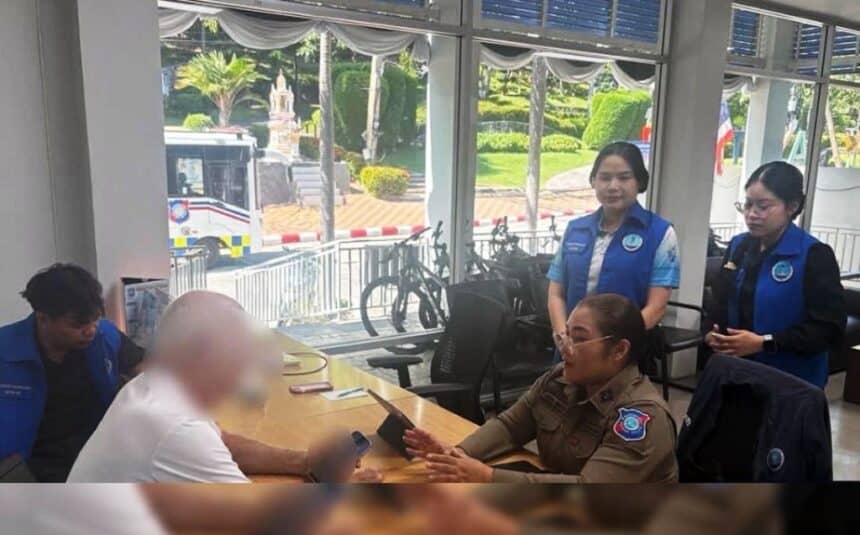
PATTAYA – A Canadian tourist was scammed out of a 9,000-baht deposit in Pattaya on Nov. 20 after booking a room through Facebook and arriving to find no running water. He reported the suspected fraud to Pattaya Tourist Police, who advised him to file a criminal complaint with local investigators.
The incident underscores a persistent wave of social media rental traps targeting foreign visitors along Thailand’s eastern coast. Tourist police officers at the Tourist Assistance Center reviewed the visitor’s signed lease and payment records before directing him to pursue legal action at Pattaya City Police Station.
Key Takeaways
- Upfront Payment Loss: A Canadian tourist wired a 9,000-baht deposit for a room listed on Facebook, only to discover upon arrival on Nov. 20 that the water supply was cut off.
- Police Referral: Pattaya Tourist Police and the Tourist Assistance Center logged the dispute and instructed the victim to open a case at Pattaya City Police Station.
- Prevention Warning: Authorities and property experts urge travelers to inspect rooms in person and verify landlord ownership before sending deposits online.
A Dry Arrival and a Suspected Trap
The trouble began online before the traveler ever stepped inside the building. Searching for short-term housing on Facebook, the Canadian national connected with a listing contact, signed a digital agreement, and transferred 9,000 baht—roughly $260—to secure the room.
When he arrived on Nov. 20, basic utilities failed immediately. No water flowed from the taps, leaving the room unlivable. Efforts to resolve the issue went nowhere, convincing the tourist he had been misled into paying for an unserviceable unit.
He sought help at the Pattaya Tourist Police office. While tourist officers assist foreign visitors with translation, mediation, and initial documentation, criminal fraud investigations belong to the local Royal Thai Police precinct. Officers logged his statement and directed him to Pattaya City Police Station on Soi 9 to file an official report.
Social Media Rentals Fuel Pattaya Disputes
Pattaya’s rapid seasonal turnover creates ripe conditions for informal housing deals. Thousands of international visitors arrive in Chonburi province each November hunting for monthly condo sublets or guesthouse rooms priced below major hotel platforms.
That demand pushes travelers toward unregulated Facebook groups and Marketplace listings. Legal analysts at Siam Legal warn that scammers exploit remote renters by collecting deposits through instant bank transfers or QR codes before vanishing or handing over keys to neglected units. Because agreements arranged over chat apps often lack Thai-language legal standing or proof of title, recovering lost cash requires lengthy legal proceedings that short-stay visitors rarely have time to pursue.
Local real estate advisors also cite unauthorized subletting as a frequent problem. Guidance from Pattaya Prestige Properties notes that unverified middlemen sometimes collect deposits on rooms with unpaid utility bills or disconnected municipal water meters, leaving incoming tenants stranded while the intermediary keeps the money.
How Travelers Can Protect Their Deposits
Tourism officials stress one clear rule for visitors seeking accommodation: never wire money sight unseen. Booking a hotel for the first two or three nights gives travelers time to inspect neighborhoods, test water pressure and air conditioning, and meet landlords face to face.
Before signing any contract, renters should request the owner’s Thai identification card alongside the property’s house registration book, known locally as the Tabien Baan, or a condo juristic office confirmation. The receiving bank account name must match the legal owner or a licensed agency.
Visitors who suspect fraud can call the Thailand Tourist Police 24-hour English hotline at 1155. Saving screenshots of chat logs, social media profiles, transfer receipts, and signed contracts gives local investigators the paper trail needed to trace suspects and freeze accounts.