
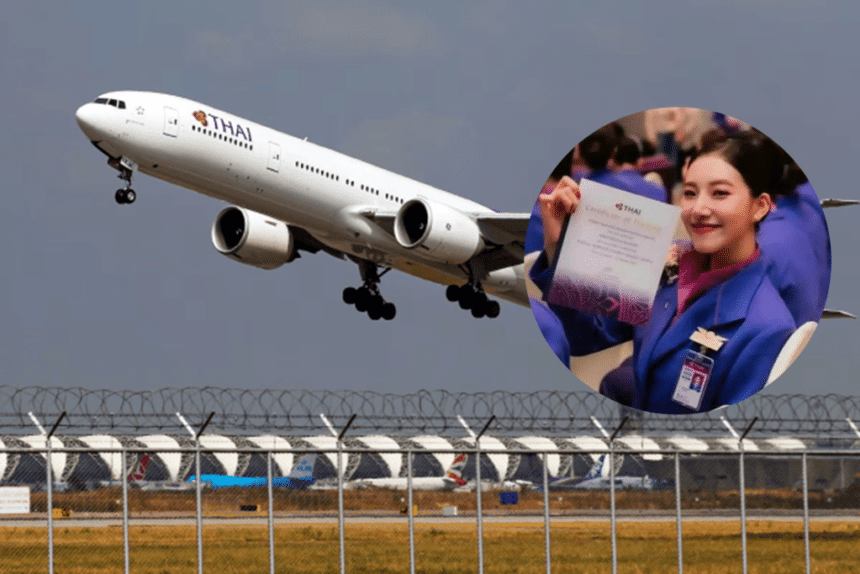
BANGKOK – Australian prosecutors withdrew all heroin-trafficking charges against former Thai Airways cabin crew member Meena Kondo on Nov. 17, ending a five-month legal ordeal that carried a 25-year prison threat. The decision clears the 26-year-old for immediate deportation back to Thailand without a conviction.
Yet her legal troubles are not entirely over. Thai prosecutors and narcotics investigators confirmed their domestic inquiry remains open and plan to question Kondo immediately upon her arrival in Bangkok. Authorities want her testimony to help dismantle an alleged smuggling ring accused of duping airline workers into carrying concealed drugs.
Key Takeaways
- Melbourne Magistrates’ Court closed the criminal case on Nov. 17 after Australian prosecutors formally dropped two border-controlled drug charges against Meena Kondo.
- Kondo was never convicted in Australia, where investigators found insufficient evidence in her phone and bank records to prove she knew heroin was hidden in her luggage.
- Thai authorities still expect to interview Kondo upon her return to Bangkok as part of an active investigation into the trafficking network behind the shipment.
Australian Court Drops Border Drug Charges
Appearing via video link from detention at Melbourne Magistrates’ Court on Nov. 17, Kondo listened as prosecutors withdrew counts of importing and possessing a marketable quantity of a border-controlled drug. Magistrate Donna Bakos formally closed the proceedings, according to court reports. Each charge had carried a maximum penalty of 25 years in prison.
The arrest unfolded on June 25 when Australian Border Force officers inspected Kondo’s luggage upon arrival at Melbourne Airport. Officers discovered roughly one kilogram of heroin—valued at an estimated 500,000 Australian dollars—stitched inside the linings of elephant-patterned cloth tote bags. Thai Airways terminated her employment shortly after the arrest. According to police forensic checks of Kondo’s mobile phone and financial transactions failed to show criminal intent, prompting Australian authorities to abandon the prosecution.
Unwitting Couriers and the Thai Smuggling Ring
The case highlights a recurring tactic used by Southeast Asian syndicates operating out of the Golden Triangle drug-producing region. Traffickers frequently target flight attendants, tourists, and gig-economy workers online, paying modest courier fees to transport seemingly innocent souvenirs or commercial goods across borders.
Because airline crew members undergo streamlined customs clearance and travel frequently on tight schedules, criminal networks view them as prime targets for blind smuggling. In joint operations with Australian Federal Police, Thailand’s Office of the Narcotics Control Board tracked the digital trail from Kondo’s online job offer. Investigators uncovered a broader network recruiting unwitting travelers to move narcotics into Australia, where street prices for high-grade heroin rank among the highest in the world.
Thai Questioning Awaits in Bangkok
While Australia’s legal action is finished, Thai law allows domestic prosecution for drug offenses committed abroad by Thai nationals. Watcharin Phanurat, director-general of the Department of Special Litigation, said police and prosecutors must formally interview Kondo once she lands at Suvarnabhumi Airport.
Thai authorities have already indicted four suspects linked to the tote-bag operation—three in custody and one at large. Watcharin noted that local police earlier indicated Kondo was likely an innocent pawn. If her testimony confirms she had no knowledge of the hidden drugs, Thai prosecutors say they will close their file against her and use her account as evidence against the alleged organizers.
Trending News:
Police Arrest Two Suspects Linked to Thai Flight Attendant Heroin Case
Thai Airways Make Emergency Landing Over Cracked Windshild