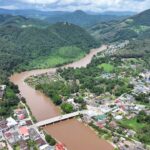
CHIANG RAI – Chiang Rai provincial officials pressed a parliamentary subcommittee on Wednesday for faster water testing, sediment traps and cross-border enforcement after arsenic pollution in the Sai River forced emergency tap water cuts across Mae Sai district.
Deputy Gov. Prasert Jitpleecheep outlined the province’s recovery plan during an online session chaired by Phattharapong Leelaphat, head of the House Committee on Natural Disaster Prevention and Mitigation. While Mae Sai’s municipal water supply has returned to full capacity following earlier shutdowns, officials warned that delayed lab results and unregulated upstream mining continue to threaten local farms and households.
Key Takeaways
- Tap Water Restored: Mae Sai’s waterworks recovered from a severe contamination shutdown to 60%, 80% and now 100% output, backed by 12 reserve groundwater wells and mobile treatment units.
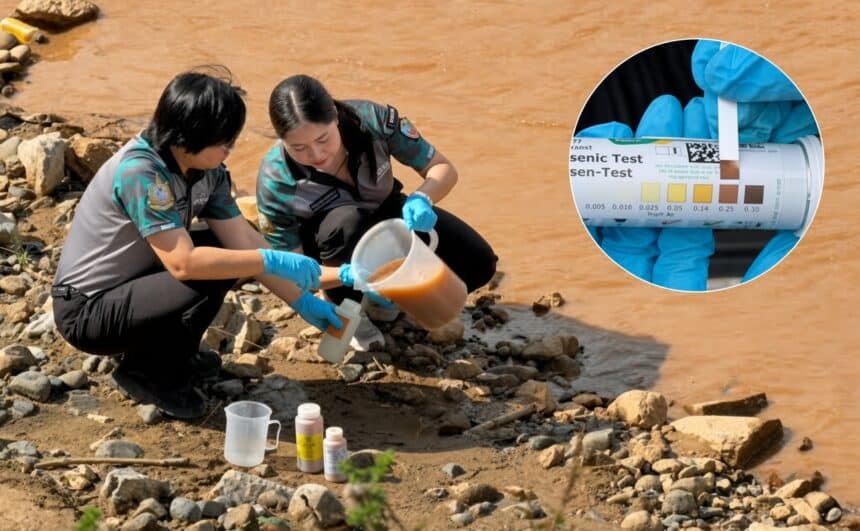
- Two-Month Lab Delays: August river samples showed arsenic at 28 times the safety limit, but results were not reported until October, stalling public health warnings.
- Structural Defenses Proposed: Provincial leaders urged lawmakers to fund real-time testing labs, build sediment traps at major irrigation weirs and curb upstream mining waste in Myanmar.
Upstream Mining Fuels Border Water Crisis
The November tap water disruption affected more than 20,000 households across 14 border villages after heavy runoff pushed river turbidity to 14,000 nephelometric turbidity units — more than double what local treatment plants can filter. Researchers and Thai authorities have linked the toxic surge to unregulated gold and rare-earth mining in Myanmar’s Shan State, where conflict-driven extraction dumps heavy metals directly into the Sai and Kok river basins.
Because the Sai River feeds into the Mekong system, contamination risks extend well beyond Mae Sai’s town center. Local residents have borne extra household water costs for bottled drinking supplies, while fisheries and irrigation officials monitor potential heavy-metal buildup across thousands of hectares of northern farmland.
Emergency Wells and Mobile Treatment Units
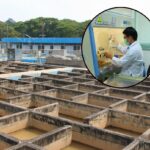
During the Nov. 18 meeting at Chiang Rai City Hall, Prasert reported that the Provincial Waterworks Authority has stabilized production through continuous turbidity monitoring and direct interagency alerts. To prevent future supply collapses, officials mapped alternative raw water sources near Tham Luang, including four newly surveyed Department of Water Resources wells, eight boreholes originally drilled during the 2018 Wild Boars cave rescue and the Nong Nam Phu natural spring.
Emergency crews also stationed a mobile drinking-water truck from Disaster Prevention and Mitigation Regional Center 15 at the Mae Sai District Office. Those units operate alongside Provincial Waterworks dispensers and royal volunteer filtration stations to maintain public confidence.
Three-Point Plan Targets Labs and Irrigation Weirs
Prasert urged the parliamentary panel, alongside the Foreign Affairs and Natural Resources ministries, to back three long-term reforms. First, Bangkok must pursue diplomatic enforcement to halt toxic discharges at their source in Myanmar.
Second, Chiang Rai needs accredited, near-real-time testing laboratories. Prasert noted that August river samples measured arsenic at 0.284 milligrams per liter — 28 times the safe standard — yet results arrived in October, leaving residents unwarned during peak exposure. He added that faster, localized testing is also vital to verify whether trace contaminants found in vegetables and health screenings stem from river water or unrelated local factors outside the affected watershed.
Third, provincial authorities called for feasibility studies on sediment traps and toxin-absorption systems at the Chiang Rai Weir and Mae Sai Irrigation Weir to block heavy metals before tainted water reaches crops, livestock and rural communities.
Trending News:
Chiang Rai Rushes Water Filtration Trucks to Chiang Khong
Arsenic Fears Slash Mae Sai Vegetable Sales By 50 Percent