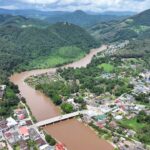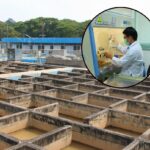
CHIANG RAI – Emergency teams rushed clean water tankers to two northern Thai villages on Wednesday after laboratory tests revealed dangerous arsenic levels in local tap systems. The urgent deployment protects residents in Ban Kaen Nuea and Ban Kiang Tai within Chiang Khong district’s Huai So subdistrict from toxic exposure.
Provincial disaster officials launched the relief operation on Nov. 18 immediately after water quality checks confirmed arsenic exceeded national safety thresholds. Hundreds of rural households now rely entirely on emergency water deliveries for drinking, cooking and bathing while engineers work to flush and repair the tainted community pipelines.
Key Takeaways• Water tests detected unsafe arsenic concentrations in village tap systems serving Ban Kaen Nuea and Ban Kiang Tai in Chiang Rai province. • The Chiang Rai Provincial Disaster Prevention and Mitigation Office partnered with Regional Center 15 to deploy water trucks on Nov. 18. • Clean water distributions will continue uninterrupted until local authorities overhaul the contaminated supply infrastructure. |
Rapid Relief Mobilized in Chiang Khong
Charasphan Arunkhong, director of the Chiang Rai office of the Department of Disaster Prevention and Mitigation, ordered immediate field intervention following the contamination alert. He assigned Suraphong Malawilas, a senior policy and plan analyst serving as acting chief of the agency’s Chiang Khong branch, to coordinate on-site response efforts with subdistrict administrators and village leaders.
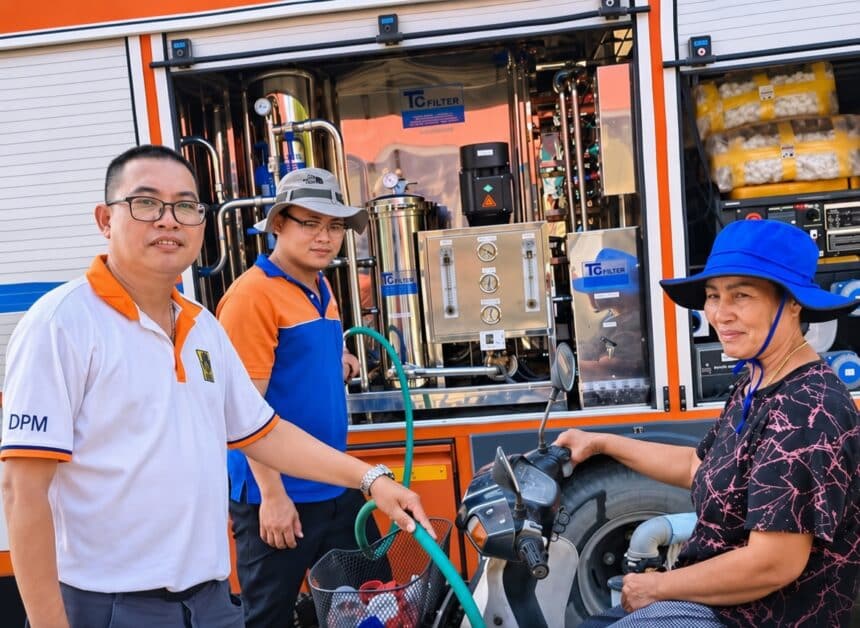
Regional Center 15 in Chiang Rai supplied heavy tanker trucks, field personnel and portable water storage equipment to sustain daily deliveries across both communities. Officials confirmed the mobile supply line will run around the clock until independent laboratory tests verify the village tap systems meet national safety standards.
Local public health workers warned villagers not to boil the tainted tap water for cooking or drinking. Boiling evaporates clean water and concentrates dissolved heavy metals rather than removing them, turning routine kitchen habits into an acute poisoning hazard.
Upstream Mining Fuels Regional Water Crisis
The contamination in Huai So reflects an escalating heavy-metal crisis across northern Thailand’s Mekong basin. Earlier tests in Kaen Nuea village recorded arsenic levels 41 times above the legal safety limit, prompting district leaders to ban tap consumption and freeze new groundwater well drilling across the subdistrict.
The emergency extends well beyond Chiang Khong. On Nov. 18, Prime Minister Anutin Charnvirakul ordered national agencies to secure clean water for more than 20,000 households across Chiang Rai province after arsenic pollution linked to cross-border mining forced widespread tap shutdowns in neighboring Mae Sai district.
Researchers at Naresuan University recently used satellite modeling and chemical sediment tracing to link toxic runoff in the Sai and Mekong waterways to unregulated gold and rare-earth mines operating across the Myanmar border. Separate regional surveys by Thailand’s Pollution Control Department also found arsenic exceeding standard limits in nine northern groundwater samples collected this year.
Rural village waterworks typically draw from shallow aquifers and local tributaries using basic sand filtration that cannot strip dissolved arsenic from raw intake water. Chronic exposure damages skin, nerves and internal organs, leaving Huai So residents dependent on state water trucks while engineers search for uncontaminated deep-water aquifers or alternative treatment systems.