CHIANG RAI – Provincial water officials have retested municipal tap supplies across Chiang Rai, confirming that arsenic levels remain well below safety thresholds after viral social media rumors triggered household panic and hotel booking cancellations.
The emergency quality audit covers treated water delivered to more than 40,000 households as local farmers simultaneously press Bangkok to separate clean agricultural zones from upstream mining-tainted waterways and accelerate new reservoir construction across border districts.
Key Takeaways• Provincial Waterworks Authority tests across five Chiang Rai stations measured arsenic between 0.0026 and 0.0049 milligrams per liter, far below the 0.01 safe limit. • False online rumors alleging contaminated municipal tap water have caused 1% to 2% of hotel bookings to cancel at the start of the high tourist season. • Mae Sai farmers are demanding official zoning to protect uncontaminated rice crops alongside cross-border talks with Myanmar to curb toxic river sediment. |
Municipal Tests Clear Six-Stage Treatment System
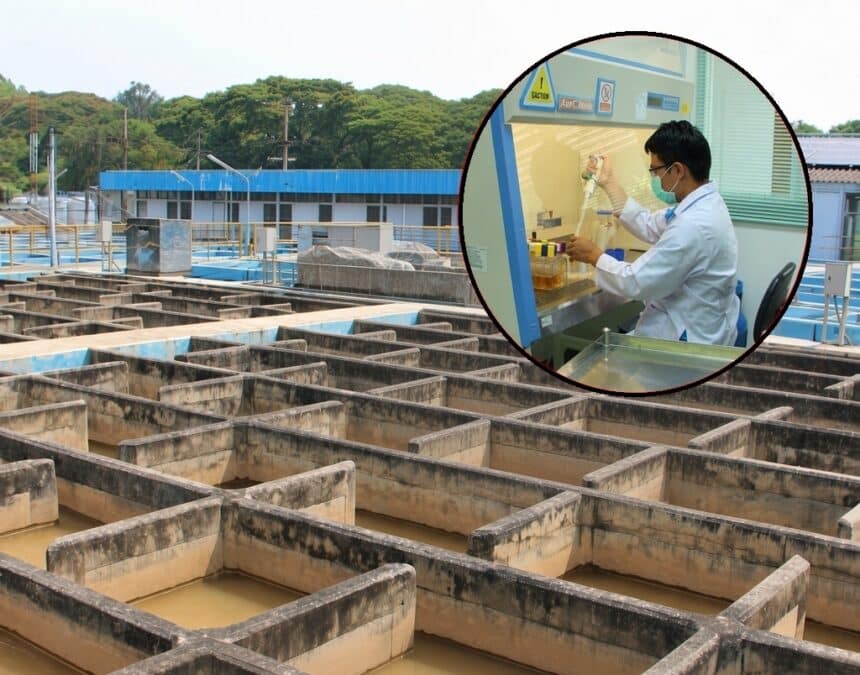
Nimit Pinthanee, manager of the Provincial Waterworks Authority Chiang Rai branch, said technicians pulled fresh water samples from both treatment plants and end-user household faucets on Nov. 18. The state enterprise operates six branches serving 10 districts across the northern province and monitors output strictly against World Health Organization drinking water standards.
Latest laboratory readings showed arsenic concentrations of 0.0031 milligrams per liter at the main Chiang Rai branch, 0.0049 in Mae Sai, 0.0026 at Koh Chang, 0.0027 in Chiang Saen and 0.0039 in Wiang Chiang Khong. Every reading sits comfortably below Thailand’s legal safety ceiling of 0.01 milligrams per liter, prompting Nimit to urge residents to resume normal drinking and household use immediately.
All 48 inspections conducted throughout 2025 passed without a single violation. In 2026, staff test supplies four times monthly—twice at central laboratories and twice at local plants—checking water at each of the six chemical coagulation, impurity separation, sedimentation and filtration stages. Nimit noted that while the authority does not oversee independent village-run community waterworks, its engineers stand ready to advise local operators on quality testing and production standards.
Cross-Border Mining Fuels Public Confusion
Public anxiety stems from severe heavy-metal pollution in raw river water rather than treated municipal pipes. Throughout 2026, rare-earth and gold mining operations across the border in Myanmar’s Shan State have discharged untreated industrial waste into the Sai, Kok and Ruak rivers, pushing raw river arsenic levels up to 28 times above safety limits and forcing emergency supply adjustments in border towns.
Recent seasonal flooding carried thick reddish sediment downstream into border communities, while separate government tests detected elevated arsenic in nine shallow rural groundwater wells across northern provinces. Social media posts repeatedly blurred the crucial distinction between raw river water, shallow village boreholes and chemically treated municipal tap lines, driving panicked residents to stockpile bottled water.
Chiang Rai Tourism Jitters
The misinformation is already hurting local businesses. Suwanna Pinsuwan, secretary of the Chiang Rai Hotel Association, reported that smaller guesthouses have seen 1% to 2% booking cancellations, while larger properties hosting hundreds of seminar guests face anxious inquiries at the onset of peak travel season. She stressed that provincial hotels rely exclusively on certified municipal tap water and urged officials to counter false claims rapidly before lasting economic and reputational damage spreads.
In Mae Sai district, growers face a distinct operational threat. Thanaratkorn Suwannaprakarn, chairman of the Mae Sai Farmers Council, said red flood sediment in irrigation channels has sparked fears of toxic residue in rice and vegetable crops. Blanket regional news coverage has stigmatized all Chiang Rai produce, even though many farms draw irrigation water from clean domestic tributaries rather than the Sai River.
Thanaratkorn called on Bangkok to map clear safe and high-risk agricultural zones to protect uncontaminated harvests and restore buyer confidence. For long-term water security, the council urged authorities to expedite three planned reservoirs—Nong Nam Kham, Mae Kham and Nong Salat—offering over 70 million cubic meters of combined storage, while pressing Myanmar and foreign mining investors in upcoming bilateral talks to halt transboundary pollution before toxic sediment ruins regional farming.