CHIANG RAI – Drinking water at major riverside hotels in Chiang Rai’s Mueang district passed on-site heavy metal inspections Friday morning, Nov. 20, showing zero arsenic contamination as provincial officials moved to calm traveler fears ahead of peak winter tourism.
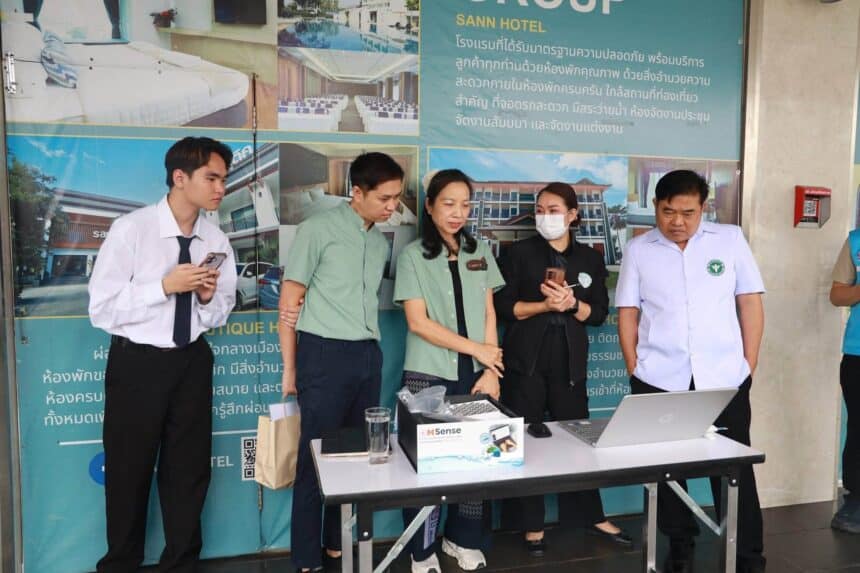
Deputy Gov. Norasak Suksomboon, acting on orders from Gov. Chucheep Phongchai, led health, municipal and tourism inspectors at 8 a.m. to The Riverie by Katathani along the Kok River, while Public Health Ministry Permanent Secretary Dr. Somruek Chungsaman inspected San Hotel. The coordinated checks aim to halt room cancellations after recent water contamination fears rattled northern Thailand’s hospitality sector.
Key Takeaways
- Rapid field tests at The Riverie by Katathani confirmed drinking water from breakfast bar stations meets national safety standards with no detectable arsenic.
- Monthly independent laboratory reports from Oct. 20 verified non-detect arsenic levels following a multi-stage reverse osmosis filtration process.
- Provincial and national health leaders launched joint hotel inspections to protect winter tourism amid upstream mining pollution concerns in border rivers.
On-Site Testing Targets Breakfast Bars and Tap Systems
Inspectors from the Chiang Rai Provincial Public Health Office drew water samples directly from guest service counters in the breakfast zone at The Riverie by Katathani. Technicians used rapid Msense field testing kits to screen for toxic metals on the spot. Results showed no trace of arsenic or suspended impurities.
Yureephan Saenjaiya, director of the Tourism Authority of Thailand’s Chiang Rai office, joined municipal and public relations officials to observe the testing. She said both drinking supplies and general utility water systems met strict safety benchmarks, allowing visitors to eat, drink and stay at local properties without risk.
Multi-Stage Filtration Blocks Heavy Metals
Hotel management detailed an industrial-grade purification line designed to strip contaminants from raw river and municipal intake water. Assistant General Manager Jeeraroj Klaithin said water first passes through a two-stage sedimentation tank and primary mechanical filters. Resin-filled softener tanks then remove minerals before the water enters a reverse osmosis membrane system.
After reverse osmosis, water runs through a three-stage fine polishing filter before reaching kitchen prep lines, ice machines or dining room dispensers. The hotel also submits treated water samples to an external laboratory every month. Its most recent lab report, dated Oct. 20, recorded arsenic at a non-detect level.
Upstream Mining Pollution Drives Tourism Anxiety
Friday’s high-profile inspection follows weeks of public alarm over transboundary river pollution flowing into northern Thailand from neighboring Myanmar. Earlier this week, Prime Minister Anutin Charnvirakul ordered emergency clean-water deliveries to more than 20,000 households in Mae Sai district after arsenic levels in untreated Sai River water spiked to 25 times the safe drinking limit, a crisis researchers traced to upstream gold mining.
Although the Kok River flows directly past downtown Chiang Rai resorts, the Provincial Waterworks Authority confirmed its Wang Kham treatment plant removes heavy metals through chemical separation and filtration, keeping municipal tap water well within World Health Organization limits. Still, public confusion between raw border river readings and treated urban tap systems triggered booking delays and cautious inquiries across the province.
For local hotel operators, traveler perception carries immediate economic weight. Cool November weather marks the start of Chiang Rai’s most lucrative travel window, when domestic and international visitors book riverside stays, dining packages and mountain tours.
By pairing rapid public testing with transparent monthly laboratory verification, provincial authorities and hoteliers aim to clearly distinguish certified downtown resort water from rural border advisories before December holiday arrivals reach full capacity. Regular audits across Mueang district hotels will continue throughout the high season to protect public health and sustain regional confidence.
Trending News:
Deep Water Wells Replace Toxic River Water in Northern Thailand
Chiang Rai City Clears Tap Water Dispels Hotel Arsnic Rumors