CHIANG MAI— District administrative officers and local police raided an unlicensed 43-room boutique hotel in Chiang Mai’s popular Nimmanhaemin neighborhood on Thursday, Nov. 26, halting illegal nightly rentals that reached nearly 5,000 baht per night.
The enforcement sweep targeted Non 13 Nimman Boutique Hotel Chiang Mai, located on Nimmanhaemin Road Soi 13 in Suthep subdistrict, after an online investigation revealed the property was advertising daily rooms without a state permit. Operators now face criminal prosecution under Thailand’s Hotel Act B.E. 2547, signaling a renewed crackdown on unregulated lodging during northern Thailand’s peak winter tourism season.
Key Takeaways
- District officials and Phu Phing Ratchaniwet police inspected Non 13 Nimman Boutique Hotel on Nov. 26 after spotting daily room listings on Facebook and Booking.com.
- The 43-room property charged between 2,380 and 4,880 baht per night and housed guests across 14 occupied rooms during the raid.
- Operators failed to produce a valid license and were referred to police investigators under the 2004 Hotel Act, which carries prison terms and daily fines.
Digital Trail Leads Inspectors to Soi 13
The operation began with a digital audit rather than a street patrol. Acting under orders from Mueang Chiang Mai District Chief Warut Wisitsilp, senior district official Thanya Suthaphan reviewed online booking platforms including Facebook and Booking.com.
Investigators cross-checked the hotel’s listings against the official Department of Provincial Administration i-Service database, finding zero registration records for the address.
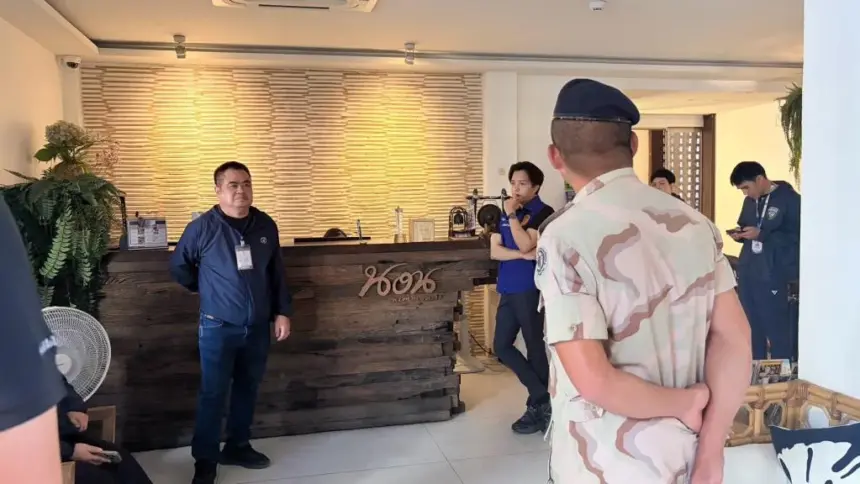
District officials joined Territorial Defense Volunteers and officers from the Phu Phing Ratchaniwet Police Station to inspect the premises. Inside, three female receptionists confirmed the property rented all 43 rooms on a daily basis at rates starting at 2,380 baht and climbing to 4,880 baht. Both Thai and international tourists were staying in 14 occupied rooms when officers arrived. When asked to verify their operating status, management failed to present a hotel license, prompting officials to gather booking records and evidence for formal charges.
Why Unlicensed Lodging Persists in Nimmanhaemin
Nimmanhaemin has transformed over the past decade from a quiet residential enclave into Chiang Mai’s densest commercial and tourist hub. Skyrocketing land values and strong visitor demand have pushed property owners to convert shophouses and low-rise apartments into boutique accommodations without navigating Thailand’s strict licensing process. Obtaining a legal hotel permit requires passing multi-agency building, fire safety and environmental inspections, a hurdle many retrofitted properties in narrow alleys like Soi 13 struggle to clear.
The timing of Thursday’s raid coincides with Chiang Mai’s Yi Peng festival week, when hotel occupancy surges and room rates spike across the city. Under the 2004 Hotel Act, any establishment offering stays under 30 days must hold a license unless it qualifies for a narrow exemption covering properties with eight or fewer rooms and no more than 30 guests. At 43 rooms, Non 13 Nimman sat well above that threshold.
Legal Penalties and Market Impact
While Thailand’s draft Accommodation Establishment Act aims to modernize registration rules, lawmakers have yet to enact the reform, leaving existing criminal penalties fully intact.
Operating an unlicensed hotel in Thailand carries up to one year in prison, a fine of up to 20,000 baht, or both, alongside an additional daily fine of up to 10,000 baht for every day the business remains open. Investigators at the Phu Phing Ratchaniwet Police Station are now reviewing the seized financial logs to determine how long the boutique property operated without authorization.
For licensed hoteliers in Chiang Mai, enforcement sweeps address longstanding complaints over unfair competition from operators who bypass commercial taxes and safety audits. Travelers also face direct risks when booking unverified properties, including sudden check-in cancellations, missing fire escapes and potential immigration reporting gaps under Thailand’s mandatory guest registration rules.