Last Updated on September 30, 2026 by Jeff Tomas
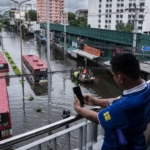
A business can lose sales, miss deliveries, or shut down even when floodwater never reaches its premises. Thailand’s September 2026 floods showed how quickly disruption can spread, though estimates of national losses varied by source and scenario.
For business owners, the key question is whether a policy covers only physical flood damage or also lost income when operations, suppliers, or access routes are affected. Review business interruption losses from Thailand floods for context, then check the policy triggers, exclusions, and limits that could leave your business exposed.
Key Takeaways
- Confirm flood is an insured peril under the property policy, and check any exclusions, endorsements, deductibles, and catastrophe sublimits before assuming damage is covered.
- Business interruption usually depends on insured physical damage; supplier losses or blocked access may require separate extensions. Review Thailand flood insurance coverage issues for context.
- Check the BI waiting period, indemnity period, notice deadlines, and any time limits on denial-of-access cover, which may be shorter than the disruption.
- Keep the full policy wording, photos, inventory records, accounts, repair estimates, and a dated log of interruptions to support the claim and loss calculation.
Flood Insurance Gaps for Thailand Businesses: What the 2026 Floods Revealed
Thailand’s September 2026 floods highlighted a gap between damage to insured property and the wider financial losses a business can face. Reported national estimates ranged from at least THB 11 billion to THB 25.345 billion or more, but they used different timeframes, geographic coverage, and assumptions. These figures describe economic impacts, not the amount insurers will pay on business claims.
Flood damage is only one part of a business loss
Floodwater can damage a building’s structure and finishes, ruin stock, disable machinery, and destroy vehicles. A business may also lose trading days when roads are blocked, employees can’t reach the site, or suppliers miss delivery windows. Those interruptions can continue even after water levels fall.
Policies may treat each loss differently. A commercial property policy might cover physical damage to insured premises or contents, subject to its terms, limits, and exclusions. Lost income may fall under business interruption cover, while vehicle damage or disruption involving suppliers could require separate cover or a specific extension. Owners reviewing what businesses can claim after flood damage in Thailand should check which policy responds to each part of the loss.
Why lost sales may not trigger business interruption cover
Business interruption cover often requires insured physical damage at the covered location before it pays for lost income. For example, a shop might remain dry but lose customers because nearby roads are flooded. If the premises itself has no covered damage, the policy may not respond to the lost sales.
The September estimates show why those distinctions matter. One report placed nationwide losses at at least THB 11 billion, while a separate assessment put losses at THB 25.345 billion under a moderate-damage scenario covering 48 provinces. The estimates differ in scope and assumptions, so neither figure is a final measure of insured loss. The higher estimate reflects a broader scenario, not a guarantee that individual businesses can recover their interruption costs. The exact policy wording determines whether damage at another site, blocked access, or supplier disruption qualifies.
Which Thai businesses can face the widest exposure?
Commerce, restaurants, tourism, retail, logistics, transport, and manufacturing can all face flood-related disruption, though exposure varies by location, building, and supply chain. A restaurant may lose customers when access roads close; a factory may stop production because workers can’t reach the site or a supplier can’t deliver parts. A tourism business could see cancellations even if its own property stays dry.
For each business, check the physical-damage trigger, any denial-of-access or supplier extensions, and the limits and waiting periods. That review can reveal whether the policy covers only water-damaged property or also the interruption that follows.
Where commercial flood insurance gaps hide in the policy wording
A commercial policy can list a large insured value and still leave a business with a much smaller flood claim. The gap often sits in the definitions, exclusions, deductibles, limits, and extensions in the wording and schedule. Terms vary by insurer and policy, so there is no single flood sublimit that applies to every Thai business.
Flood exclusions, special deductibles, and sublimits
Check whether flood is covered, specifically excluded, or addressed under terms such as “water damage” or “natural catastrophe.” Some commercial all-risks policies include flood, while others limit or exclude it. For example, AIG Thailand’s commercial property coverage lists flood among natural catastrophe exposures, subject to the policy’s terms, conditions, exclusions, and limits.
Next, look for a separate flood deductible or a catastrophe sublimit. A deductible may be a fixed amount or a percentage, while a sublimit caps payment for flood damage below the overall sum insured. As a result, a business with a high insured value could still receive a much smaller payout for flood losses. Review both the policy wording and schedule; the schedule may show the applicable limit, but the wording explains how it works. For more context on flood limits and deductibles in Thailand, compare the listed terms with your own documents.
Stock, equipment, and the value used to settle a claim
Confirm that the insured property includes the assets your business depends on. Inventory, raw materials, contents, and machinery may appear under different categories, and an item not listed or covered by the wording may not qualify for payment.
Also check how the insurer values damaged property. Replacement value and actual cash value can produce different settlements, especially for older machinery or stock that has depreciated. Meanwhile, an outdated inventory or a declared value that falls below current replacement costs can leave a business underinsured. Update stock records and declared values regularly, and keep purchase invoices, asset lists, and maintenance records where you can access them after a flood.
Business interruption, suppliers, utilities, and blocked access
Business interruption cover may require direct physical damage at your own insured premises before lost income qualifies. If your site stays dry but a supplier floods, utilities fail, or authorities restrict access, the policy may not respond unless it includes a relevant extension.
Read the wording for supplier or customer disruption, off-site utilities, and denial or prevention of access. These extensions can have their own covered-peril rules, waiting periods, distance limits, and sublimits. Check whether flood is among the covered causes and whether the extension requires physical damage at another location. That distinction can determine whether a shutdown caused by disruption elsewhere is covered or remains your business’s expense.
How Thailand Businesses Can Test and Close Their Flood Cover Gaps
A policy review works best when you compare real operating risks with the exact terms in your insurance documents. Use the steps below before renewal, then update your plan whenever locations, stock levels, or suppliers change.
Match the policy to the sites, stock, and supply chain you depend on
Map flood exposure for every site, including warehouses, offices, production facilities, and storage yards. Mark critical suppliers, delivery routes, and utilities too. A dry shop can still lose business if a flooded road blocks customers or a supplier cannot ship essential materials.
Compare that map with the policy schedule and wording. Check that each property and key asset is insured, then review limits, flood deductibles, and sublimits. For business interruption, confirm the indemnity period and whether the cover responds to disruption at suppliers or other locations. Fix practical weaknesses where possible, such as moving stock above floor level or arranging an alternate delivery route.
Ask your broker or insurer these policy questions
Request clear answers in writing, tied to the wording and schedule. Ask:
- Is flood covered at each insured location, and what deductible or sublimit applies?
- Does business interruption require physical damage at my site?
- Are supplier interruption, blocked access, and utility failures covered?
- What notice deadlines and loss-mitigation duties apply after a flood?
Also ask which extensions, waiting periods, and exclusions affect your specific locations. Review the responses before renewal, while there is still time to request changes or compare options.
Build a claim file before floodwater arrives
Keep records in secure cloud storage and make sure someone can access them if the premises closes. Useful evidence includes:
- Dated photos and videos of buildings, equipment, and stock.
- Inventory counts, purchase invoices, and repair estimates.
- Cleaning bills, sales reports, and payroll records.
- Delivery notices, supplier messages, and road-closure evidence.
- A timeline showing when operations stopped and restarted.
After a flood, contact the insurer promptly and follow its instructions before discarding damaged items, where safe. Clear records can support both property damage and business interruption claims. For additional guidance, see what to document for a Thailand flood claim.
Treat public disaster aid as a backstop, not business insurance
Thailand’s announced THB 15.5 billion national disaster insurance plan is scheduled to run from October 1, 2026, to October 1, 2027. Public reporting describes it as a household-focused scheme, not commercial property or business interruption cover. Coverage details for the household disaster plan do not replace a company policy.
Check current program rules with the relevant authorities, but don’t count household support as payment for company losses. Protect business property and income through appropriate commercial cover, and keep your own continuity plan current.
Frequently Asked Questions
Flood claims often turn on details that are easy to miss when reviewing a policy or assembling documents. These answers can help you identify what to confirm before filing.
Does commercial property insurance in Thailand automatically cover floods?
No. Coverage depends on the policy wording, schedule, exclusions, and any flood-specific limit or deductible. Don’t assume that a reference to water damage covers every type of flood; ask your insurer to confirm how the policy defines flood and which locations and assets it covers.
Can a business claim for lost sales if its building was not flooded?
Standard business interruption cover may require insured physical damage at the covered location, so lost sales alone may not qualify. However, an extension could cover certain disruptions, such as blocked access, if its wording applies to the event. Check the trigger and evidence requirements before counting on reimbursement.
What is a flood sublimit, and how does it affect a payout?
A flood sublimit is a smaller maximum payment for flood losses within the policy’s main limit. For example, even if the total property limit is higher, the insurer may cap payment for flood damage at a lower amount. A deductible and other policy terms can reduce the final payout further.
Does Thailand’s household disaster scheme cover business losses?
No. The scheme scheduled to begin October 1, 2026, targets residential properties and households, not company revenue or commercial business interruption. Check the scheme’s reported coverage and terms and current official program rules; Thailand’s national disaster insurance scheme is not a substitute for commercial coverage.
What records should I keep for a flood insurance claim?
Keep dated photos, a damage and closure timeline, stock counts, purchase records, repair costs, and sales records from before and after the flood. If the claim involves disruption beyond physical damage, save supplier messages, delivery notices, and evidence of access restrictions. These documents can help support both the cause of the loss and the amount claimed.
Close the gap before the next flood
A policy review should end with clear answers and practical changes, not a folder of unanswered questions. Test how your cover would respond to realistic disruptions, then turn any weak points into renewal requests and continuity steps.
Run a claim scenario before renewal
Pick a likely event and trace its financial effects. For example, consider flood damage at your warehouse, a key supplier’s shutdown, or a road closure that keeps customers and staff away. For each scenario, identify which policy section might respond, what evidence you would need, and where a deductible, waiting period, or limit could reduce payment.
This matters because direct property damage and disruption elsewhere may trigger different terms. Recent reporting on Thai commercial flood cover highlights the need to check contingent business interruption wording rather than assume supplier losses are included.
Turn unclear terms into written answers
Send your broker or insurer specific scenarios and ask them to point to the relevant wording, endorsement, or schedule entry. If an answer depends on a policy condition, get that clarification in writing before renewal. Verbal assurances can be difficult to rely on when a claim is assessed.
Then ask what change would address each uncovered risk. You may need a suitable extension, adjusted limits, or a separate policy, depending on the insurer and your business. Confirm that the revised documents name the correct sites and reflect current stock, equipment, and operating needs. Keep the updated wording and schedule together so staff know which version applies.
Connect insurance with your continuity plan
Insurance can help pay covered losses, but it won’t reopen a flooded road or restore a disrupted supply line. Assign someone to monitor warnings, contact staff and suppliers, protect records, and coordinate insurer notification. Decide in advance where you could move essential stock or resume critical work if a site becomes inaccessible.
Keep one contact sheet with policy numbers, insurer and broker details, emergency contacts, and the location of claim records. For broader context on Thailand flood insurance claims and business disruption, review how flood impacts can extend beyond damaged premises.
A policy’s headline limit doesn’t show whether key assets, lost income, or supply-chain disruption are protected. Review the wording, confirm uncertain terms in writing, and prepare claim records and continuity plans before the next flood warning.