



Last Updated on September 30, 2026 by Jeff Tomas
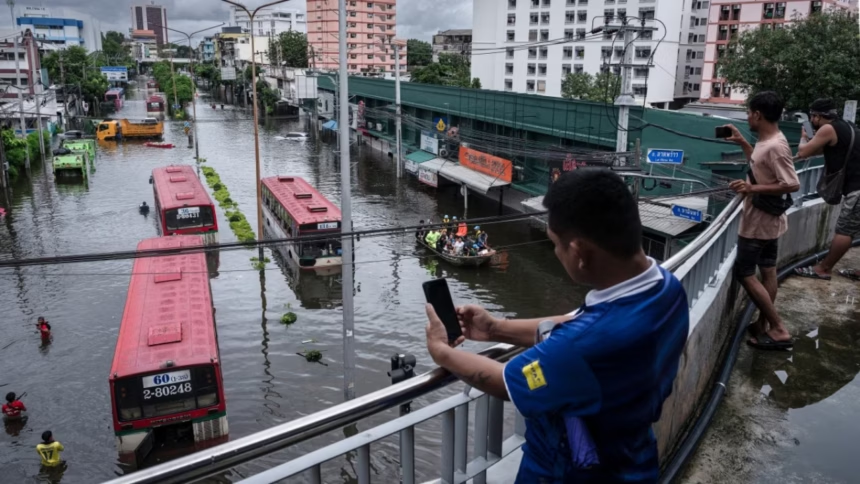
BANGKOK – Severe floods have swept across Thailand, leaving a trail of destruction in Bangkok and 41 surrounding provinces. Heavy weekend rains transformed busy city streets into rivers, forcing thousands of residents to seek safety in emergency shelters.
The disaster has tragically claimed at least eight lives and disrupted more than 580,000 homes across the nation. Emergency crews are working around the clock to rescue stranded families and safely deliver basic survival supplies.
As the heavy rainfalls finally begin to slow down, government officials are rushing to assess the immense financial toll. Early estimates predict the nationwide economic damage will reach roughly 11 billion baht, or at least $320 million. Financial experts warn this number could easily rise if the standing water is not cleared quickly from major cities. Local street markets and major retail businesses are currently bearing the brunt of these heavy financial losses.
Key Takeaways:
- Massive floods across 41 Thai provinces have impacted over 580,000 homes and displaced thousands of vulnerable residents.
- Early financial loss estimates stand at roughly US$320 million, hitting local wholesale and retail sectors the hardest.
- Government officials remain hopeful and expect to clear standing water in Bangkok within two to three days.
The severe weather’s impact quickly spilled over into the busy local travel and commercial transport sectors. Bangkok received nearly a month’s worth of rain during a single weekend, causing major logistical nightmares. At local airports, hundreds of bags lined the hallways as major airlines struggled with massive luggage delays. Exhausted travelers faced extreme frustration while airline staff worked overtime to process the massive backlog of stranded baggage.
Economic experts are deeply concerned about the long-term effects on the country’s somewhat fragile national economy. Aat Pisanwanich, an economics expert from Rangsit University, noted the disaster could severely reduce this year’s GDP growth.
The recent floods in Thailand have heavily impacted both industrial and agricultural sectors located outside the capital city. Without swift government intervention, the region’s overall financial recovery could face severe delays heading into the next quarter.
The Path to Recovery and Future Outlook
Despite the grim situation across the country, government officials remain optimistic about the immediate nationwide cleanup efforts. Authorities recently announced ambitious plans to clear the stagnant floodwater from central Bangkok within two to three days.
Massive industrial water pumps are currently operating at full capacity to drain heavily flooded commercial and retail zones. However, many low-lying residential neighborhoods might require additional time and resources before displaced families can safely return home.
While the massive nationwide cleanup operation moves forward, anxious citizens are keeping a close eye on the sky. The national meteorological department has warned that additional heavy rain could potentially strike the vulnerable region very soon.
Local community leaders are actively urging residents to remain on high alert and keep their emergency disaster supplies stocked. The true human and financial cost of this historic disaster will only become clear once the deep floodwaters finally recede.
Trending News:
Thai Airways Cuts 30% of Bangkok Flights Amid City Floods
GISTDA Images Show 29 Provinces in Thailand Under Water


