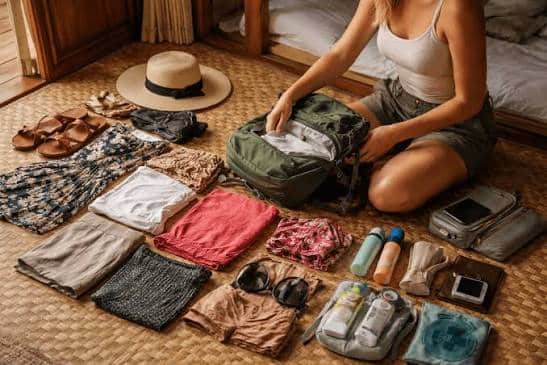
Thailand’s heat, sudden rain, temple dress expectations, and varied itineraries can make packing feel like a guessing game. You’ll need less than you might think: choose breathable clothes for your route, add a respectful outfit for temple visits, and bring only the extras your plans call for.
Because weather varies by season and region, check the forecast for your destinations before you pack. This guide to Thailand’s climate and seasonal weather can help you plan for cooler northern mornings as well as warm days. Start with a practical packing plan, then decide what to bring, leave behind, or buy after you arrive.
Key Takeaways
- Pack lightweight, breathable clothes, a compact rain layer, and one light layer for air-conditioned spaces or cooler northern mornings.
- Set aside an outfit that covers your shoulders and knees for temple visits, so you can dress respectfully without buying clothes on arrival.
- Bring sunscreen, insect repellent, sunglasses, and a hat for outdoor days. The CDC’s Thailand packing list covers health items to consider.
- Keep essential medicines in their original packaging, carry prescription documents, and check Thailand’s import rules for your specific medication before departure.
- Pack for your actual route rather than every possibility. Use this practical Thailand packing list to plan clothes and travel essentials.
Packing for Thailand: What You Do and Don’t Need
A useful Thailand packing list starts with your itinerary, travel dates, and bag size. Pack for the places and activities you’ve planned, then leave room for laundry and anything you pick up along the way.
Start with your route, season, and bag size
A city stay, island trip, and northern itinerary can call for different gear. City days often involve lots of walking, while islands may mean beachwear and quick-drying clothes. For northern Thailand, check conditions at your specific stops before deciding whether you need an extra layer.
Thailand’s broad seasons are hot from mid-February to mid-May, rainy from mid-May to mid-October, and cooler from mid-October to mid-February, according to the official guide to Thailand’s seasons. These dates are a starting point, not a destination-by-destination forecast, so check local weather for your travel dates. During wet months, bring a compact rain layer. In any season, one light layer helps in air-conditioned spaces and cooler northern conditions. For regional rainy-season packing ideas, see this guide to Thailand’s green-season weather.
Use a short, mix-and-match clothing list
Choose breathable, easy-care pieces that work together, rather than packing a separate outfit for every day. Plan for a few days at a time and do laundry as needed; that keeps your bag smaller without leaving you short on clean clothes.
Before packing, list the activities that need specific clothing, then add versatile basics for the rest of your trip. A carry-on traveler may need to edit more closely, while a larger bag doesn’t have to be filled just because there’s room. Leave some space for souvenirs or items you buy after arriving.
Choose Clothes for the Heat, Rain, Temples, and Activities
Thailand’s heat and changing weather call for clothes that feel comfortable, dry easily, and suit your plans. Use this checklist to cover everyday wear, temple visits, and outdoor activities without packing a separate outfit for every day.
Pack breathable basics and a light rain layer
For everyday wear, choose lightweight tops and comfortable bottoms in breathable fabrics. Pack enough underwear for several days, then plan to do laundry as needed. Walking-friendly shoes matter in cities and at busy attractions, where you may spend hours on your feet.
Rain can vary by region and travel date, so check the forecast for each stop before leaving home. During rainy-season travel, keep a compact rain jacket or foldable umbrella in your day bag. A bulky coat usually takes up space without offering much benefit in Thailand’s warm weather. For more ideas on breathable clothes and rain gear for Thailand, choose pieces that work across several parts of your itinerary.
Bring a respectful outfit for temple visits
Set aside at least one outfit that covers your shoulders and knees. Thailand’s government tourism portal advises visitors to dress politely at temples, with trousers or a skirt at least knee-length. Avoid sleeveless tops, crop tops, and tight or revealing clothing.
A lightweight scarf or cover-up can add coverage when needed, but don’t rely on it as a guarantee of entry. Temple staff may apply their own rules, so wear suitable clothing before you arrive. These Bangkok temple dress tips can help you plan an outfit for a day of sightseeing. For the official guidance, see the Thai temple visitor dress advice.
Match shoes and extras to your itinerary
Choose sturdy walking shoes for city days, hikes, or longer sightseeing routes. Sandals can be useful for beach trips and casual outings, but pick a pair that feels secure and comfortable for your planned activities. If your trip includes swimming, pack swimwear; otherwise, you may not need it.
For long days outdoors, add a hat, sunglasses, and sun-protective clothing such as a light long-sleeved shirt. These basics provide useful coverage without requiring a large collection of specialty gear. Check your itinerary, then pack only the shoes and extras you expect to use.
Bring the Health and Sun Protection You Rely On
Some travel essentials may be available in Thailand, but finding a familiar medicine or suitable sunscreen takes time. Pack the items you depend on, especially for the first days of your trip, and check import and airport rules before you leave.
Pack medicines with the right paperwork
Keep essential prescription medicines in their original packaging in your carry-on. Bring a copy of the prescription and a clinician’s letter that names the medicine and explains why you need it. For more advice on bringing prescription medication through Bangkok airport customs, keep the documents close at hand.
A prescription does not automatically make a medicine legal to bring into Thailand. Controlled medicines have separate restrictions, and requirements depend on the active ingredient. Check the Thai FDA’s guidance for travelers bringing medicine well before departure, and follow its rules for your specific medicine.
A compact personal kit can also include familiar remedies for motion sickness, pain or fever, allergies, and minor cuts. Choose items you already know how to use, and check expiration dates before packing.
Plan for sun and mosquitoes
Pack broad-spectrum sunscreen, sunglasses, and a wide-brim hat. Lightweight clothing that covers exposed skin can help on long outdoor days, too. Bring a sunscreen you trust so you have it when you arrive, even if you expect to buy more during the trip.
For mosquito protection, the CDC lists repellents containing at least 20% DEET, picaridin, oil of lemon eucalyptus or PMD, and IR3535. Check the CDC’s guidance on insect repellents to choose an option that suits you. Permethrin treats clothing and gear; never apply it directly to skin.
Keep carry-on liquids within airport limits
Under the CAAT cabin-bag rules, liquids, gels, and aerosols must be in containers of 100 mL or less. Place them together in one transparent, resealable bag with a maximum capacity of 1 liter. A larger container won’t pass screening even if it’s only partly full.
Reasonable quantities of medicine and baby food are exempt from these limits, but you must present them for screening. Check your airline’s baggage rules as well, since it may have additional requirements.
Sort Out Travel Documents, Power, and Phone Access
A few small items can prevent delays and make your first day in Thailand easier. Check entry requirements before you leave, make sure your devices will work with local power, and decide how you’ll get mobile data.
Keep travel documents and backups easy to reach
Check your passport’s expiration date and the entry rules for your nationality before booking and again before departure. Requirements can differ by traveler, so consult your government’s travel guidance. All non-Thai nationals must also complete the Thailand Digital Arrival Card online before entering the country.
Keep your passport and other originals secure, and store copies separately. Save a printed copy in a different bag from your passport, then keep a secure digital backup you can access if your phone is lost. Include your travel insurance policy number, emergency assistance line, and key emergency contacts. For more travel document and insurance tips, plan backups before you leave home.
Check your plugs and appliance voltage
Thailand uses 230 V, 50 Hz power, with Type C and Type O plug standards. Many outlets are hybrid and may also accept Type A and Type B plugs, but socket fit can vary. Check the voltage range printed on each device or charger, and pack a plug adapter if your equipment needs one.
An adapter changes the shape of the plug, not the voltage. If a device doesn’t support 230 V, check whether it needs a voltage converter before plugging it in. Chargers labeled for a range such as 100–240 V typically support Thailand’s supply.
Decide whether to bring a SIM or buy one there
True-dtac tourist SIMs are available at service centers and airport locations, and registration requires a valid passport. AIS tourist plans also require registration. Check each carrier’s current plan details, coverage, and prices before choosing; promotions and inclusions can change. This guide to Thailand SIM card options can help you compare ways to stay connected.
If you’ll buy a SIM after landing, keep your passport accessible for registration. Before departure, download maps for your first destinations and save hotel addresses, booking confirmations, and important contacts for offline access.
Leave These Items at Home, and Buy Only What Makes Sense
A lighter bag is easier to manage, especially when your itinerary includes several stops. Pack for the activities you have planned, bring essentials you rely on, and check Thailand’s import rules before taking anything that may be restricted.
Skip bulky extras and duplicate toiletries
Leave behind gear you probably won’t use, extra outfits for every day, and backup toiletries that take up space. A few versatile clothes are easier to manage than a packed bag, and you can plan for laundry during a longer trip.
For carry-on travel, full-size shampoo, sunscreen, and other liquids won’t meet airport screening limits. Pack travel-size containers that fit the rules, or put larger containers in checked baggage if your airline allows them. Review Thailand’s airport liquid and toiletries rules before packing.
Bring products you depend on, particularly prescription medicines and the sun or insect protection you know works for you. A familiar formula may not be easy to find, so carry enough for your immediate needs and check import rules for medicines before departure.
Check Thai customs rules before packing restricted goods
Don’t pack an e-cigarette or vaping device as if it were an ordinary travel accessory. Thailand’s rules restrict these items; check the Thai Embassy’s guidance on import restrictions before you travel.
Thai Customs separates prohibited goods from restricted goods that may need a permit or approval. Its examples include narcotics and counterfeit goods among prohibited items. Restricted categories can include some medicines, firearms, plants, live animals, food, wildlife products, and cultural items such as Buddha images or artifacts. Requirements depend on the item, so review Thai Customs’ official guidance and the relevant agency’s rules before packing. This guide to Thailand customs restrictions offers additional traveler-focused context.
Buy simple supplies after arrival when practical
Basic, nonessential supplies may be easier to buy during your trip than to carry across the world. Consider leaving room in your bag instead of packing backup toiletries or everyday items you can manage without on travel day.
However, bring anything you need immediately, along with products tied to a medical need or a specific formulation. That includes essential medicines and preferred sunscreen or insect repellent. Check rules for regulated items before departure, and don’t assume a product is permitted just because you can buy something similar locally.
Frequently Asked Questions
A few packing decisions depend on how you plan to travel, not just what fits in your bag. These answers can help you make the final choices before departure.
Should I bring a backpack or a suitcase to Thailand?
The better option depends on your route, how much walking you’ll do, and how often you’ll move between stops. A backpack can be easier to carry over uneven ground or between transport connections, while a suitcase may suit a trip with fewer hotel changes and smoother transfers.
How many outfits should I pack for a two-week trip?
Build a small mix-and-match wardrobe you can wear more than once, rather than packing a different outfit for every day. Plan to do laundry during the trip, and add a few extra basics if you expect to spend time outdoors or change clothes often.
Do I need to pack a towel?
Check with your accommodation first, since many places provide towels. A small quick-dry towel can still help for beach days, swimming, or stays where towels aren’t included.
Can I bring a power bank on my flight?
Check the operating airline’s current battery and baggage rules before you pack, since restrictions can depend on the power bank’s capacity and where you carry it. The FAA’s guidance on passenger batteries explains U.S. flight limits, but your airline’s rules apply to your trip.
Should I pack a small amount of cash before I leave?
Plan to have a way to cover arrival-day needs, such as transport or a small purchase, while confirming how you’ll access money after landing. Payment options can vary, so check current card, cash, and visitor payment methods through Thailand’s payment guidance for international visitors.