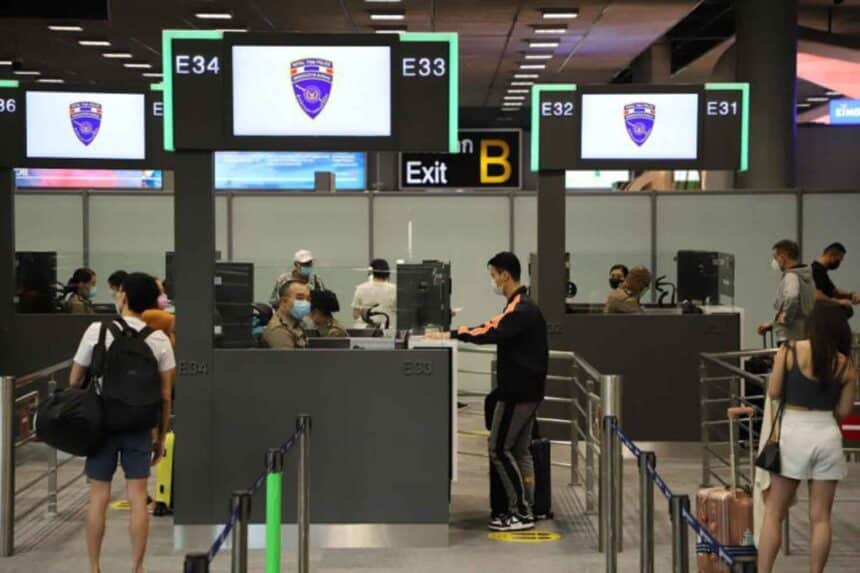
BANGKOK — Thai immigration officers denied entry to 92 foreign passengers at Suvarnabhumi Airport on Nov. 12, including 45 Chinese nationals, as authorities intensified airport screening to block suspected scam network operatives posing as tourists.
Immigration Bureau spokesman Pol. Maj. Gen. Choengron Rimphadee confirmed on Nov. 14 that all 45 Chinese travelers were repatriated on return flights. The denials sparked online complaints over airport holding conditions and unverified claims of paid entry brokers, prompting an internal police probe while underscoring stricter document checks for all international arrivals.
Key Takeaways
• Border officers barred 92 passengers across multiple nationalities on Nov. 12 after they failed to verify travel plans or flagged risk indicators tied to transnational scam syndicates.
• Immigration leaders ordered an immediate investigation into social-media claims regarding transit holding areas and alleged brokers charging 18,000 yuan to bypass border checks.
• Foreign residents and tourists entering Thailand face discretionary checks for return tickets, confirmed lodging, digital arrival cards and minimum cash reserves.
Complaints and Broker Claims Trigger Inquiry
The enforcement push drew public scrutiny after a denied Chinese passenger posted videos online criticizing conditions inside an airport transit waiting area. The post also alleged that an intermediary had offered to guarantee smooth immigration clearance for a fee of 18,000 yuan, roughly 90,000 baht.
Immigration Bureau Commissioner Pol. Lt. Gen. Nopphasil Phulsawat ordered Immigration Division 2 to investigate both allegations immediately. Choengron rejected descriptions of the space as a detention cell, stating that airlines manage the short-term transit lounges for passengers awaiting return flights, where travelers retain mobile phone access and basic amenities. He also dismissed the broker claim as unsubstantiated, warning travelers against online fraudsters claiming false influence over border officers, and urged anyone holding concrete evidence to submit it to investigators.
Regional Scam Crackdowns Drive Tighter Border Gatekeeping
Thursday’s rejections reflect a broader structural shift in Thai border enforcement during 2026 rather than an isolated airport sweep. Following regional law enforcement operations against cyber-scam compounds along the Myanmar and Cambodian borders, Thai police warned that displaced syndicate recruiters and money-laundering facilitators have attempted to relocate into Bangkok and coastal resort hubs using visa-free tourist entries.
To counter that trend, authorities rolled out a strict “No Entry, No Stay, No Escape” border policy, linking airline passenger data with national police watchlists to screen out high-risk arrivals. Choengron noted that out of more than 4.87 million Chinese arrivals recorded since Jan. 1, officers have refused entry to 12,880 individuals—about 0.26%—applying identical screening standards across all nationalities.
What Travelers and Foreign Residents Must Carry at the Border
For legitimate tourists, business travelers and returning expatriates, heightened scrutiny means front-line officers are exercising wider discretion at air and land checkpoints. Travelers who previously cleared passport control with minimal questioning may now be asked to prove their visit is genuine before receiving an entry stamp.
Under official Thai entry guidelines, visitors should keep printed or offline copies of confirmed hotel reservations, an onward or return flight ticket within their permitted stay and a completed Thailand Digital Arrival Card QR code. Officers may also require proof of living expenses—at least 10,000 baht per person or 20,000 baht per family for visa-exempt arrivals, and 20,000 baht per person or 40,000 baht per family for tourist visa holders. Long-term residents holding re-entry permits should ensure their registered residential address and visa extensions remain current to avoid secondary questioning.