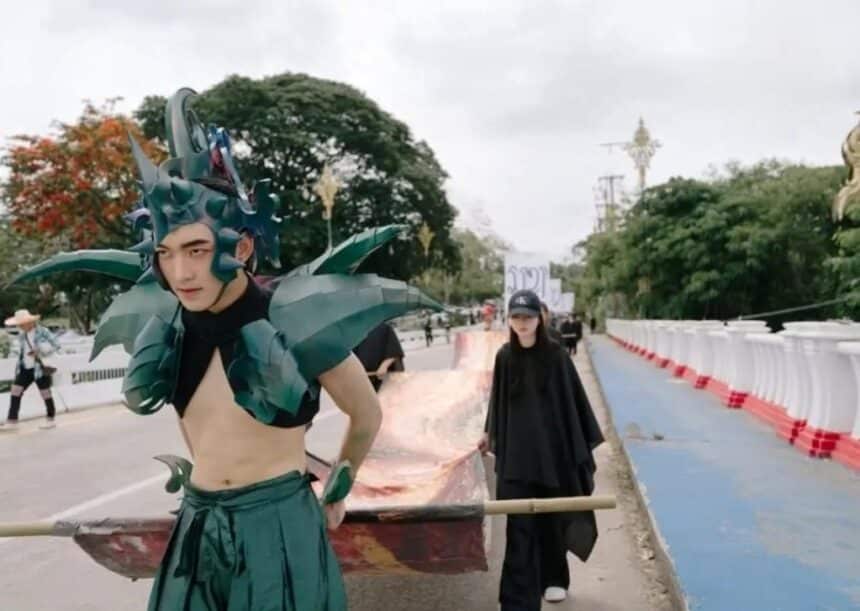
CHIANG RAI – Artists from Thailand and 10 other nations have launched a grassroots art campaign in northern Thailand to protest toxic mining runoff fouling the Kok, Sai and Mekong river basins. Operating under the banner River Resistance, the collective uses live riverside performances, photography and mixed-media exhibitions to demand that Thailand, China and Myanmar halt unregulated extraction upstream.
The project responds to worsening arsenic and heavy-metal contamination that has turned once-clear waterways murky, forced riverside villages onto bottled water and gutted local fishing incomes. Organizers staged site-specific works along the Kok River in Chiang Rai in March before bringing the multimedia exhibition to the Bangkok Art and Culture Centre in October to pressure regional policymakers.
Key Takeaways• Thai and international artists launched the River Resistance project in Chiang Rai and Bangkok to spotlight heavy-metal pollution across the Kok, Sai and Mekong basins. • Water testing and academic studies link elevated arsenic levels in northern Thai rivers to unregulated rare-earth and gold mining upstream in Myanmar’s Shan State. • Artists and river networks are urging Thailand, China and Myanmar to suspend border mining and establish transparent cross-border water monitoring. |
Turning Riverbanks Into Protest Stages
Co-curated by Chiang Rai artist Chakkrit Chimnok alongside Singapore’s Jeramy Hiah and U.S. curator Michael Barrett, the initiative frames rivers as living systems rather than industrial dump sites. Organized through Artist Home International Friendship House, the March residency gathered creators from 11 countries on the banks of the Kok River to translate scientific water-quality data into visceral public art.
Local artists also joined civic demonstrations on World Water Day and World Environment Day, staging mock funeral processions for poisoned fish to underscore ecological losses. Community networks in Chiang Rai welcomed the creative push, viewing art as a bridge to reach urban audiences who rarely see the upstream damage firsthand.
Upstream Mines Drive Cross-Border Toxicity
The artistic outcry tracks mounting scientific alarm over rapid mine expansion across the border in Myanmar’s Shan State. Following severe regional flooding in late 2024, residents noticed the Kok River never returned to its usual dry-season clarity. Subsequent sampling by Thailand’s Pollution Control Department detected arsenic levels exceeding safety thresholds across the Kok, Sai and Mekong waterways, according to investigations by HaRDstories.
Researchers at Mae Fah Luang University later confirmed elevated arsenic concentrations in urine and nail samples among residents and schoolchildren in the Kok River basin. Chemical signatures linked roughly 70% of the heavy-metal sediment to rare-earth extraction, an industry driven by global supply chains and Chinese investment in border territories where environmental enforcement is virtually absent.
Demands for Tri-Nation Accountability
Daily life along the riverbanks has shifted sharply. Fishermen report catching fish covered in skin blisters, while families in villages such as Ban Ruam Mit have abandoned contaminated wells to buy drinking water, according to a United Nations Development Programme report. Even local elephant camps have stopped bathing animals in the river.
Civic coalitions, including the Chiang Khong Conservation Group and the People’s Network to Protect the Kok, Sai, Ruak and Mekong Rivers, have paired the artists’ exhibitions with formal petitions to Thai officials and foreign diplomats. They are pressing Bangkok to suspend mineral imports tied to unregulated mines and demanding joint, transparent cleanup action from Thailand, Myanmar and China before heavy metals permanently taint the Mekong basin.
Trending News:
Deputy Minister Visits Chiang Rai to Probe Myanmar Toxic Mines
Thailand Weighed Down By Toxic Rivers: New Curbs Planned