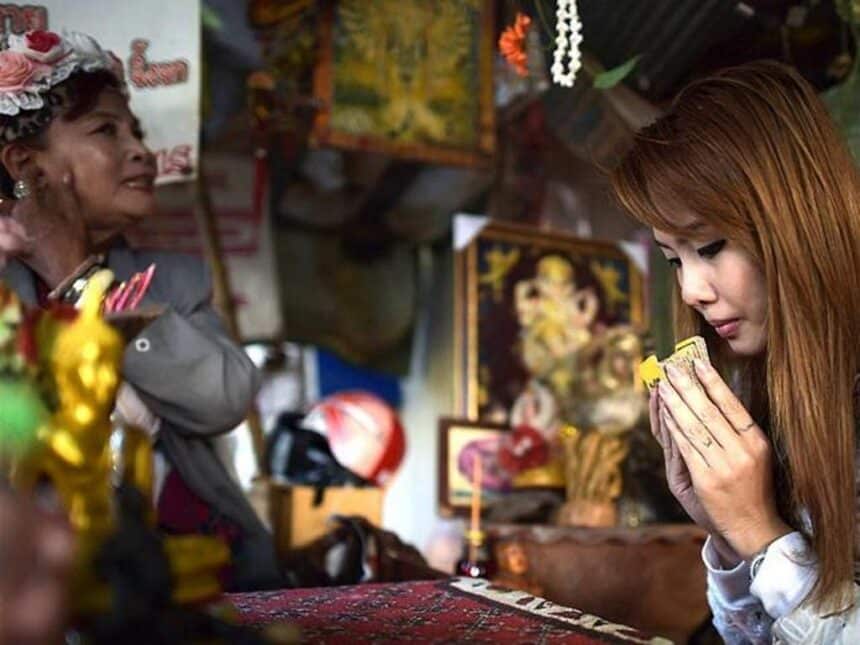
A flower garland at a shrine or a family choosing a special date for a wedding may catch your eye when you first live in Thailand. These customs can reflect personal beliefs, family traditions, or regional practices, so there’s no single list of rules every Thai person follows.
As an expat, you don’t need to memorize every superstition. A little curiosity and simple gestures, like leaving shrine offerings undisturbed and asking politely when you’re unsure, go a long way. Start with the spirit houses you may see outside homes and businesses, and what respectful observation looks like.
Key Takeaways
- Thai spirit houses, often called san phra phum, honor guardian spirits; families and businesses may leave food, flowers, incense, or drinks.
- Offerings and routines vary by household, so don’t assume red soda or a particular ritual is required. Deutsche Welle’s report on spirit houses explains their role in seeking blessing and protection.
- Treat shrines as active religious spaces. Don’t touch, move, sample, or add offerings without permission.
- At private homes or businesses, ask before approaching closely or taking photos; quiet observation is enough. See Thai spirit house customs and offerings for visitor guidance.
- Customs around lucky dates, numbers, and protective objects differ, so ask politely rather than treating any belief as universal.
Thai Superstitions Every Expat Should Know
Spirit houses are among the most visible signs of local spiritual practice in Thailand, but their presence doesn’t mean every Thai person holds the same beliefs. These shrines are part of living traditions, not simply decorative objects, and customs vary between households and businesses.
Why homes and businesses keep spirit houses
A spirit house, often called a san phra phum, may honor a guardian spirit associated with the land. Some homes and businesses also keep a separate shrine for local or ancestral spirits. The arrangement and terminology can differ by place, so it’s best not to assume every shrine has the same purpose.
Beliefs about spirits can exist alongside Buddhist and other religious practices. People may maintain a shrine to show respect or ask for protection and good fortune, while others may take part in the custom for family or community reasons. As Deutsche Welle’s report on Thai spirit houses describes, offerings can also express gratitude when a wish is answered.
Offerings vary. They may include flowers, incense, water, fruit, rice, sweets, prepared food, or drinks. Red soda is one familiar example, not a required offering or a custom followed by everyone. Some households tend their shrines regularly, while others follow different routines or mark particular occasions. For more context on the spirits and traditions associated with these shrines, see Thai spirit houses and ghost folklore.
How to behave respectfully near a shrine
Treat a shrine as an active religious or household space, even when it stands beside a road or outside a business. Observe without disrupting the people who maintain it. In particular, don’t touch, move, climb on, or remove the shrine or its offerings. Food and drinks left there aren’t for visitors to sample.
If you’d like a close-up photo, ask first, especially at someone’s home or workplace. Otherwise, give the shrine some room and avoid blocking people who may be tending it. Visitors generally aren’t expected to pray or leave an offering; watching respectfully is enough.
These gestures are good etiquette, not a way to avoid bad luck. If a host invites you to participate, follow their lead. When no invitation is offered, a polite pause and unobtrusive observation are appropriate.
Everyday Thai Beliefs About Luck, Numbers, and Timing
Ideas about luck can shape everyday choices in Thailand, but beliefs vary by person, family, and community. A number or date that feels auspicious to one household may mean little to another, so treat these customs as personal practices rather than national rules.
Why nine can be seen as a lucky number
Many people consider nine lucky, and some associate it with progress and success. That preference can influence practical choices, such as selecting a phone number or vehicle-registration number with a nine. Some couples may also choose a ceremony time that includes nine; Thai wedding traditions offer examples of how the number can feature in celebrations.
Still, there is no single Thai system for assigning meaning to every number. Personal associations and context matter, and preferences differ. A number that someone values may reflect family history or an individual belief, rather than a rule shared across the country. You may see lucky-number choices mentioned alongside lottery play, but they shouldn’t be taken as a reliable way to predict an outcome. For context, see these practical Thai lottery tips.
Choosing dates for weddings, openings, and ceremonies
Some families consult a fortune-teller or another practitioner when choosing a date for an important event. This may include a wedding, a shop opening, or the installation of a spirit house. A family might also consider a meaningful time of day, then plan the ceremony around it.
However, not everyone seeks advice or follows the same calendar. Choices can depend on family preferences, the practitioner consulted, and the event itself. If a Thai friend or colleague mentions an auspicious date, ask what it means to them instead of assuming the practice applies to everyone.
Treat weekday taboos as local sayings, not hard rules
You may hear the saying that getting a haircut on Wednesday brings bad luck. Treat it as a reported folk belief, not a universal Thai custom or a rule followed by every salon or household. Everyday beliefs can vary, and a familiar saying doesn’t tell you what a particular person believes.
When you’re unsure, ask politely and let the other person explain their own practice. That approach is more respectful than correcting someone or assuming a superstition applies across Thailand.
Small Etiquette Choices That Show Respect
Thai etiquette includes small gestures that can make shared spaces feel more comfortable. One common idea is that the head is the body’s highest, most respected part, while the feet are its lowest. These are useful cultural guidelines, not guarantees that everyone will react the same way. Context matters, and temples call for particular care.
Keep your feet pointed away from people and sacred images
Pointing your feet toward someone, a Buddha image, or a shrine may seem disrespectful because feet are regarded as the body’s lowest part. In temples, sit with your legs folded to one side, or choose another position that keeps the soles of your feet turned away from sacred images and people. Avoid stretching your legs toward a shrine, even if you’re resting nearby.
The same courtesy applies at home or in public. Don’t use your foot to point at something, push an object toward another person, or move belongings out of your way. Instead, use your hand or ask someone for help. For more guidance on temple visits, see the Tourism Authority of Thailand’s advice on sacred-site etiquette and this guide to respectful seating and foot etiquette in temples.
Ask before touching someone’s head
Because the head is often treated as a respected part of the body, avoid ruffling a child’s hair or touching another person’s head unless you know the gesture is welcome. A playful intention doesn’t always make the contact feel comfortable, especially with someone you don’t know well. The same caution applies at work and in public, where familiarity may be limited.
Relationships and settings vary, so follow the other person’s lead rather than assuming one rule fits every interaction. If you touch someone’s head by mistake, a brief, sincere apology is usually enough. A long explanation or public fuss can draw more attention to a minor misstep than it needs.
These gestures are simple ways to show consideration, especially when you’re a guest in someone’s home or visiting a temple. When in doubt, keep your feet tucked away, ask before touching, and take your cue from the people around you.
Protective Amulets, Sak Yant, and Beliefs About Spirits
Protective objects and tattoos can carry personal, spiritual, and cultural meaning in Thailand. Their presence may offer a glimpse of someone’s practice, but it doesn’t tell you exactly what they believe or why they chose it.
What an amulet may mean to its wearer
Some people wear Buddha images or other amulets, while others place them in a home or car. They may be connected with protection, good fortune, or a personal devotion. The meaning can vary with the object and the person who keeps it, so avoid assuming that every amulet has the same purpose.
Beliefs about spirits also sit alongside Buddhist practices in many settings. A protective object might relate to a particular concern, a family custom, or an individual’s understanding of spirits. For more context, see these Thai ghost beliefs and stories.
If you notice an amulet on someone’s dashboard or around their neck, treat it as personal. Don’t touch it or ask the wearer to explain it unless the conversation feels welcome. Most importantly, don’t infer someone’s religion or level of belief from a single object.
Understand sak yant beyond its appearance
Sak yant is a traditional form of tattooing associated with protective designs, prayers, and, in some practices, behavioral observances. The designs and their meanings can be connected to religious or local spiritual traditions, but interpretations and guidance vary by practitioner and wearer. UNESCO ICHCAP’s overview of sak yant offers background on the tradition.
A tattoo’s appearance alone won’t tell you what it means to the person wearing it. Some wearers may follow guidance linked to their tattoo, while others may understand or practice the tradition differently. Don’t assign a particular religion, set of restrictions, or motive to someone based on their ink. For more on its spiritual significance and practical considerations, see Sak Yant tattoos in Thailand.
For expats, respectful curiosity matters more than trying to interpret the symbols. If someone chooses to share the story behind an amulet or tattoo, listen without treating the object as a costume or a novelty. When they don’t offer an explanation, let their privacy guide you.
Ghost Stories and Household Sayings to Hear With an Open Mind
Ghost stories and household sayings can come up in everyday conversation, but they don’t describe beliefs shared by every Thai person. Treat them as stories or customs that some people observe, rather than rules you need to enforce or facts you need to accept.
Whistling at night and other reported beliefs
One saying warns that whistling at night may call spirits. Another belief some people hold is that sleeping with your head facing west is inauspicious, because westward orientation can be associated with death and the dead. These are reported beliefs, and people vary in whether they take them seriously or follow them at home. A discussion of the nighttime whistling belief offers more context, while Thai beliefs about household and forest spirits show how varied spirit stories can be.
You may also hear local ghost stories tied to a house, road, or neighborhood. Listen without assuming that one account represents all Thai folklore. A story someone shares for fun may not reflect a firm personal belief, and a family custom may matter deeply to that household while remaining unfamiliar to others.
Ask with curiosity instead of making assumptions
If someone mentions a custom, ask about their own experience rather than asking them to speak for the whole country. For example, you might say, “Does your family follow that practice?” or “I’ve heard people say whistling at night can call spirits. Is that a belief in your household?” Then let them decide how much they want to explain.
Avoid mocking the belief, testing it as a joke, or staging photos around a shrine or spiritual practice. Also, don’t treat one person’s answer as representative of Thailand. Families, regions, and individuals differ, and some people may not follow a custom at all. For wider guidance on respectful conduct, see these Thai etiquette rules for visitors.
Frequently Asked Questions
Thai customs around spirits and luck vary by household, region, and personal belief. These answers offer practical guidance for common situations, but your host’s preferences should always take priority.
Does every Thai home or business have a spirit house?
No. You may see spirit houses outside homes, shops, hotels, and other buildings, but they aren’t universal. Some people maintain one as part of a household or business practice, while others don’t. Even when a shrine is present, its purpose and upkeep can differ.
Do I need to pray or wai at a spirit house?
No. Visitors generally aren’t expected to pray, wai, or leave anything at a spirit house. If you’re invited to join a ritual, follow your host’s lead; otherwise, quiet and respectful observation is enough. For similar care around sacred spaces, see this Wat Saeng Kaew Phothiyan temple guide.
Can I leave an offering if I want to show respect?
Ask the person who maintains the shrine before leaving anything. Offerings are chosen as part of a household or business practice, so an unexpected item may not fit that routine. The types of offerings can vary; Deutsche Welle’s report on spirit houses describes examples such as flowers, fruit, and drinks.
Are spirit houses part of Buddhist practice?
Spirit-house customs can exist alongside Buddhism, but they shouldn’t be treated as a single Buddhist rule. Thai spiritual practices draw on different traditions, and individuals may relate to them in different ways. A shrine alone doesn’t tell you what its keepers believe.
Does neglecting a spirit house cause bad luck?
Some people may believe that caring for a shrine helps maintain goodwill or protection, but there’s no single belief shared by everyone. As a visitor, you don’t need to judge how often offerings appear or whether a shrine looks recently tended. Leave its care to the people responsible for it.
What should I do if I accidentally offend someone?
Apologize briefly and sincerely, then follow the other person’s guidance. A small mistake doesn’t call for a long explanation or a joke at someone else’s expense. If you’re unsure how to act next time, ask politely and let your host explain what feels appropriate.
Conclusion
Thai superstitions and customs vary by household, region, and personal belief, so no fixed list can explain what every Thai person follows. The simplest habits are to leave shrines undisturbed, mind where you point your feet and whom you touch on the head, and ask politely when you’re unsure.
Above all, respectful curiosity matters more than memorizing rules. Listening to how a custom matters to the person in front of you is a thoughtful way to be a guest in Thailand.