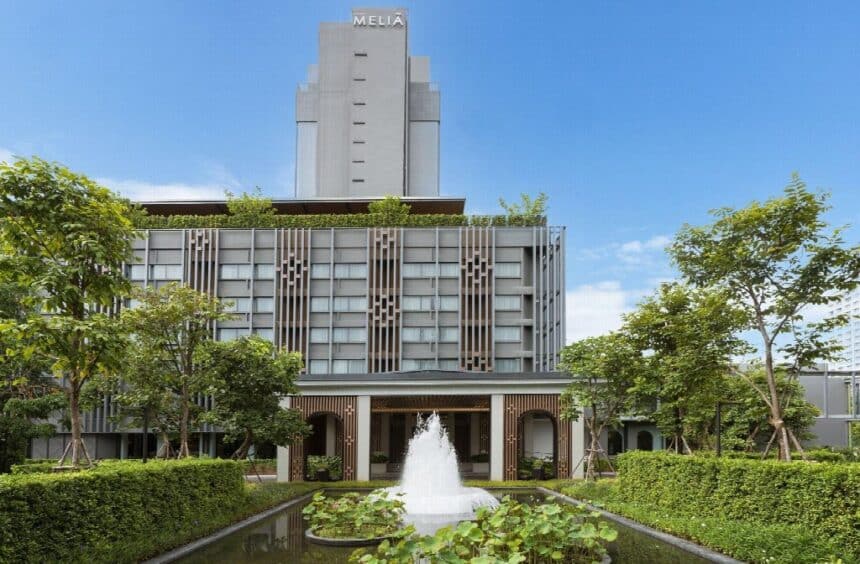
CHIANG MAI – Before a Bo Sang umbrella reaches a painter, its paper has been mulberry bark, soaked, beaten to pulp and pressed into sheets, and its frame has been cut from bamboo by a different household. In the village east of Chiang Mai, each stage belongs to a different workshop, so one visit can follow an umbrella from bark to brushstroke. From Meliá Chiang Mai the drive is 10 km, about 18 minutes by car on Google Maps.
That makes a day trip to Bo Sang Umbrella Village an easy half day from a hotel in the Night Bazaar district, with the rest of the day left for the pool or the city. The drive, the workshop hours and the January festival decide when to go, and the same umbrella motif turns up again inside the hotel.
How to Get to Bo Sang
Google Maps gives three routes from the hotel to the Borsang Umbrella Community Enterprise: 10.0 km via Route 1006 in about 18 minutes, 12.0 km via Route 1317 in 19, and 14.7 km via Routes 1141 and 1317 in 20. Traffic on Route 1006 varies through the day, so leave a margin on the way back. Taxis and app-booked cars both work, and the hotel’s concierge can advise on transport.
Bo Sang sits about 9 km east of the Old City on Sankamphaeng Road. Workshops generally open daily from roughly 8am to 5pm with no entry fee, so a departure after breakfast still catches most of the working day. Going on a weekday matters more than the hour: the village is quieter and the workshops are in full production.
Who Makes a Bo Sang Umbrella?
Each umbrella is assembled from parts made by different craftspeople. The Umbrella Making Centre followed in 1977 with 12 craftspeople, and villagers had already formed the Bo Sang Umbrella Making Cooperative in 1941, dividing paper-making, frame-building, painting and inspection between households. Workshops line the main street, so each stage can be watched in a single stop.
The paper, known as sa or saa, is made from mulberry bark. Local legend credits a monk, Luang Por Inthaa, with spotting a decorated umbrella from Burma and realising the same materials grew in his own village. Whatever its exact age, the craft is in daily use today, and visitors can try making a sa paper umbrella themselves.
Umbrella Details at the Hotel
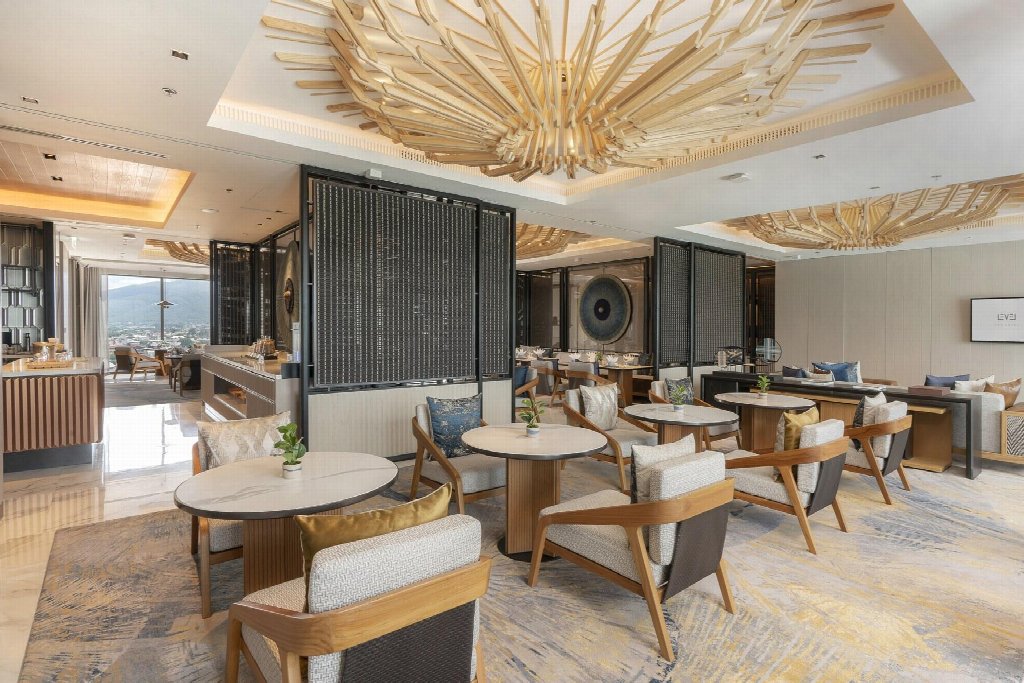
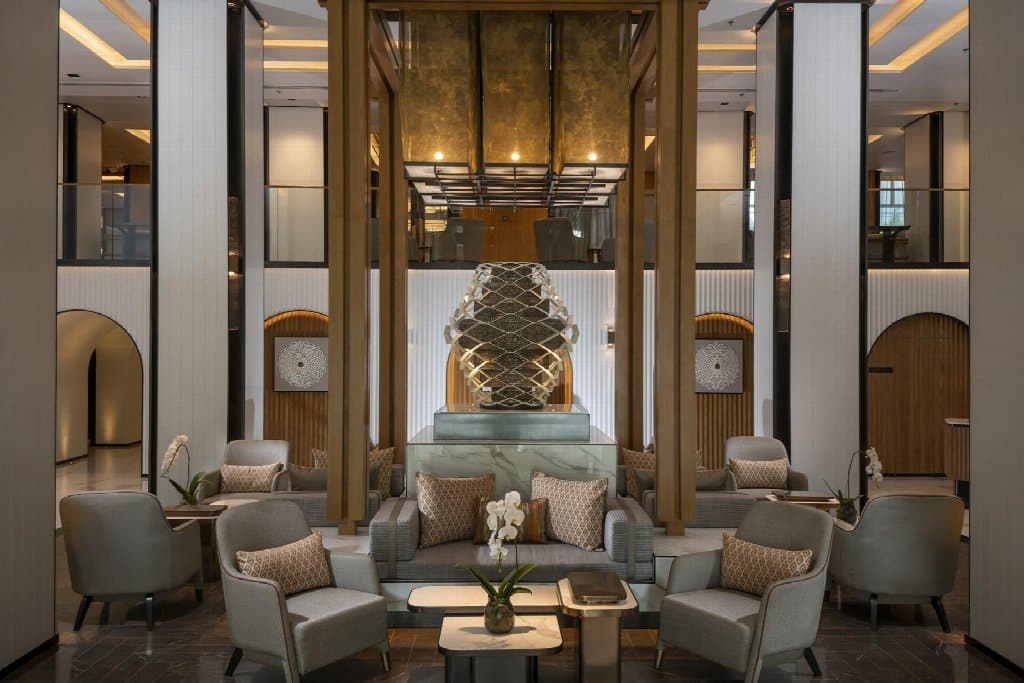
The Bo Sang parasol is also part of the hotel’s design story. Meliá Chiang Mai’s Lanna-inspired interiors borrow the parasol as a motif, alongside event spaces called the Yi Peng Grand Ballroom and the Khom Room. The Level Lounge on the 21st floor, for one, sits under an umbrella-rib ceiling, and the motif itself comes from the village 10 km down the road.
Families with children aged 4 to 12 can carry the theme further at The Kidsdom, which runs umbrella painting workshops alongside game rooms and Montessori-inspired toys. Ask reception which days the workshop runs.
Plan for a Morning Visit
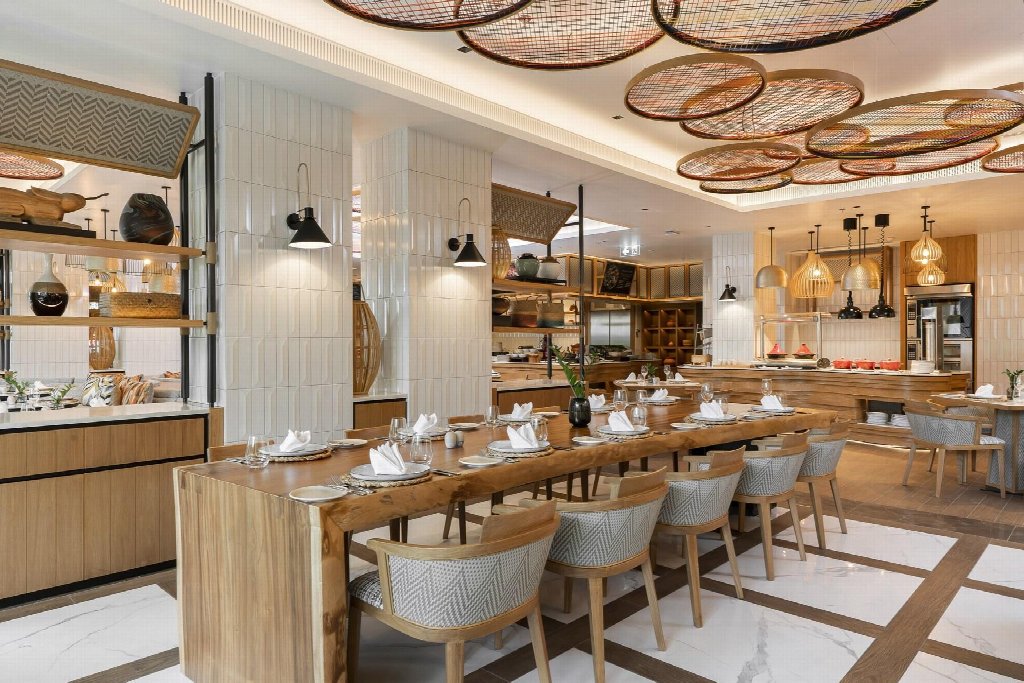
Breakfast at Laan Na Kitchen from 6am, a car from the front door around 9am and arrival at Bo Sang by about 9:20 gives the workshops a full morning. Two hours is enough to follow paper, frame and painting through the main street and try the craft yourself. Be back on Charoen Prathet Road by about 1pm.
The same plan works on a travel day: check-in is at 3pm and check-out at noon, and the hotel offers luggage storage, so bags can wait at the front desk and the village can fill the hours before check-in or after check-out.
Lunch can be a quick one at Ruen Kaew Lounge, next to Laan Na Kitchen, which is open from 10am to 10pm with crispy fried calamari and pizzas from about 180 THB (roughly US$6), so nobody needs to book. Confirm the current menu and prices on the day.
On the way out, stop at THE GALLERY in the lobby. The social enterprise space sells handcrafted products made by local artisans and community enterprises, a useful second look if the village’s own shops were crowded or the umbrellas would not fit in a suitcase.
When Is the Bo Sang Umbrella Festival?
The Bo Sang Umbrella Festival, run by the village with the Tourism Authority of Thailand since the 1980s, is held on the third weekend of January. The expected 2027 dates are 15 to 17 January, with the organisers confirming exact dates a couple of months ahead. Festival weekends bring crowds that a normal weekday does not.
Craft-minded travellers can pair Bo Sang with San Kamphaeng, a little further along the same road, where silk and cotton weaving, wood carving, celadon ceramics and lacquerware sit along what locals call the handicraft highway. The guide to villages in Chiang Mai covers both. Leave San Kamphaeng for a second day: workshops at each stop reward a slow look.
Pool, Spa and Room After the Trip
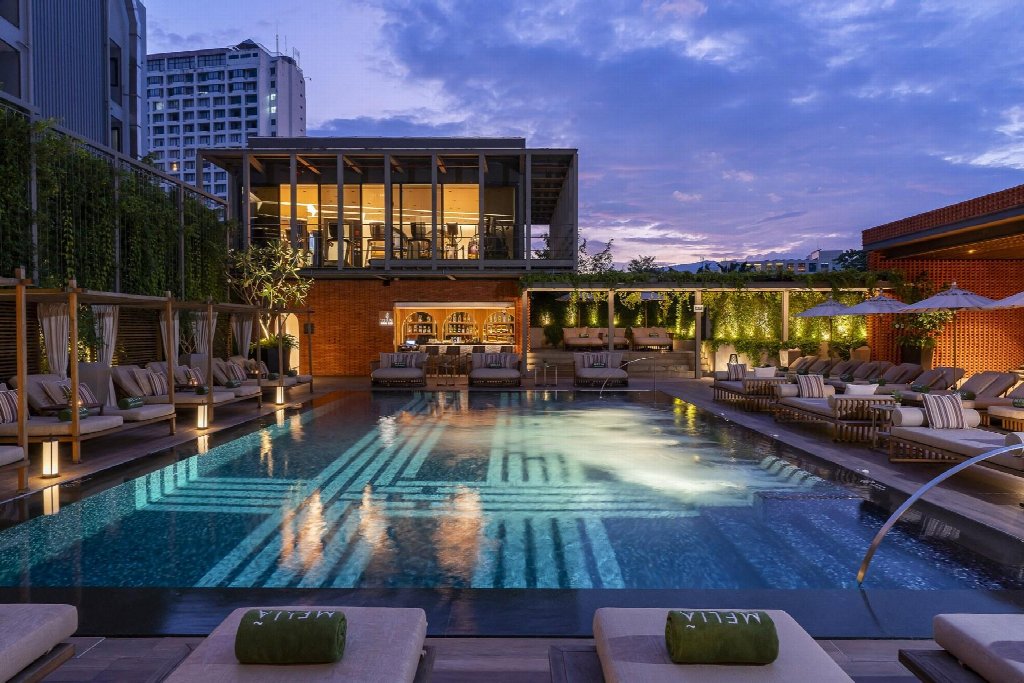
Back from the village, the outdoor pool stays open until 7pm from November to January (9pm from February to October), and Tien Pool Bar opens at 10am. After sunset there is MAI The Sky Bar, at the top of the tower, which opens its doors at 5pm from September to March.
The spa is the other reason to be back by mid-afternoon. Behind the doors of YHI Spa are seven private rooms plus a steam and sauna suite, so a treatment fits between the drive back and sunset; ask when booking whether a spa offer applies to the stay.
A day trip does not need a large room. The 30 sqm Meliá Room, with a double bed or two singles and a city view, is enough for a base that sees the guest mostly at breakfast and bedtime.
Bo Sang works best as one of several day trips from a Chiang Mai base, with the pool and rooftop waiting at the end of each. Book a standard room, keep the budget for parasols, and plan the village for a weekday.
Rooms, transport advice and current offers are on the front desk line at +66 (0) 52 090 699.