CHIANG RAI — Thai officials in Mae Sai, Chiang Rai are rushing to complete a real-time arsenic filtering system at a irrigation project by Dec. 25, aiming to protect more than 30,000 rai (11,860 acres) of rice paddies from toxic upstream river pollution.
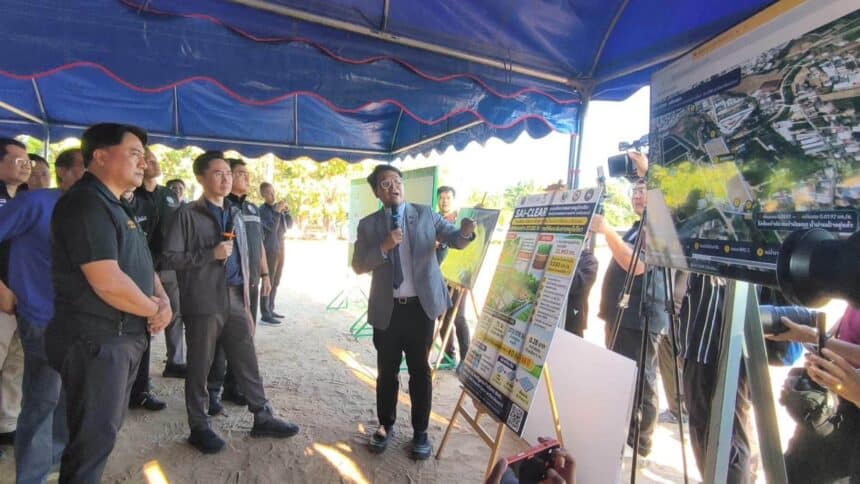
Deputy Prime Minister Yodchanan Wongsawat and Deputy Agriculture Minister Piyarat Tiyapairach inspected the Ban Mueang Daeng irrigation site in Chiang Rai province on Nov. 29 alongside Gov. Chucheep Phongchai.
Built on more than two years of research led by academic Thanapol and his team, the pilot system targets fine arsenic-laden silt before contaminated water enters farm canals. If the trial succeeds, authorities plan to install four more units along the Sai and Kok rivers.
Key Takeaways• Officials aim to finish the first smart sediment trap at Ban Mueang Daeng before Dec. 25 to shield 30,000 rai of farmland. • The system separates fine arsenic-contaminated silt from irrigation water, bags the toxic waste, and sends it to industrial treatment plants. • A successful rollout will trigger immediate expansion to four additional sites on the Sai and Kok rivers. |
How the Smart Trap Filters Fine Silt
Standard irrigation basins at Ban Mueang Daeng capture heavy gravel and coarse sand, leaving microscopic arsenic particles suspended in the water flowing toward local farms. Engineers are installing a specialized sub-unit at the MC1 intake point to intercept that fine sediment, dewater the sludge, and seal the concentrated waste inside heavy-duty bags before releasing clean water back into the canal network.
Automated sensors track contamination levels around the clock and display live readings to local residents. “We call this a smart sediment trap because it monitors contaminant levels continuously for the public to see and starts collection immediately whenever readings exceed safety limits,” Yodchanan said during the site visit. He added that sealing and hauling away the bagged sediment prevents seasonal floodwaters from washing trapped toxins back into nearby fields.
Cross-Border Mining Drives Urgent Action
The engineering push comes amid an escalating water crisis across Chiang Rai. Earlier in November, authorities suspended tap water supplies to 14 villages in Mae Sai after tests showed arsenic levels nearly 30 times above national safety limits. Thai officials and university researchers traced the heavy-metal contamination to unregulated rare-earth and gold mining operations across the border in Myanmar’s Shan State, where rivers flow south into northern Thailand.
Diplomatic talks with Myanmar and China have yielded preliminary agreements for joint river sampling, yet halting upstream mine operations in territory controlled by armed groups remains slow. By intercepting contaminated silt directly at tributary irrigation gates rather than waiting for main-river cleanup, Bangkok hopes to protect the upcoming rice harvest and reassure buyers worried about regional crop safety.
Waste Disposal and River Expansion Plans
Local villagers raised concerns about whether toxic sludge pulled from the canal would be dumped near their communities. Yodchanan said all bagged sediment will be transported out of Mae Sai, treated under standard protocols used for waterworks filter cake, and transferred to certified industrial facilities for safe reuse.
Rather than building directly inside the fast-flowing main channel first, engineers chose the Ban Mueang Daeng tributary intake to prove the system’s efficiency under controlled conditions. Once the Dec. 25 milestone is met, teams will deploy two additional traps along the Sai River and two on the Kok River.