
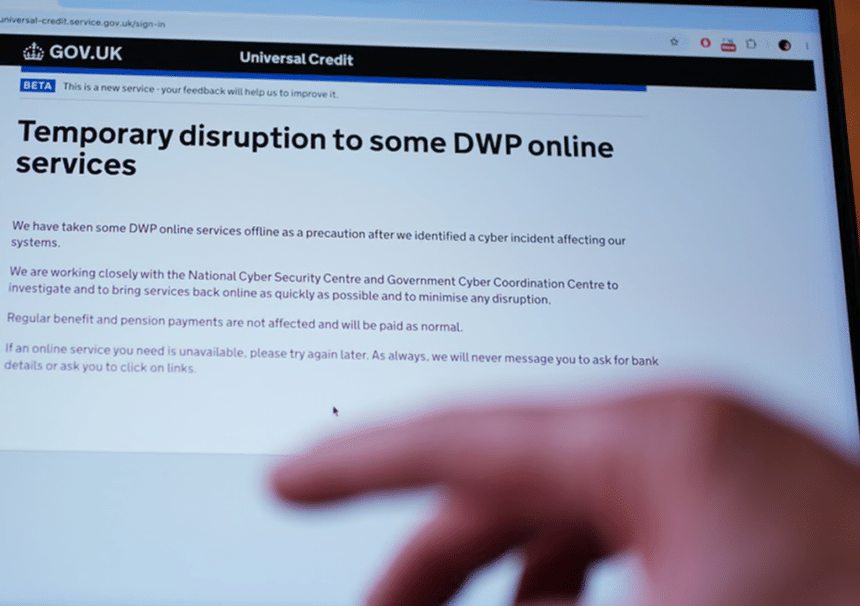
LONDON — A targeted cyberattack has knocked Britain’s primary online pension and welfare system offline since Nov. 26, blocking millions of claimants from managing accounts or submitting new digital applications. Department for Work and Pensions officials shut down the public portal late Thursday after detecting unauthorized attempts to breach internal networks.
Work and Pensions Secretary Pat McFadden confirmed Saturday that investigators found no evidence hackers extracted personal or banking records, though engineers have yet to set a restoration timeline. Scheduled pension and benefit transfers continue uninterrupted, while British retirees living abroad—including thousands across Thailand—face heightened warnings over opportunistic phishing emails.
Key Takeaways• Britain’s online pension and benefits portal remains offline following a Nov. 26 cyberattack, with no confirmed restart date. • Work and Pensions Secretary Pat McFadden said no personal data was leaked and pre-approved benefit payments remain on schedule. • U.K. retirees in Thailand and worldwide are urged to ignore unsolicited emails or texts requesting bank verification. |
Portal Shutdown Halts New Digital Claims
Security teams isolated the public-facing system after spotting anomalous network traffic late Thursday night. Within hours, access to state pension forecasts, Universal Credit journals and disability benefit portals went dark across Britain and overseas.
Speaking to reporters in London, McFadden acknowledged public anxiety over stalled applications but stressed that automated clearing houses process recurring payouts days in advance. Existing recipients will see funds land in their bank accounts on time.
“We don’t believe any delays like that are to do with this cyberattack,” McFadden said, responding to isolated complaints of missing Friday deposits. Department officials also suspended missed-appointment penalties so claimants locked out of online journals will not face benefit sanctions while engineers rebuild access.
Specialists from the National Cyber Security Centre and the Government Cyber Coordination Centre joined internal technicians over the weekend to trace the intrusion vector. Downing Street said investigators have found no sign the attackers breached other ministries, though officials declined to name suspected culprits.
Legacy Infrastructure and Rising Cyber Threats
The outage exposes long-standing vulnerabilities inside Britain’s largest public-spending ministry, which distributes more than 250 billion pounds annually to roughly 20 million citizens. Parliamentary watchdogs have repeatedly warned that aging legacy databases bolted onto modern web interfaces create prime targets for state-backed hackers and criminal syndicates.
Earlier this month, the department’s top civil servant told lawmakers that digital resilience was the single risk keeping senior leadership awake at night. That warning followed a turbulent autumn across British networks, including recent data intrusions at major retail chains and government advisories flagging elevated Russian sabotage risks against U.K. infrastructure.
In an investigative briefing reported by The Guardian, department insiders noted that while internal caseworker terminals were restored Friday, halting the public portal created a manual processing backlog running into tens of thousands of urgent claims. Staff worked through the weekend to clear emergency hardship requests by phone, underscoring how heavily Britain’s welfare safety net now relies on uninterrupted cloud uptime.
Scam Alerts Target British Expats in Thailand
Half a world away, the digital blackout carries immediate risks for the estimated 50,000 British nationals living in Thailand, many of them retirees dependent on monthly U.K. state pensions. Expats rely on online portals to update Thai residential addresses, report changes in marital status and submit annual life-certificate verifications required to keep overseas payments flowing.
Cybercrime analysts warn that high-profile government outages reliably trigger waves of secondary phishing campaigns. Fraudsters exploit confusion over frozen accounts by sending urgent emails or text messages disguised as official department notices, urging pensioners to click links and re-enter banking credentials to avoid payment suspension.
In its official disruption notice, the department emphasized that staff will never request passwords, bank details or security codes via email or text message. British pensioners in hubs such as Chiang Mai, Pattaya and Phuket who require urgent account assistance are advised to call the International Pension Centre directly using verified telephone numbers rather than responding to unsolicited digital prompts.