
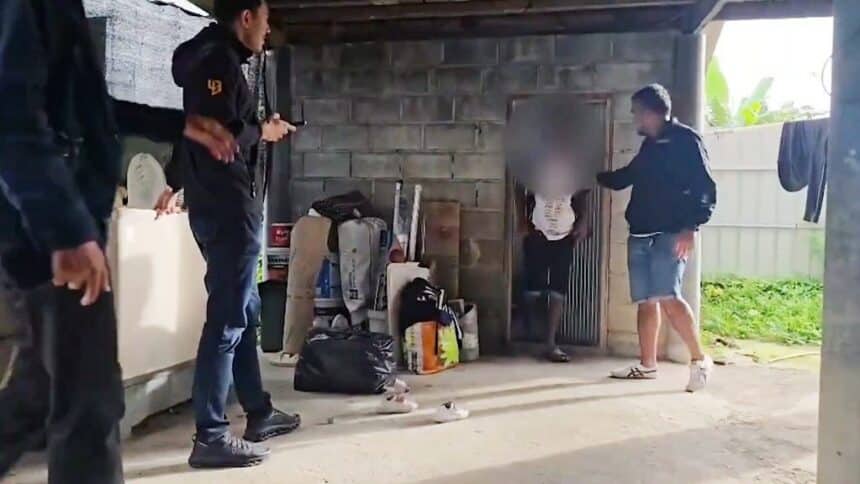
HAT YAI — Border patrol officers in southern Thailand staked out an outdoor bathroom for nearly 30 minutes before arresting a 22-year-old online fraud suspect who was busy scrolling through short videos inside.
Police identified the suspect only as Chakkraphan, who was wanted on a 2024 warrant from central Thailand after victims lost tens of thousands of baht in an online shopping scam. His arrest underscores how low-paid local recruits keep Thailand’s multi-billion-baht cybercrime networks running, even as authorities step up nationwide crackdowns.
Key Takeaways
- Officers from Border Patrol Police Division 43 waited outside a Hat Yai home’s bathroom for half an hour while the suspect watched TikTok.
- The 22-year-old suspect admitted selling his bank account for 300 baht to scammers who defrauded online buyers out of tens of thousands of baht.
- The arrest highlights Thailand’s ongoing battle against mule bank accounts, which fuel hundreds of daily consumer fraud cases nationwide.
A Half-Hour Standoff Outside the Bathroom
Officers from the narcotics suppression unit of Border Patrol Police Division 43, led by Police Capt. Kongkraphan Thammachat, tracked Chakkraphan to a house in Hat Yai’s Khuan Lang subdistrict on Nov. 26, according to Khaosod English. Surveillance teams watched the property from early morning before spotting him enter the outdoor toilet.
Then they waited. And waited. Audio from a mobile phone echoed through the door for almost 30 minutes as officers stood guard outside. Investigators later confirmed the suspect was browsing TikTok while taking his time on the toilet.
When Chakkraphan finally unlatched the door and stepped out buttoning his trousers, officers immediately identified themselves and served an arrest warrant issued by the Nakhon Sawan Kwaeng Court in April 2024. He faces charges of public fraud and entering false information into a computer system.
Mule Accounts Fuel Thailand’s Scam Economy
During interrogation, Chakkraphan told investigators he had sold his personal bank account to another person for just 300 baht (about $9). He also admitted he knew about the fraud accusations after ignoring earlier police summonses from Mueang Nakhon Sawan Police Station.
His case exposes the lowest rung of a sprawling underground economy. Criminal syndicates rely heavily on rented or purchased Thai bank accounts—known locally as mule accounts—to launder stolen cash within seconds of a fraudulent online sale. While masterminds operate from call centers across regional borders, young cash-strapped locals in provincial hubs like Hat Yai often supply the financial pipelines for pocket change.
The scale of the damage across Thailand remains severe. People in Thailand lost nearly 9 billion baht to online scam networks during the first six months of 2026 alone across more than 170,000 reported cases. Fake e-commerce listings and undelivered goods consistently rank among the most frequent traps.