
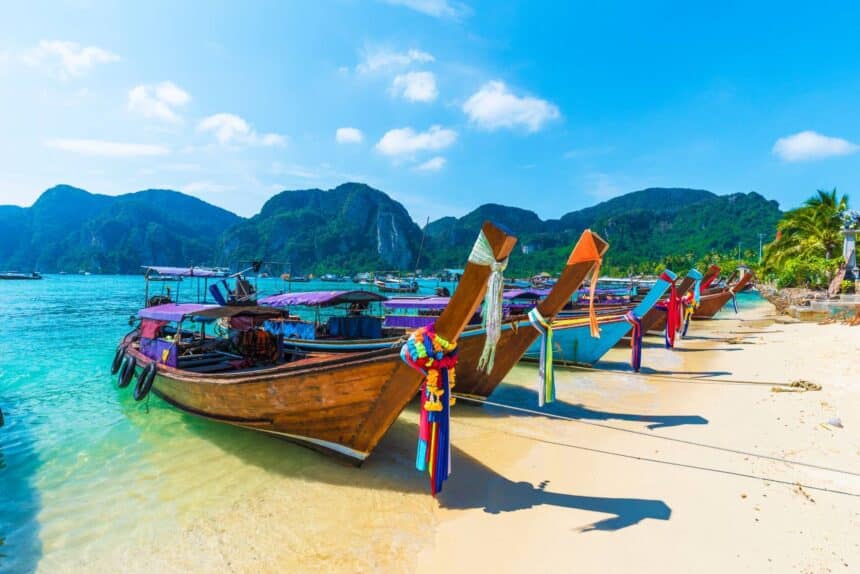
BANGKOK — Travelers planning trips to Thailand are increasingly skipping crowded resort hubs in favor of smaller, slower-paced islands, driving rapid search growth for Koh Tao, Koh Lipe, Koh Lanta and Koh Samet on digital booking platform Agoda. Company executives confirmed the shift during a late-November briefing in Bangkok, noting that Thailand remains the platform’s top overall destination heading into 2027 even as holidaymakers rethink where they spend their beach vacations.
One-third of all accommodation searches across Thailand by Asian travelers now target locations outside the country’s 10 most visited hotspots, according to Agoda’s latest travel data. While major gateways like Phuket, Pattaya and Chiang Mai still capture the highest total volume of foreign arrivals, smaller islands recorded the steepest growth rates among Thailand’s 20 most-searched destinations, signaling an immediate redistribution of tourism revenue toward secondary coastal communities.
Key Takeaways• Thailand retains its crown as Agoda’s most-booked global destination, led by steady short-haul demand from China, Malaysia, South Korea, Japan and Singapore. • Smaller islands—specifically Koh Tao, Koh Lipe, Koh Lanta and Koh Samet—posted the fastest search growth among Thailand’s top 20 destinations. • Budget awareness and crowd fatigue are reshaping itineraries, with 44% of surveyed Thai travelers planning visits to less-crowded spots and 84% capping nightly budgets at 3,300 baht. |
Short-Haul Visitors and Domestic Travelers Fuel the Shift
Akaporn Rodkong, Agoda’s country director for Thailand and Indochina, told reporters that traditional heavyweights still anchor overall arrival numbers. Yet search momentum has decisively swung toward compact islands offering clear water, coral reefs and quieter beaches without the gridlock of Phuket or Koh Samui.
Regional proximity drives much of that demand. Agoda’s top five inbound source markets remain unchanged from last year: China, Malaysia, South Korea, Japan and Singapore. Short flight times allow weekenders and repeat visitors from neighboring Asian hubs to bypass familiar tourist circuits in search of fresh coastal scenery.
Domestic holidaymakers are reinforcing the trend. According to Agoda’s 2027 Asia Travel Pulse survey, 54% of Thai respondents plan to travel within Thailand next year, and 44% say they are likely to choose emerging towns or less-crowded retreats. Cost discipline plays a central role. Roughly 84% of Thai travelers expect to spend no more than 3,300 baht ($95) per night on lodging, while 42% now pick a standout hotel or bungalow first and build their itinerary around that stay.
Why Smaller Islands Are Winning—And What It Means on the Ground
The surge in searches reflects a structural recalibration across Thailand’s coastal economy following years of rapid post-pandemic rebound. In mass-market hubs like Phuket and Koh Samui, surging airfares, dense beach clubs and strain on roads and water supplies have pushed price-sensitive and repeat visitors toward lower-density alternatives.
Geography and transport links also shape which islands capture the spillover. Koh Samet, located just a short ferry ride off Rayong province, absorbs weekend traffic from Bangkok without requiring a flight. In the Gulf of Thailand, Koh Tao continues to draw international dive travelers through high-speed catamaran connections from Chumphon and Surat Thani. Along the Andaman coast, improved ferry networks link Krabi to Koh Lanta and connect Satun’s mainland piers to remote Koh Lipe.
For local operators, rising search volume brings both opportunity and operational pressure. Agoda Chief Operating Officer Ittai Chorev noted that straightforward local licensing rules help independent, family-run guesthouses list on global booking platforms alongside major resort chains. At the same time, sudden demand spikes test waste management, freshwater reserves and marine park moorings on islands with limited land area.
Balancing Growth With Fragile Island Ecosystems
Tourism officials and local boat operators face an immediate challenge: converting digital search interest into sustainable arrivals without replicating the congestion travelers are trying to escape. National park authorities around Koh Lipe and Koh Lanta already enforce seasonal reef closures and visitor caps to protect coral habitats from anchor damage and runoff.
Chorev said Thailand’s hospitality sector remains well positioned to convert online curiosity into confirmed bookings, citing the country’s service culture and competitive room rates. Whether smaller islands can preserve their laid-back appeal will depend on how carefully local authorities manage ferry capacity, water infrastructure and reef conservation as 2027 bookings accelerate.