
CHIANG RAI — Thailand will move to block cross-border exports of mining chemicals and use forensic water testing to trace toxic heavy metals polluting the Kok River, a senior lawmaker announced Saturday following an urgent inspection by Deputy Prime Minister Yodchanan Wongsawat.
Speaking after Yodchanan met with national researchers in Chiang Rai on Nov. 22, Chiang Rai District 1 Rep. Police Capt. Thanarat Jongsuwanmanee said Bangkok is shifting from reactive monitoring to aggressive source control. The five-point strategy pairs lab-verified chemical tracing with trade pressure, National Security Council export bans and sediment containment to protect northern communities and reassure travelers.
Key Takeaways• Export Controls: Deputy Prime Minister Yodchanan Wongsawat ordered National Security Council mechanisms to halt the export of mining chemicals and raw materials from Thailand. • Forensic Tracing: Thai scientists are using high-precision mass spectrometry at Mae Fah Luang University to fingerprint upstream pollutants and back international trade and diplomatic pressure. • Local Water Status: Recent Pollution Control Department tests show river water and municipal tap water in Mueang Chiang Rai district meet safety standards, though officials warn upstream risks remain. |
Lab Forensics and Cross-Border Supply Chokepoints
Yodchanan, who also serves as minister of higher education, science, research and innovation, began his trip inside the Scientific and Technological Instruments Center at Mae Fah Luang University. There, he inspected heavy metal testing conducted on an inductively coupled plasma tandem mass spectrometer (ICP-MS/MS), an instrument capable of detecting trace toxic elements at parts-per-trillion levels.
According to Thanarat, those lab results form the backbone of the government’s first two directives. Thai officials plan to use forensic chemical signatures to trace pollutants back to specific upstream extraction sites. Armed with hard scientific data, Bangkok intends to demand accountability from operators and foreign agencies through regional forums, while weighing trade restrictions as leverage.
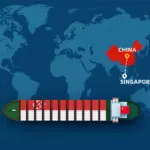
At the same time, Yodchanan directed security agencies to cut off supply lines originating inside Thailand. Officials are drafting an export ban on mining chemicals and processing inputs through the National Security Council, aiming to choke off illicit extraction operations along the border before additional waste enters the watershed.
Upstream Mining Fuels a Regional Water Crisis
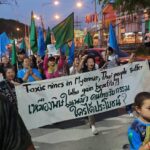
The crackdown follows more than a year of escalating alarms across northern Thailand over heavy metal contamination flowing south from Myanmar’s Shan State. Originating in Myanmar before winding more than 150 kilometers through Chiang Rai into the Mekong River, the Kok River supports farming, fisheries and municipal water systems for tens of thousands of residents.
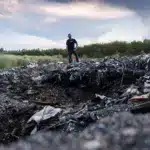
Environmental investigations and satellite monitoring have linked spikes in arsenic and lead across the Kok and neighboring Sai rivers to a surge in unregulated rare earth and gold mining in conflict-torn border zones. Those operations rely heavily on chemical leaching that washes toxic runoff straight into transboundary tributaries. Earlier university health screenings in the basin detected elevated arsenic levels in local residents, prompting urgent government plans to designate a formal 150-kilometer pollution control zone and drill alternative groundwater wells ahead of regional talks with Myanmar and China.
Sediment Containment and Public Transparency
Beyond border controls, Thanarat outlined three domestic measures targeting river recovery and public trust. Engineers building sediment-trapping weirs along the Kok River must pair those structures with dedicated toxic sludge management to prevent long-term buildup on the riverbed. The government will also enforce the polluter-pays principle and accelerate cleanup work rather than waiting for acute health emergencies.
To curb public confusion, agencies will consolidate water test results from multiple ministries onto a single public digital platform, backed by joint monitoring among officials, academics and local residents.
Latest readings from the Pollution Control Department show river water in Mueang Chiang Rai district remains within national safety thresholds, and municipal tap water is normal, Thanarat said. He cautioned that those tests reflect specific locations and sampling windows rather than the entire river course, while emphasizing that Chiang Rai remains safe and open to tourists as cleanup efforts advance.