
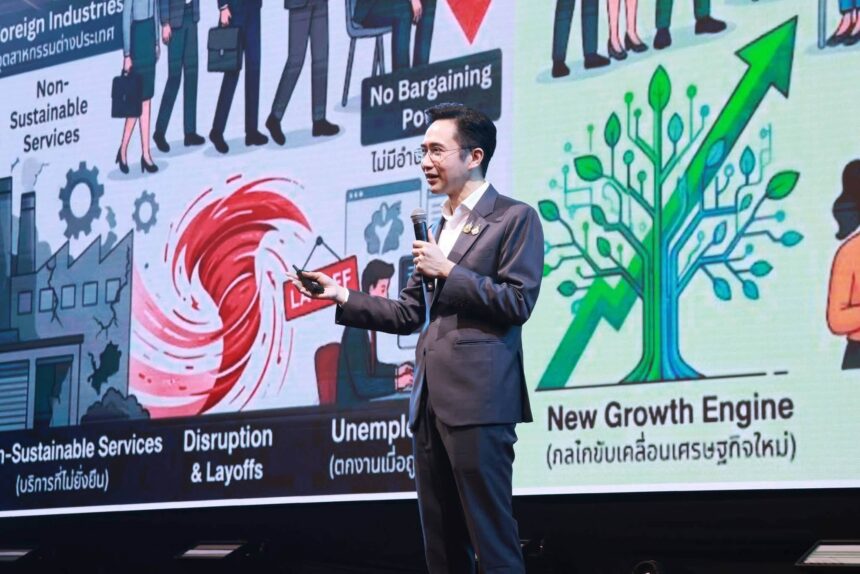
CHIANG RAI – Deputy Prime Minister Yodchanan Wongsawat urged Thai business leaders Saturday to adopt science, research and commercial innovation to keep the nation competitive in a fast-shifting global economy.
Speaking at the 44th National Chamber of Commerce Seminar at Chiang Rai Rajabhat University, Yodchanan—who also serves as minister of higher education, science, research and innovation—outlined a push to turn academic studies into high-value commercial goods. The Nov. 14 keynote drew provincial governors, executives from the Thai Chamber of Commerce and regional delegates seeking immediate strategies to boost local production efficiency and export strength.
Key Takeaways
- Deputy Prime Minister Yodchanan Wongsawat called on Thai firms to commercialize scientific research and technology to raise export and domestic competitiveness.
- The Nov. 14 keynote at Chiang Rai Rajabhat University united provincial governors, academic researchers and national business leaders under a shared growth framework.
- Hosting the 44th annual seminar showcased Chiang Rai’s conference infrastructure while channeling new tourism and business revenue into northern Thailand.
Bridging Research Labs and Factory Floors
Thai manufacturers face mounting pressure from regional rivals with lower labor costs and automated supply chains. Yodchanan told delegates that state agencies, universities and private enterprises must pool their research capacity rather than operate in isolated silos.
Chiang Rai Gov. Chucheep Pongchai joined recipients of the Golden Junk Award and provincial chamber delegates at the auditorium, where organizers framed the two-day gathering around the theme Unlocking New Growth. The event, moving laboratory prototypes into commercial production will help small and medium enterprises raise product margins, upgrade service quality and strengthen grassroots economies outside Bangkok.
Northern Border Economics and Regional Urgency
Holding the summit in Thailand’s northernmost province carries strategic weight beyond ceremony. Sitting along the Mekong sub-region borders with Myanmar and Laos, Chiang Rai serves as a primary logistics gateway for cross-border trade and agricultural processing, yet local businesses have long struggled with seasonal flooding, transport bottlenecks and upstream river contamination.
At the close of the seminar, business leaders delivered a formal policy white paper urging the government to cut operating costs, curb corruption and target at least 3% annual economic growth across five regional zones. For Chiang Rai’s hospitality and service operators, hosting hundreds of national delegates provided an immediate post-monsoon revenue lift while proving the province can handle large-scale international conventions and regional trade forums.