
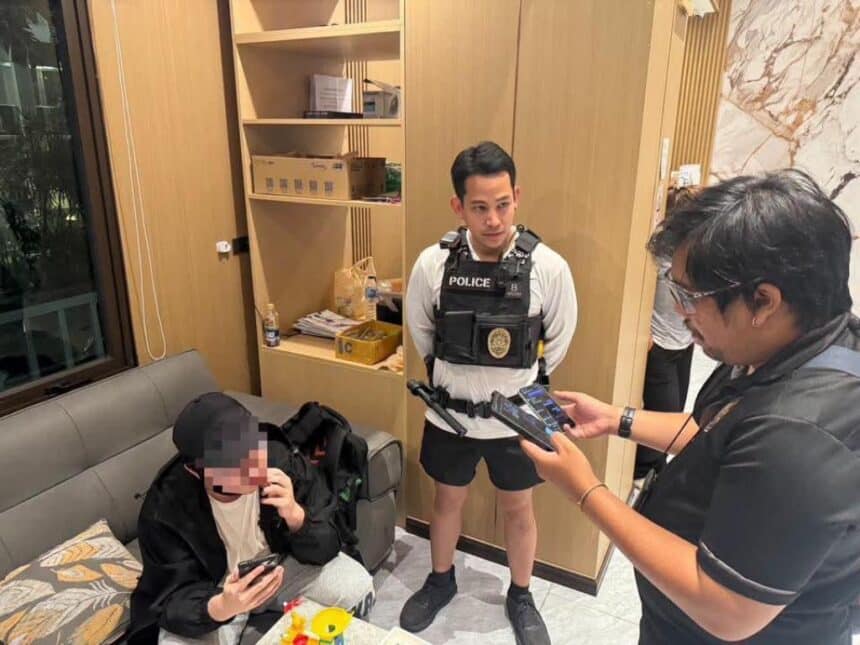
PATTAYA – Thai immigration officers rescued a 19-year-old Chinese student from a Pattaya hotel room on Nov. 14, locating him within 30 minutes of an urgent alert from Chinese police after extortionists demanded roughly 10 million baht ($290,000) from his parents in Australia.
Investigators say a transnational scam syndicate likely lured the teenager from Australia into Thailand a day earlier, then cut his communications and sent his family a short video alongside threats to sever his arm. The rapid extraction prevented a massive payout and triggered a cross-border hunt for the operatives who orchestrated the coercion scheme.
Key Takeaways• Immigration Bureau rapid-response officers tracked and freed the 19-year-old student in Pattaya within 30 minutes of receiving entry data from Chinese authorities. • Extortionists sent the student’s parents in New South Wales a six-second video and demanded 10 million baht via WeChat under threat of violence. • Thai and Chinese investigators are tracing digital footprints and hotel records to dismantle the cross-border syndicate behind the suspected virtual kidnapping. |
Thirty-Minute Race Against Ransom Threats
The crisis began around 11 a.m. on Nov. 14, when the student’s parents in New South Wales received a six-second clip on WeChat. On screen, their son stated the date and claimed he was safe, yet his stiff posture suggested someone off-camera was scripting his words. Moments later, his phone went dark and a demand for 10 million baht arrived, backed by threats to mutilate his arm.
Rather than wiring cash, the parents alerted authorities in China, who verified that the teenager had flown into Thailand on Nov. 13. Royal Thai Immigration Bureau Commissioner Pol. Lt. Gen. Noppasin Pulsawat classified the request as an immediate life-safety mission and dispatched a mobile unit in Chonburi province. Officers cross-referenced arrival records with local hotel registries and breached the Pattaya room within half an hour, finding the student unharmed.
How Cross-Border Virtual Kidnapping Syndicates Operate
Security analysts classify cases like this as “virtual kidnappings,” a hybrid fraud model that exploits overseas students through psychological coercion rather than physical abduction. Scammers typically telephone victims while impersonating Chinese police or prosecutors, fabricating money-laundering warrants and ordering targets to isolate themselves in third countries so they cannot verify the ruse.
In June 2026, Thai cybercrime investigators freed a 21-year-old student from a Bangkok hotel after fraudsters forced her to stage her own abduction. Data compiled by Australia’s National Anti-Scam Centre shows Chinese authority impersonation scams stripped students in Australia of millions of dollars within months, with 18-to-24-year-olds representing the hardest-hit demographic. Thailand’s visa-free entry policy and dense resort hotel network in hubs like Pattaya allow syndicates to direct frightened victims across borders without raising immediate airline red flags.
Protocol When a Traveler Goes Silent
Law enforcement officials across Asia and Australia warn families never to pay ransom demands immediately or engage in prolonged negotiations over encrypted apps. According to guidance from Australia’s Scamwatch, relatives should preserve all video files, account handles, and bank routing instructions while contacting local police and consular officials simultaneously.
Immigration investigators in Chonburi are reviewing surveillance footage, hotel check-in logs, and telecom metadata to determine whether local accomplices assisted the callers. Authorities urged international students to verify any unexpected legal summons directly through university support offices or official embassy channels before boarding flights.