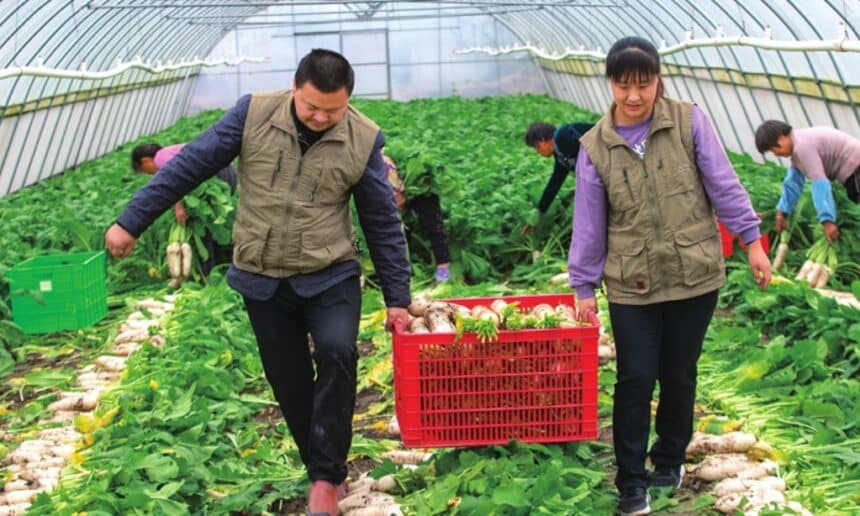
BEIJING — Fresh vegetable prices across China plunged 16.9% year-on-year in November 2026 data releases, creating a severe nationwide market glut that has forced rural growers to give away produce for free rather than harvest crops at a financial loss. Favorable autumn weather and expanded planting acreage yielded massive harvests just as domestic household demand remained subdued, depressing farmgate values below the cost of labor and freight.
While cheaper greens offer immediate relief at urban grocery checkout counters, the collapse in wholesale prices threatens rural household incomes across key agricultural provinces. According to consumer price figures published by the National Bureau of Statistics of China, falling vegetable costs served as the single largest downward drag on national food inflation this autumn, pushing growers in major farming belts to open their fields to local residents and passing motorists to clear land before winter freezes.
Key Takeaways• Fresh vegetable prices fell 16.9% from a year earlier, acting as the primary driver behind China’s negative food inflation reading. • Favorable growing conditions and expanded acreage created an autumn supply surge that collided with cautious consumer spending. • Facing steep losses on hired labor and transport, farmers are inviting drivers and neighbors to pick crops for free so fields can be cleared for next season. |
Fields Open to Passing Drivers as Harvest Math Breaks Down
Across northern and central farming hubs, the economics of bringing leafy greens and root crops to market have inverted. Wholesale buyers at regional distribution centers have slashed purchase offers to fractions of a yuan per kilogram for staple varieties such as Chinese cabbage, white radish, and spinach. For smallholder growers who rely on seasonal day laborers to cut, sort, and crate produce, every truckload sent to market now locks in a guaranteed cash loss.
Rather than paying wages to harvest crops that will not cover packaging and diesel expenses, farmers in provinces including Shandong, Henan, and Hebei have posted short videos on social media inviting nearby villagers and highway commuters to pull over and fill their car trunks at no charge. Leaving mature vegetables in the soil is not a viable option. Rotting biomass breeds pests and soil-borne pathogens, and growers face a narrow autumn window to plow their plots and prepare seedbeds for winter wheat or spring greenhouse rotations.
Local agricultural cooperatives report that self-pick giveaways have become a pragmatic triage measure. Volunteers and families clear rows in a matter of hours, saving farmers thousands of yuan in disposal or tilling fees while preventing edible food from decaying in the dirt.
Diverging Inflation Forces Squeeze Rural Profit Margins
The steep slide in vegetable prices stands out sharply against broader price trends across the Chinese economy. Official statistical releases tracked by ING Economics show that while overall consumer inflation cooled to 0.7% year-on-year, food prices fell 2.9% to hit a 13-month low. Fresh vegetables accounted for the heaviest drag within the food basket, outpacing an 8.6% drop in pork prices and a 3.8% decline in fresh fruit.
At the same time, farmers face stubbornly high input and logistics bills. Transportation fuel costs climbed more than 20% year-on-year amid elevated global energy prices, and factory-gate producer prices rose 5.7%, reflecting higher raw material and extraction costs. When long-haul trucking rates stay elevated while wholesale vegetable prices crater, regional price gaps widen without triggering cross-provincial arbitrage. Produce remains stranded near farms because freight charges exceed the retail value of the cargo.
Household spending patterns have compounded the imbalance. Core consumer inflation, which strips out volatile food and energy items, eased to 0.8%, signaling cautious discretionary spending among urban households. Restaurants and institutional cafeterias have maintained steady baseline orders, yet sluggish retail consumption has left wholesale markets unable to absorb peak autumn volumes.
Upstream Acreage Expansion and Structural Boom-Bust Cycles
The November 2026 vegetable glut reflects a recurring structural vulnerability in China’s decentralized horticultural sector, amplified by recent food security policies. Over the past two years, provincial authorities expanded subsidized vegetable basket programs and upgraded rural irrigation networks to shield cities from weather-driven price spikes. Those investments paid off in raw output, particularly after mild late-summer temperatures and well-timed rainfall boosted per-hectare yields across the North China Plain.
Agricultural market analysts note that small-scale growers frequently make planting decisions based on the prior season’s prices rather than forward demand forecasts. Elevated vegetable prices during periods of extreme weather in 2025 encouraged farmers to expand autumn plantings of fast-growing brassicas and root vegetables simultaneously. Without centralized acreage quotas or widespread price-insurance adoption, synchronized planting across neighboring counties regularly produces sharp harvest gluts.
Broader national efforts to strengthen domestic crop resilience, detailed in industry analysis by CME Group, have prioritized staple grain self-sufficiency and smart farming infrastructure. Yet perishable vegetables lack the state stockpiling mechanisms that stabilize grain and pork markets. Cold-storage facilities remain concentrated near major wholesale hubs rather than rural townships, leaving smallholders with minimal buffer capacity when spot prices collapse.
Urban Relief Versus Next Season’s Supply Risks
In major metropolitan areas from Beijing to Shanghai, wet markets and supermarket chains have passed lower wholesale costs directly to shoppers. Weekly grocery bills for staple produce have dropped noticeably compared with late 2025, easing cost-of-living pressures for low- and middle-income urban families. Retail vendors report brisk foot traffic for discounted autumn greens, even though total tonnage sold has not grown fast enough to clear upstream farm inventories.
Economists and rural extension agents warn that prolonged farmgate losses carry consequences for early 2027. Growers burned by unrecovered seed, fertilizer, and plastic-mulch expenses often scale back winter greenhouse plantings or switch acreage into lower-maintenance grains. When thousands of small farms cut back at once, oversupply can rapidly flip into spring shortages, restarting the volatile price cycle that defines China’s fresh produce trade.
For now, county agriculture bureaus in several eastern provinces have begun pairing struggling growers with e-commerce platforms, factory canteens, and community bulk-buying groups to move remaining autumn harvests. Until cold-chain logistics reach deeper into rural townships and planting data is shared more effectively before sowing, roadside giveaways remain the fastest way for farmers to clear their land and move on.