




Last Updated on April 4, 2026 by Jeff Tomas
BANGKOK – The palm-fringed beaches of Phuket and the neon-lit streets of Bangkok feel worlds away from the geopolitical tremors of the Middle East. However, in our interconnected world, a shadow cast in Tehran is quickly felt in Thailand.
As the conflict involving Iran fluctuates, the Thai tourism industry—the lifeblood of the national economy—is finding itself at a critical crossroads.
For decades, Thailand has been a sanctuary for travelers seeking sun, culture, and affordability. But as 2026 unfolds, the “Land of Smiles” is navigating a complex landscape where rising fuel costs, rerouted flight paths, and shifting traveler demographics are rewriting the rules of the game.
The Cost of Conflict: Airfare and Logistics
The most immediate impact of the Iran conflict isn’t found on the ground in Thailand, but in the skies above it. As airspace over parts of the Middle East becomes restricted or closed, airlines are forced to take the long way around.
For a traveler flying from London or Paris to Bangkok, this means more than just a couple of extra hours in a middle seat. Longer routes require more fuel. When you combine these extended flight times with the global spike in oil prices—driven by uncertainty in the Gulf—the result is a significant jump in ticket prices.
- Fuel Surcharges: Many international carriers have reintroduced or increased fuel surcharges to cope with Brent Crude prices flirting with $100 per barrel.
- Connectivity Issues: Hubs like Dubai and Doha, which serve as vital transit points for millions of tourists heading to Southeast Asia, have faced periodic disruptions, leading to cancellations and “travel fatigue.”

Bangkok: The Urban Hub Feels the Squeeze
In Bangkok, the impact is visible in the luxury hotel sector. The capital has long been a favorite for affluent Middle Eastern travelers, particularly during the “Green Season” (the monsoon months) when many escape the desert heat for Thailand’s cooling rains.
While the city remains vibrant, there is a noticeable shift in the crowds at high-end shopping malls like Siam Paragon. Tourism operators note that while visitor numbers from the West remain steady, the high-spending demographic from the Gulf region has become more cautious. Some are choosing to stay closer to home, while others are delaying their annual “medical tourism” trips to Bangkok’s world-class hospitals.
Key Impacts on Major Thai Destinations
| Destination | Primary Impact | Current Trend |
|---|---|---|
| Bangkok | Drop in high-end Middle Eastern spenders | Shift toward East Asian business travel |
| Phuket | Increased flight costs from Europe | Rise in long-stay “safe haven” visitors |
| Pattaya | Volatility in the Russian/Eastern European market | Growth in domestic weekend tourism |
| Chiang Mai | Higher transport costs for digital nomads | Focus on sustainable and “slow” travel |
| Chiang Rai | Reduced “Grand Tour” group bookings | Niche interest in cultural trekking |
| Hua Hin | Stable due to domestic proximity | Preferred by expats living in Thailand |
Phuket and the “Safe Haven” Effect
Down south in Phuket, the story is slightly different. While the island is certainly feeling the pinch of higher airfares, it is also seeing an interesting counter-trend. For some, Thailand is viewed as a “neutral” haven.
Real estate agents in Laguna and Rawai report a steady interest from international investors looking for a “Plan B” far from the volatility of EMEA (Europe, the Middle East, and Africa). While the casual three-week vacationer might be deterred by a $1,500 flight, the long-term traveler or “snowbird” is still arriving, albeit with a tighter budget for excursions and dining.

Pattaya and Hua Hin: A Tale of Two Coasts
Pattaya has traditionally relied on a mix of Russian, Indian, and Chinese tourists. The conflict in the Middle East adds another layer of uncertainty to a market already dealing with fluctuating currencies. To compensate, Pattaya is leaning heavily into the family market and regional Asian travelers who are less affected by Middle Eastern airspace closures.
Meanwhile, Hua Hin remains the most insulated. Because it is easily accessible by car or train from Bangkok, it doesn’t rely as heavily on international flight stability. It remains the “steady hand” of Thai tourism, supported by a loyal base of domestic travelers and local expats.
The Northern Frontier: Chiang Mai and Chiang Rai
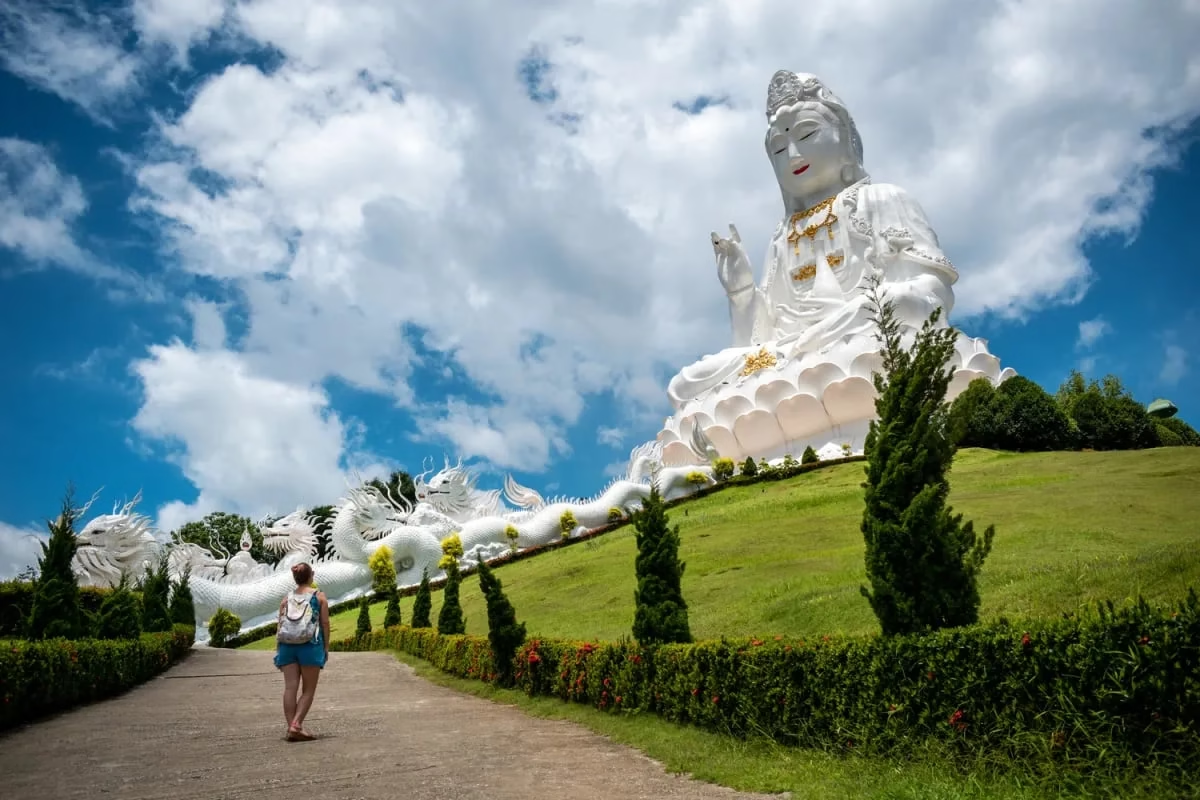
In the north, the cooler air of Chiang Mai and the rolling hills of Chiang Rai are seeing a shift in how people arrive. With long-haul flights from Europe becoming more expensive, there has been a dip in the traditional “backpacker trail” that starts in the south and ends in the north.
However, Chiang Mai is successfully pivoting toward the “digital nomad” and wellness crowds. These travelers tend to stay longer, which helps offset the initial high cost of getting to the country. In Chiang Rai, the focus has shifted to the regional market, with an increase in travelers coming across the border from Laos or flying in from nearby Asian hubs like Singapore and Hong Kong.
Adapting to the New Normal
The Tourism Authority of Thailand (TAT) is not sitting idly by. To fight the “conflict blues,” the government has introduced several measures:
- Visa-Free Entry: Expanding visa-free schemes for major markets like China and India to make the entry process seamless.
- Short-Haul Focus: Investing heavily in marketing campaigns across Malaysia, South Korea, and Japan—countries that don’t need to fly over the Middle East to get to Thailand.
- Domestic Subsidies: Encouraging Thais to travel within their own country to keep hotel occupancy rates stable during international lulls.
Looking Ahead: Resilience in the Face of Uncertainty
The Thai people are famously resilient. From tsunamis to political shifts and global pandemics, the tourism industry has a knack for bouncing back. The Iran conflict is a significant “headwind,” but it is not a full stop.
The future of Thai tourism in 2026 will likely be defined by “quality over quantity.” As the cost of travel rises, Thailand is focusing on providing better value, enhancing the visitor experience so that when a traveler does decide to pay that higher airfare, they feel the destination was worth every cent.
For the traveler currently sitting in a café in Chiang Mai or watching the sunset in Phuket, the conflict feels a world away. And for Thailand, that sense of peace is exactly what they are working so hard to protect.
Frequently Asked Questions (FAQ)
Is it safe to travel to Thailand right now?
Yes. Thailand remains one of the safest destinations in the world. The conflict in the Middle East is a regional issue that affects flight paths and global oil prices, but it does not pose a physical safety risk to those within Thailand.
Are flights to Thailand more expensive?
Generally, yes. Due to rerouted flights and higher jet fuel costs, travelers from Europe and parts of the Americas may see an increase in ticket prices compared to previous years.
Which parts of Thailand are best to visit during this time?
All major areas, including Bangkok, Phuket, Pattaya, and Chiang Mai, are fully operational. Travelers looking to avoid the high cost of domestic flights might prefer staying in one region or using Thailand’s extensive train and bus network.
Trending News:
Chinese Outbound Travel Shifts Away From the U.S., Japan, and Europe
Chiang Rai Starts Free Electric Bus Service to Help With Rising Fuel Costs


