



Last Updated on May 2, 2026 by Jeff Tomas
YANGON – Myanmar authorities have transferred the country’s deposed civilian leader, Aung San Suu Kyi, from a military prison to house arrest. The late-night move on Thursday marks a significant shift in her status, coming more than five years after a brutal military coup plunged the Southeast Asian nation into a devastating civil war.
The 80-year-old Nobel laureate was moved under heavy security to a government-owned residence in the military-built capital, Nay Pyi Taw. Since her initial detention in February 2021, she had been held in solitary confinement. Her exact whereabouts were often kept secret from the public and even her own legal team.
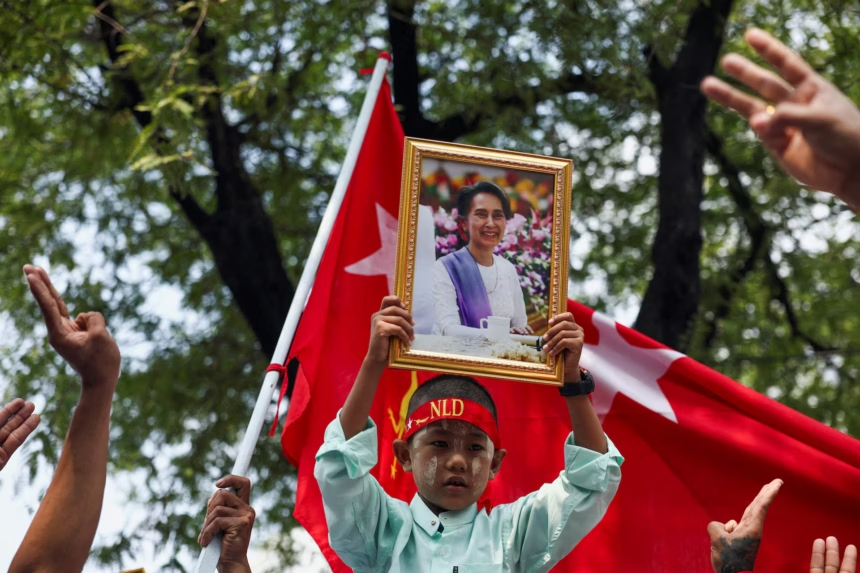
For the people of Myanmar, she remains a powerful symbol of democracy. However, this transfer raises crucial questions. Is this a genuine step toward peace, or simply a strategic move by a military junta losing its grip on power?
Sources close to the military administration confirmed the transfer took place late Thursday evening. Military convoys escorted Suu Kyi from the Nay Pyi Taw central prison to an undisclosed, heavily guarded compound within the city limits.
This move comes after years of international pressure demanding her immediate release. Human rights groups and global leaders have repeatedly condemned her imprisonment. According to reports from Amnesty International, the conditions of her solitary confinement were severe and violated fundamental human rights.
The junta has not released an official public statement detailing the exact reasons for the transfer. However, military spokespeople have privately cited “humanitarian concerns” and her advanced age as primary factors.
Mounting Health Concerns for the 80-Year-Old Leader
Aung San Suu Kyi will turn 81 next month. Over the past five years, alarming reports have emerged regarding her declining health.
Living in a poorly ventilated prison cell without regular access to her personal physicians has taken a toll. Sources connected to her legal team previously noted she suffered from severe dizziness, dental issues that prevented her from eating, and general fatigue.
The shift to house arrest may allow her better access to medical care. Many observers believe the military junta, led by Senior General Min Aung Hlaing, feared the political fallout if Suu Kyi were to die while locked inside a military prison.
Key factors driving the transfer:
- Declining Health: Severe ongoing medical issues requiring specialized care.
- Advanced Age: At 80 years old, prison conditions were deemed life-threatening.
- Political Calculus: The junta wants to avoid the massive public uprising that would likely follow her death in custody.
- Diplomatic Pressure: Regional partners have demanded proof of life and better treatment.
Five Years of Turmoil: The 2021 Coup
To understand the weight of Thursday’s events, one must look back to the early hours of February 1, 2021. The military seized power, claiming widespread fraud in the 2020 general elections. Suu Kyi’s National League for Democracy (NLD) had won those elections by a massive landslide.
Independent election observers, including the Carter Center, found no evidence of significant fraud. Yet, the military arrested Suu Kyi, President Win Myint, and hundreds of other political figures.
The coup immediately ended Myanmar’s brief decade of democratic reform. In the months that followed, the military courts handed Suu Kyi a series of sentences totaling 33 years. The charges ranged from violating COVID-19 restrictions to corruption and inciting public unrest. Rights groups and the United Nations widely condemned the trials as a political sham designed to remove her from public life forever.
Over the last five years, Myanmar has descended into a full-scale civil war. The military’s initial violent crackdown on peaceful street protests forced citizens to take up arms.
Every day, people formed local militia groups known as the People’s Defense Forces (PDFs). These groups soon joined forces with established Ethnic Armed Organizations (EAOs) that had been fighting the central government for decades.
International Outcry and Diplomatic Reactions
Global reactions to the transfer have been swift but cautious. Governments are careful not to celebrate house arrest as true freedom.
Human rights advocates stress that house arrest is still an illegal detention. “Aung San Suu Kyi, along with thousands of other political prisoners, should never have been detained in the first place,” said a spokesperson for a prominent human rights watchdog. “Transferring her to a different type of cage does not change the fact that she is a hostage.”
Meanwhile, diplomats in nearby countries are watching closely. Thailand, which shares a long border with Myanmar and hosts thousands of refugees, has quietly pushed for dialogue. The international community continues to demand the unconditional release of all political prisoners and an immediate end to the military’s violence against civilians.
The future of Myanmar remains highly uncertain. Thursday night’s transfer is a major news event, but it does not instantly solve the deeply rooted civil conflict.
The resistance forces have made it clear that their goal is the complete removal of the military from politics. For them, the revolution is no longer just about saving one leader; it is about saving the entire nation’s future.
As Aung San Suu Kyi settles into house arrest in Nay Pyi Taw, she remains isolated from the very people fighting in her name. While her physical living conditions may have improved, her country continues to burn. Only time will tell if this transfer is a genuine opening for peace or just another delay tactic by a desperate military regime.
Trending Myanmar News:
Thailand Tightens Border Security as Conflict Intensifies in Myanmar
Myanmar Man Confesses to Murdering 17-Year-Old Girl in Mae Sai, Chiang Rai
Children Hit With Shrapnel in Mae Sot as Fighting in Myanmar Spills Over into Thailand


