



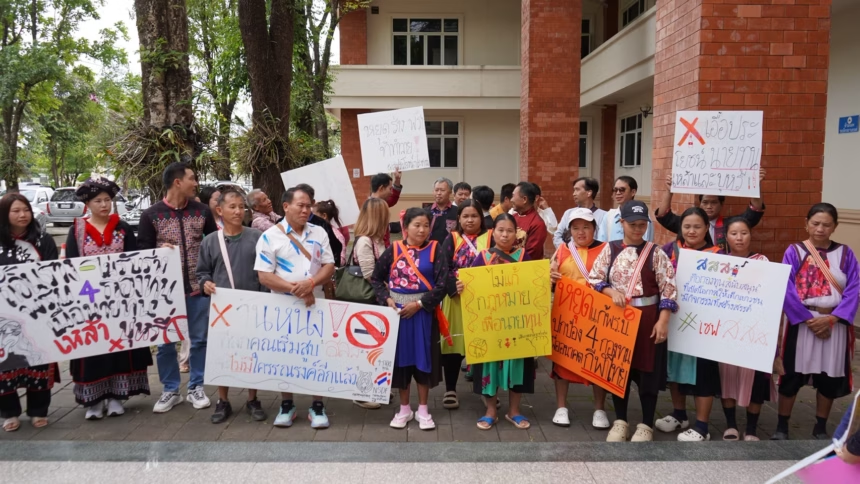
CHIANG RAI – Ethnic and indigenous community leaders across northern Thailand submitted a formal petition to Prime Minister Anutin Charnvirakul on Tuesday morning. Community representative Suphot Li-cha led delegations from Chiang Rai and Chiang Mai to demand an immediate freeze on proposed state budget revisions.
The coalition firmly opposes sweeping amendments to legislation governing four dedicated autonomous public bodies: the Thai Health Promotion Foundation, public broadcaster Thai PBS, the Elderly Fund, and the Sports Development Fund.
Key Takeaways
- Northern indigenous networks demand that the government pause legislative amendments to four vital earmarked public funds for one full year.
- Advocates reject Thailand joining the UPOV 1991 treaty because the framework restricts traditional seed-saving practices among farming communities.
- Delegates urge policymakers to hold transparent regional public hearings that directly involve vulnerable hill-tribe elders and local civil society.
The petition urges central authorities to withdraw the current draft bills and enforce a mandatory one-year moratorium. Grassroots organizations argue that redirecting these dedicated revenue streams into the centralized state treasury threatens community welfare initiatives and independent public reporting.
Senior welfare advocates warn that stripping autonomy from the Elderly Fund dismantles localized elderly support in remote mountain districts. Meanwhile, cultural defenders emphasize that Thai PBS provides essential airtime to broadcast minority language programming and document indigenous heritage.
Civil society groups contend that legislators drafted these financing reforms behind closed doors without broad stakeholder consultation. Activists demand open regional hearings across northern provinces before parliament takes any binding legislative steps.
Ethnic Farming Communities Reject Seed Restrictions
Beyond fiscal battles, the petition strongly condemns ministerial efforts to push Thailand into the UPOV 1991 plant convention. This restrictive international agreement grants multinational corporate breeders exclusive commercial rights over modified plant varieties.
Agricultural monitors at BioThai caution that entering the treaty criminalizes common agricultural practices like saving, exchanging, and breeding indigenous seeds. Smallholder farmers must instead purchase expensive proprietary seeds each planting cycle, severely driving up farm debt.
Northern tribal villagers have preserved resilient native crop lineages across generations without corporate interference. Community elders view seed sovereignty as an indispensable pillar of their ancestral cultural identity and food security.
Community leader Suphot Li-cha stressed that indigenous families will stage peaceful regional rallies if ministries ignore their petition. He urged the Prime Minister to prioritize vulnerable rural producers over commercial agri-business interests and bureaucratic fiscal centralization.
Government representatives accepted the petition papers outside provincial offices and promised prompt formal delivery to Bangkok ministries. Meanwhile, northern agrarian networks pledge continued active civic mobilization until the government formally shelves both contentious measures.
Trending News:
Exploring the History of Hill Tribes in Chiang Rai
Chiang Rai’s Hill Tribe Entrepreneurs Build Local Brands


