CHIANG RAI – Provincial officials and Thailand’s Department of Disaster Prevention and Mitigation are coordinating a response after tests found arsenic above standards in parts of the Kok and Ruak rivers, and arsenic and lead above standards in the Sai River. The agencies are monitoring water quality, checking aquatic animals and reviewing raw water sources used for tap water as they assess possible risks to residents and the environment.
Key takeaways
- Arsenic levels exceeded standards at some monitoring points in the Kok and Ruak rivers.
- Tests in the Sai River found both arsenic and lead above standards.
- Chiang Rai is collecting aquatic animal samples for tests that include arsenic, mercury, lead and cadmium.
- Agencies are also checking water sources used for tap water and plan to alert residents if test results indicate a health risk.
Officials coordinate a response
On November 11, 2026, Chiang Rai Governor Choochiep Phongchai led a meeting with provincial agencies and national officials to discuss contamination in the Kok, Ruak and Sai rivers. The meeting took place online on November 10 and was chaired by Nirat Phongsitthavorn, director-general of the Department of Disaster Prevention and Mitigation.
Representatives from the Ministry of Public Health, the Pollution Control Department, the Department of Fisheries, the Department of Local Administration, the Provincial Waterworks Authority and Chiang Mai agencies also took part. Chiang Rai officials joined from the provincial office of the disaster prevention department.
Nirat said the government is treating the contamination reports as a priority. He called for agencies to coordinate prevention and public assistance, and to share clear information about test results so residents can understand the situation.
Water testing identifies heavy metals
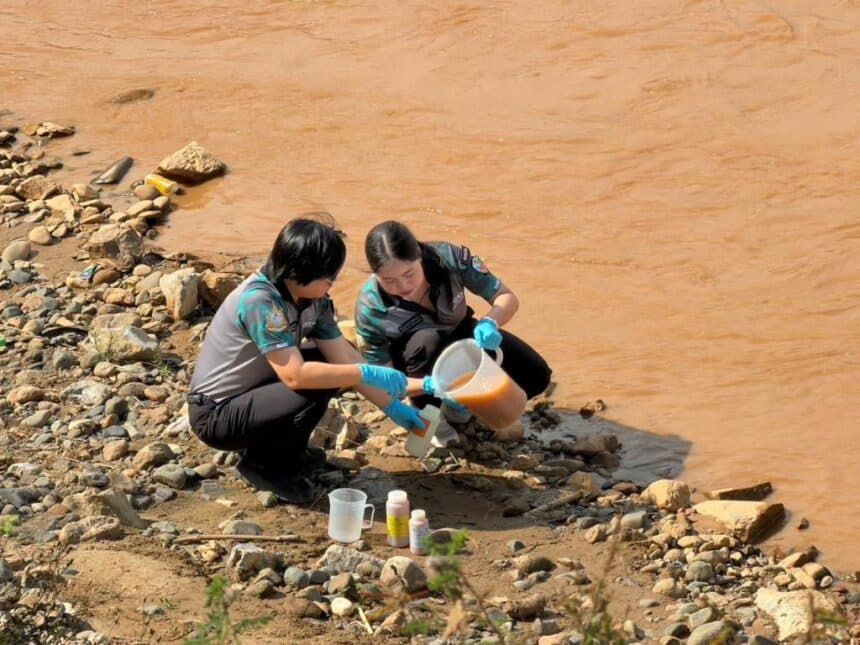
Monitoring found arsenic above the applicable standard at certain locations on the Kok and Ruak rivers. In the Sai River, tests detected both arsenic and lead at levels above standards. Officials said the findings raise concerns about water quality, aquatic life, household water use and the livelihoods of communities along the rivers.
Governor Choochiep said Chiang Rai is continuing to monitor the rivers and has collected samples of aquatic animals for laboratory testing. The tests cover arsenic, mercury, lead and cadmium. If results indicate a possible health danger, the province will notify residents and pay particular attention to groups at greater risk.
The disaster prevention department has asked its provincial office to work with relevant agencies on measures to address the contamination. These include identifying and controlling pollution sources, reviewing wastewater treatment systems, and continuing tests of river water and aquatic animals.
Officials will also inspect raw water sources used to produce tap water. Agencies plan to provide residents with accurate information about water supplies and distribution as monitoring continues.