
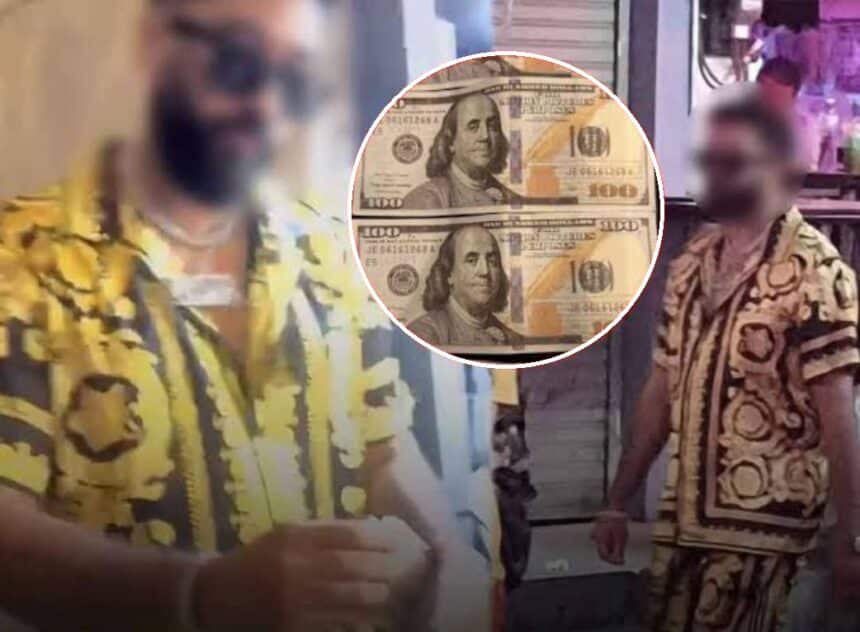
BANGKOK — Thai immigration police arrested a 42-year-old Sierra Leonean man during a condominium raid in Bangkok’s Bang Na district on Nov. 18 after finding 54 counterfeit $100 bills hidden inside his waist bag.
The seized fake notes carry a face value of $5,400, or roughly 182,600 baht, according to investigating officers. During initial questioning, the suspect told police a friend smuggled the bogus currency across the land border from Cambodia, triggering heightened alerts for local currency exchange booths and expatriate residents.
Key Takeaways
- Immigration police arrested a 42-year-old Sierra Leonean suspect in Bang Na on Nov. 18 with 54 fake $100 bills worth about 182,600 baht.
- The suspect claimed an associate transported the counterfeit U.S. currency into Thailand from neighboring Cambodia.
- Passing known fake bills violates Section 245 of the Thai Penal Code, prompting urgent verification warnings for expats exchanging cash.
Cross-Border Pipeline Fuels Bangkok Fake Cash Crackdown
The Bang Na arrest highlights an active smuggling corridor moving counterfeit foreign banknotes from border hubs into Bangkok’s commercial districts. Earlier this year, a Thai border raid exposed a scam compound and fake currency operation linked to cross-border syndicates, showing how illicit printing networks exploit porous transit routes along the Thai-Cambodian frontier.
Once inside the capital, traffickers target high-foot-traffic neighborhoods like Bang Na and Sukhumvit, where tourists and long-term expats routinely convert U.S. dollars into Thai baht. Licensed money changers enforce strict inspection protocols, which pushes street-level distributors to offload fake $100 bills through private peer-to-peer swaps, informal rental payments or unverified cash deals.
Under Thai law, getting stuck with fake cash carries severe legal jeopardy beyond financial loss. Individuals who knowingly pass counterfeit banknotes received by mistake face up to 10 years in prison or a 200,000-baht fine, while the Bank of Thailand instructs anyone who discovers suspect bills to surrender them immediately to the nearest police station.
How Expats Can Spot Fake $100 Notes Before Exchanging
Counterfeiters favor the $100 denomination because a single pass yields maximum payout, yet modern U.S. bills contain tactile and optical defenses that cheap prints fail to copy. According to the U.S. Currency Education Program, anyone handling $100 notes can verify authenticity in seconds using three physical checks before stepping up to a Bangkok exchange counter.
Start by feeling the paper texture. Genuine U.S. currency uses a blend of 75 percent cotton and 25 percent linen, giving it a crisp, slightly rough surface rather than the smooth, waxy feel of commercial printer paper. Run a fingernail across Benjamin Franklin’s shoulder to feel distinct raised ink.
Next, tilt the bill under bright light to check two color-shifting elements. Both the numeral 100 in the lower-right corner and the bell inside the copper inkwell must shift cleanly from copper to green. Beside Franklin’s portrait, a woven blue 3-D security ribbon displays bells and 100s that appear to move in opposite directions as you tilt the note.
Hold the bill up to a light source before completing any private cash exchange. A genuine note reveals a faint portrait watermark of Franklin on the right side and an embedded vertical security thread on the left reading “USA 100.” If any feature looks flat, blurry or printed on the surface, refuse the note and alert local police.
Trending News:
Pet-Friendly Malls and Hangout Spots in Bangkok
Fake Police Gang Busted for Extorting People on Dating-App