



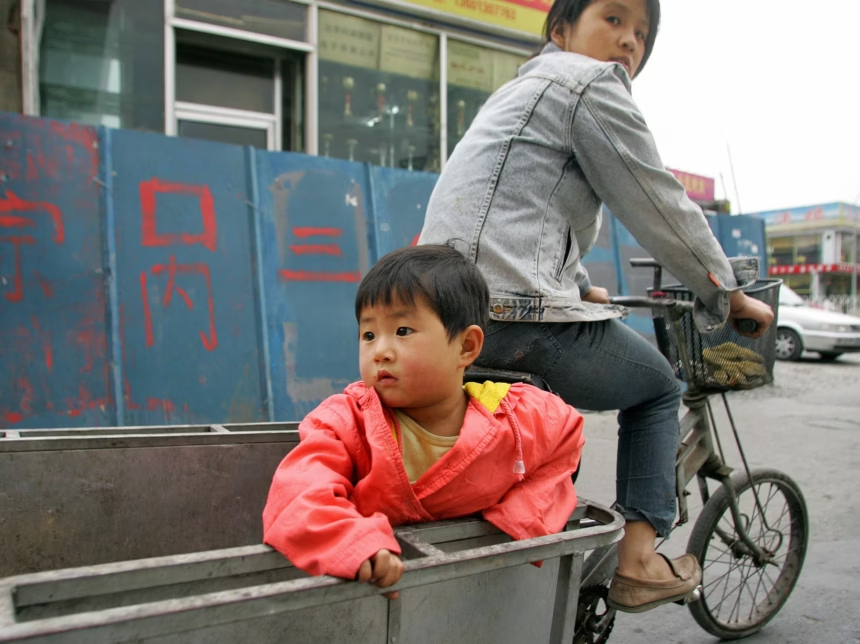
BEIJING – Over the past five years, China has seen a historic drop in preschool enrollment due to a crashing birth rate. From 2020 to 2025, the number of children in kindergartens fell from a peak of 48.18 million to just 32.25 million. This massive loss of over 12 million toddlers has forced tens of thousands of schools to close their doors forever.
The sheer scale of this decline is truly hard to imagine for most people. It is the exact equivalent of more than half of Shanghai’s entire population suddenly vanishing from the early education system.
Key Takeaways
- Kindergarten closures are speeding up rapidly, with roughly 21,400 schools shutting down in 2025 alone.
- Total preschool enrollment has dropped by more than 12 million children in just five short years.
- The ongoing crisis is driven by record-low birth rates and the extreme cost of raising a family today.
The Shrinking Classrooms
The speed of these school closures is alarming even to long-time population experts. Recently released data shows a deeply worrying trend that only seems to be picking up speed. In 2023, the country saw a sudden drop of 14,800 kindergartens across various provinces.
This sharp decline was just the beginning of a much larger national crisis. By 2024, the situation worsened as another 21,100 early childhood centers were forced to shut down permanently.
The newest figures for 2025 are even more grim for the education sector. An estimated 21,400 facilities closed their doors this year, showing an accelerating collapse rate. At this current pace, communities are losing roughly two early education centers every single hour.
When we look at the actual number of children, the picture becomes even clearer. Back in 2020, Chinese kindergartens reached a massive peak of 48.18 million enrolled toddlers. At that time, parents often had to fight hard just to secure a spot for their child.
Today, those crowded and noisy classrooms are starting to look like a distant memory. By 2025, total enrollment crashed down to just 32.25 million young students nationwide. This means more than 12 million empty seats have appeared in a very short amount of time.
For school directors, this massive drop has completely changed how they run their daily operations. Instead of turning eager parents away, many principals are now struggling to find enough children to keep the lights on.
Why Are Birth Rates in China Falling?
This education crisis is a direct result of China’s rapidly changing demographic landscape. Recent data shows that the country recorded only about nine million new births in a single year. This is the absolute lowest figure the nation has seen since records began in 1949.
Many young couples today are simply choosing not to start families at all. According to a recent South China Morning Post report, high living costs are the main reason behind this shift. The price of buying a home in major cities makes having children seem financially impossible for many.
Furthermore, the extreme pressure to succeed in school adds to the massive burden on modern parents. The intense competition for good jobs means families spend huge amounts of money on tutoring and activities. Many adults feel they cannot provide a good life for even one child, let alone two or three.
Behind these shocking statistics are real people who are losing their jobs and businesses. Thousands of dedicated teachers and school staff are suddenly finding themselves entirely out of work. Many of these professionals have spent decades building their careers in early childhood education.
Take the example of long-time kindergarten operators who invested heavily in their local communities. Some business owners built large educational networks that employed hundreds of local teachers and support staff. Now, many of these once-thriving businesses are facing total bankruptcy and massive unpaid debts.
The emotional toll on these educators is just as heavy as the financial ruin. Teachers who truly love working with children are being forced to find new careers in completely different fields. The loss of experienced educators will be felt by society for a very long time.
From Playgrounds to Nursing Homes
As schools empty, a strange and powerful transformation is happening in many neighborhoods. Some empty kindergartens are finding a completely new purpose to survive the changing times. They are being fully renovated and turned into daytime care centers for the elderly.
This shift perfectly highlights the extreme aging problem happening across the entire country right now. As the birth rate hits rock bottom, the elderly population is growing faster than ever before. Facilities that once housed slides and finger paints now feature medical beds and walking aids.
Some former preschool teachers are even retraining to work as elder care assistants. While this helps provide needed jobs, it is a tough transition for those who trained to teach toddlers. This direct switch from childcare to eldercare is a very clear sign of the times.
Local and national leaders are trying very hard to fix this growing population problem. Over the last few years, they have rolled out several policies hoping to encourage larger families. The old rules limiting family size have been completely scrapped in favor of new incentives.
Some local governments are now offering direct cash bonuses to couples who have a second or third baby. In certain provinces, families can receive thousands of yuan just for welcoming a new child. However, these one-time payments are largely failing to change the minds of young couples.
As outlined by an article in The Guardian, economists argue that these small rewards are just not enough. The overall cost of housing, food, and education far outweighs a quick, one-time cash bonus. Until everyday living becomes more affordable, the birth rate is highly unlikely to bounce back.
The Threat to Economic Growth
A shrinking generation of children means serious trouble for the nation’s future economy. Today’s kindergarten students are the essential workers, consumers, and taxpayers of tomorrow. If this group remains small, the country will lack the labor needed to keep businesses running smoothly.
China’s rapid economic rise was heavily fueled by a massive, youthful workforce over the last few decades. Now, as the population ages, there will be fewer young people to support the growing number of retirees. This creates a heavy financial burden that could easily stall economic growth for years.
Furthermore, entire industries built around children are already feeling the painful financial squeeze. Toy makers, clothing brands, and educational publishers are all losing a huge portion of their target market. The ripple effects of this crisis will touch almost every single part of the economy.
Looking ahead, experts believe the situation will likely get much worse before it gets better. Some analysts predict that thousands more preschools will vanish over the next few years. If current trends continue, the national education landscape will look completely different by 2030.
Current forecasts suggest that only around 163,000 kindergartens might remain open by the end of the decade. This would mean losing almost another 100,000 schools from the current total count. For rural areas, this could mean children must travel very far just to attend preschool.
School operators are being warned to adapt quickly if they want to survive this tough era. Many will need to expand their services to include care for infants under three years old. Those who refuse to change their business models will almost certainly be forced to close.
A Global Warning Sign
While this specific crisis is happening in China, it serves as a warning for the whole world. Many other developed nations are also facing the same problem of rapidly falling birth rates. Countries across Europe and Asia are watching closely to see how this situation unfolds.
The rapid closing of schools shows how quickly demographic shifts can change everyday society. It proves that a falling population is not just an abstract concept discussed by distant economists. It is a real, physical force that empties local classrooms, ruins businesses, and reshapes entire communities.
Ultimately, solving this issue will require much more than just building new schools or offering cash. It will demand a massive change in how society supports young families and working parents. Until those big structural changes happen, the number of empty kindergarten seats will only continue to grow.
The challenge ahead is clearly massive, but it is not entirely hopeless for the country. Some local communities are already experimenting with new ways to support struggling parents and schools. A few cities are trying out free public childcare to ease the crushing financial burden on young couples.
Others are testing flexible working hours so parents can actually spend time with their children. If companies allow more remote work, families might finally feel comfortable growing their households again. These small steps could eventually create a much friendlier environment for raising happy kids.
However, these major changes need to happen on a much larger, national scale to truly make a difference. The government, large businesses, and local communities must work together to create real, lasting solutions. Only then can the country hope to see its kindergarten classrooms full of life once more.
Trending News:
China’s Real Estate Sector Enters an Unprecedented Collapse Cycle
China May Be Hiding the Largest Debt Crisis the World Has Ever Seen
China’s Provinces Face Deepening Debt: Zero Regions Hit 100% Fiscal Self-Sufficiency


