
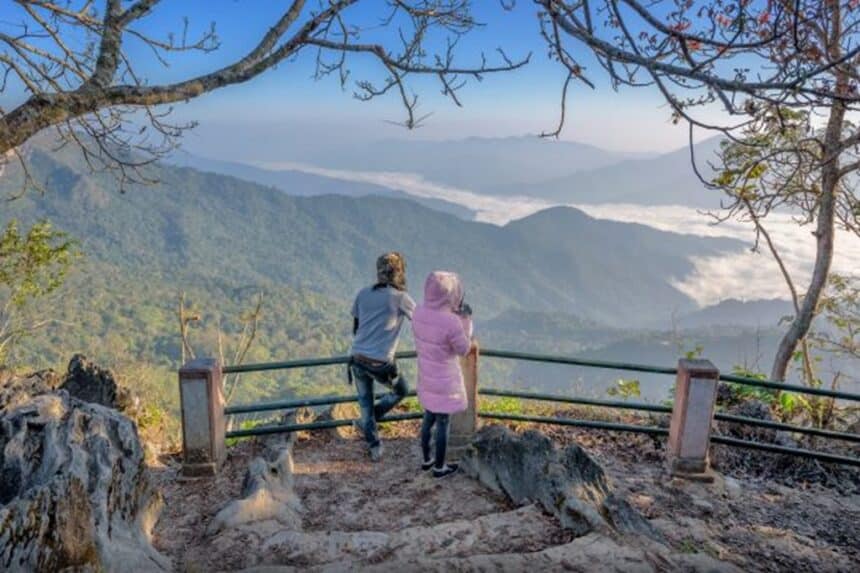
CHIANG RAI — Temperatures plunged to 8 degrees Celsius (46.4 degrees Fahrenheit) atop Doi Pha Tang on Sunday morning, drawing early-winter travelers to the rugged border ridge for sweeping views of a dense sea of fog. Visitors gathered along the cliffside paths in Po subdistrict, Wiang Kaen district, as low clouds settled between jagged mountain peaks dividing Thailand and Laos.
The sharp drop on Nov. 29 marks an abrupt arrival of peak cold-weather tourism in northern Thailand, triggering an immediate surge in weekend bookings for highland homestays and local transport operators. Provincial officials and local guides urged drivers to use caution on steep, mist-shrouded mountain roads and advised visitors to pack heavy winter gear.
Key Takeaways
- 8°C Summit Low: Mercury dropped to 8 degrees Celsius on Nov. 29 at Doi Pha Tang in Chiang Rai’s Wiang Kaen district, producing a thick morning sea of fog along the Thai-Lao border.
- Primary Viewpoints: Tourists crowded Chong Pha Khad alongside Hills 102, 103 and 104 to photograph sunrise vistas overlooking the Mekong basin and neighboring Laos.
- Travel Advisories: Local authorities warned motorists to navigate winding highland routes carefully in low visibility and prepare thermal clothing for brisk dawn conditions.
High-Pressure Winds and Highland Geography Drive the Freeze
Sunday’s single-digit chill followed the Thai Meteorological Department’s official declaration of Thailand’s winter season on Nov. 9. While forecasters projected a slightly milder winter overall due to El Niño patterns, high-pressure systems sweeping south from China continue to push cold, dry air across upper northern Thailand, creating stark temperature inversions between lowland valleys and summits.
Rising more than 1,600 meters above sea level along the Phi Pan Nam range, Doi Pha Tang acts as a natural geographic barrier above the Mekong River valley. Overnight radiative cooling traps chilled air in the deep gorges below, condensing river moisture into thick banks of valley fog at dawn. Because lowland Chiang Rai temperatures typically hover around 16 to 18 degrees Celsius in late November, the 8-degree reading on the ridge underscores how elevation dictates microclimates and drives seasonal economic activity for remote border villages.
Border Vistas and Yunnanese Heritage
At dawn, visitors trekked between four signature vantage points: Chong Pha Khad, Hill 102, Hill 103 and Hill 104. Each lookout offers unobstructed views across the Mekong River into Laos, framing both sunrise and sunset over rolling ridgelines.
Beyond scenery, the mountain’s economy relies on a distinctive cultural and agricultural identity. Local communities descended from Yunnanese Chinese settlers welcome travelers with traditional highland cuisine and homestays. Nearby, the Pha Tang Royal Project Development Center—part of Thailand’s sustainable highland agricultural network—cultivates temperate-climate vegetables and fruit orchards that flourish in the crisp mountain air.
With cool conditions expected to persist through February, transport operators in Wiang Kaen are bracing for heavier holiday traffic. Steep gradients and dense morning mist make early-hour driving hazardous, prompting local safety reminders for motorists heading up the ridge before daybreak.
Trending News:
Doi Hua Mae Kham: Chiang Rai’s Remote Hilltribe Village
Chiang Rai’s Phu Chi Dao vs. Phu Chi Fa: Which Peak Fits You?