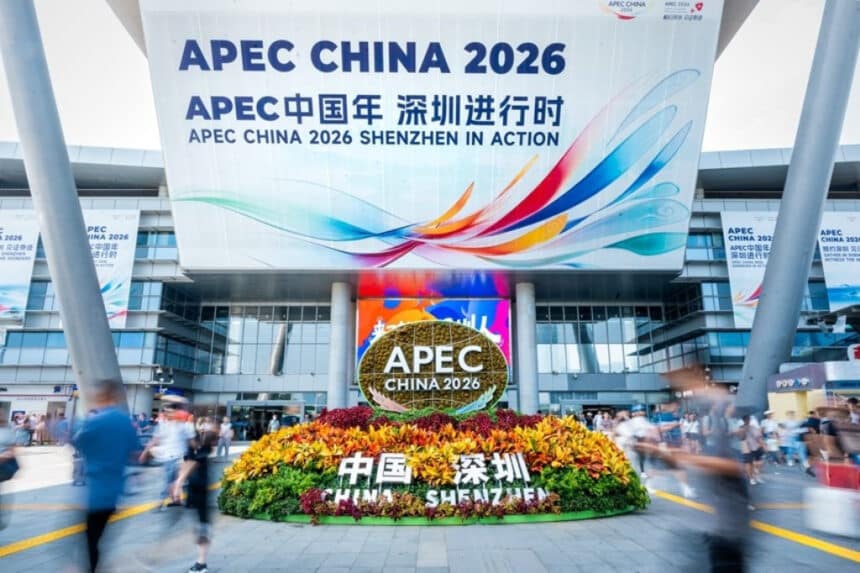
BANGKOK — Officials and business leaders from Thailand are heading to Shenzhen this month to press for smoother cross-border logistics, digital trade rules and supply chain protection as China hosts the Asia-Pacific Economic Cooperation leaders’ summit on Nov. 18–19. The weeklong meetings, running Nov. 13–19 in China’s southern technology hub, give Thailand a platform to shape commercial rules across 21 Pacific Rim economies.
While APEC agreements are voluntary rather than legally binding treaties, they set practical standards for customs clearance, digital payments and investment flows. For Thai manufacturers, agricultural shippers and tech firms, progress in Shenzhen could cut border delays and clarify rules for doing business with China and regional partners.
Key Takeaways
- Thailand’s Official Focus: Bangkok will prioritize supply chain resilience, responsible artificial intelligence, anti-scam cooperation and inclusive growth during Leaders’ Week.
- Voluntary Nature of APEC: Unlike formal trade pacts, APEC declarations carry no legal force, meaning outcomes rely on voluntary government follow-through.
- Private-Sector Priorities: Thai exporters want concrete fixes for customs bottlenecks, interoperable electronic trade documents and steadier Chinese market access.
Thailand’s Stated Agenda and Commitments
Ahead of the summit, Thailand’s Ministry of Foreign Affairs confirmed four priorities for Shenzhen: strengthening economic security against supply chain shocks, promoting responsible artificial intelligence, combating cross-border online scams and addressing demographic shifts. Rujikorn Saengchantr, director-general of the Department of International Economic Affairs, led interagency preparations to align those goals with host China’s theme of building an Asia-Pacific community.
Thailand has already signed 15 bilateral agreements and memorandums of understanding with Beijing this year covering industrial supply chains, artificial intelligence education, intellectual property enforcement and quarantine rules for Thai aquatic exports. Those bilateral pacts represent firm government-to-government commitments. Broader APEC initiatives on the table — including a proposed standalone statement on the Free Trade Area of the Asia-Pacific — remain nonbinding proposals until leaders endorse final text next week.
Why Shenzhen and APEC Matter to Thai Firms
Founded in 1989, APEC operates differently from the World Trade Organization or bilateral free trade pacts. Its 21 members make decisions by consensus and rely on peer pressure rather than enforceable penalties. For businesses, the forum’s practical value lies in technical alignment — speeding up customs checks, expanding the APEC Business Travel Card and testing paperless trade documents.
At a November briefing, APEC Policy Support Unit Director Carlos Kuriyama noted that members are shifting away from forcing identical digital regulations toward making different national systems interoperable so trade documents cross borders smoothly. Alongside the leaders’ meeting, the APEC CEO Summit and the APEC Business Advisory Council will gather more than 2,000 executives in Shenzhen to pitch policy fixes directly to heads of government.
Shenzhen’s Shift and Ground-Level Bottlenecks
Holding the summit in Shenzhen underscores how regional supply chains have changed since Beijing last hosted APEC in 2014. Once a low-cost assembly center, Shenzhen now anchors the Guangdong-Hong Kong-Macao Greater Bay Area as a global hub for electronics, electric vehicles and artificial intelligence. For Thailand, which has attracted heavy Chinese investment into its Eastern Economic Corridor, linking Thai factories with Guangdong’s component networks has become an operational necessity.
Yet ground-level friction persists for exporters moving goods into southern China. Temporary security and air cargo restrictions in Shenzhen ahead of the summit have highlighted how vulnerable peak-season and perishable shipments remain to sudden regulatory shifts. Industry data shows Shenzhen handled 25,000 metric tons of fresh and cold-chain imports in the first half of 2026, up 37.1% from a year earlier — volume in which Thai fruit and seafood exporters hold a major stake.
Thai business groups, including the Thai Chamber of Commerce and the Federation of Thai Industries, have engaged Chinese counterparts to push for predictable customs inspection lanes.
Whether Shenzhen yields lasting commercial gains depends on follow-through after the motorcades leave. Thai companies will be watching not for sweeping summit communiques, but for faster port clearances, compatible digital trade platforms and clearer cross-border investment rules.