
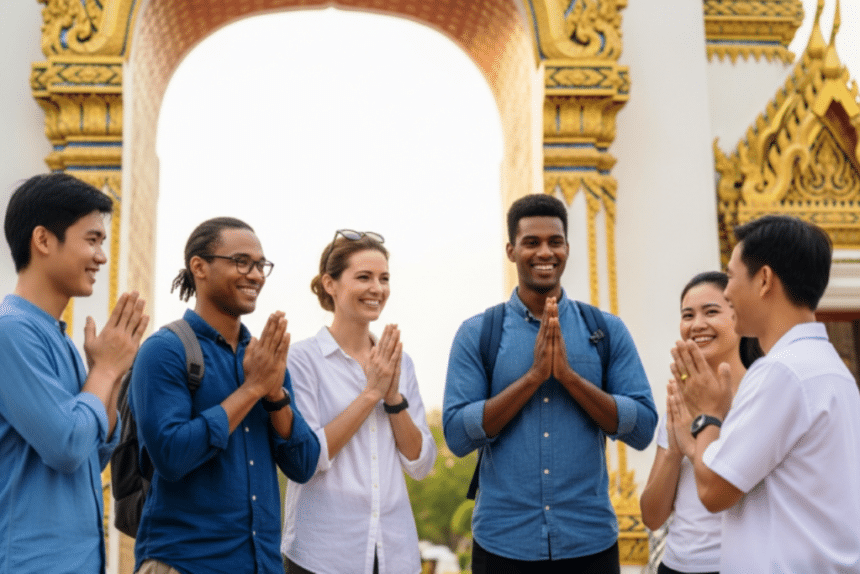
Are people in Thailand racist? No single answer can describe an entire population, and available reports don’t provide a representative survey of Thai people’s views on race or Black people. However, credible reporting documents unequal treatment affecting some ethnic minorities, stateless residents, migrants, and people seeking safety.
Racism can refer to personal prejudice, but it can also describe discrimination reinforced by laws, institutions, or unequal access to rights. Those are related questions, yet evidence about one doesn’t automatically answer the other. The distinction matters when assessing claims about racism in Thailand.
Freedom House, Human Rights Watch, and the UN Human Rights Office for South-East Asia document specific barriers and legal protections, while leaving important limits in what’s known about personal attitudes. The evidence offers a clearer picture of who faces exclusion and what remains uncertain.
Key Takeaways
- Available evidence does not show what most Thai people think about race; there is no representative national survey establishing the prevalence of anti-Black prejudice.
- Reports document structural barriers affecting ethnic minorities and stateless residents, including limits on political participation and access to rights, as described in Freedom House’s Thailand report.
- Migrant workers and refugees, including people from Myanmar and Rohingya communities, face insecure legal status, detention, and restrictions on labor rights.
- Thailand’s 2025 ethnic-groups law adds protections, but gaps remain around Indigenous recognition, land rights, and implementation.
- Colorism and visitors’ personal experiences require separate evidence; neither can stand in for the documented conditions facing communities who live and work in Thailand.
Racism in Thailand: Are Thai People Racist?
Whether someone experiences prejudice in Thailand can depend on who they are, where they are, and the situation they encounter. The evidence supports serious concerns about discrimination and unequal treatment, but it cannot establish how common racist beliefs are among Thai people.
Why one answer cannot describe every Thai person
Thai people do not share one set of views. Some may hold racial or ethnic prejudices; others may challenge them or have little direct contact with the communities affected. A visitor’s warm welcome or experience of bias can be real, but neither tells us what an entire population believes.
That distinction matters when discussing race and discrimination. A tourist’s experience may differ from the daily realities of a stateless person, a migrant worker, or a member of an ethnic minority. Those groups can face barriers tied to citizenship, ethnicity, or immigration status, whether or not an individual they meet expresses personal prejudice.
The available evidence also does not include a representative national survey of Thai attitudes toward race or Black people. Without that kind of survey, claims about what most Thai people think would go beyond what the evidence can show. Personal accounts can describe individual experiences, but they cannot establish national prevalence on their own.
What the available evidence can and cannot tell us
Freedom House’s Freedom in the World 2025: Thailand documents political and legal barriers affecting ethnic minorities and stateless residents. It reports that some northern hill-tribe communities lack citizenship, which can limit voting, land ownership, schooling, and labor protections. These are concrete forms of exclusion, but they do not prove that every Thai person holds racist views.
Human Rights Watch reporting documents additional hardships for migrants and refugees, including insecure legal status and vulnerability to exploitation. Such findings show that unequal conditions are serious and have practical consequences. They describe policies, institutions, and lived barriers, rather than measuring personal attitudes across the country. Human Rights Watch’s Thailand reporting provides context on rights concerns, but it is not a survey of public opinion.
Read these sources for what they establish: particular groups face documented disadvantages, and those disadvantages deserve attention. They cannot answer how many Thai people hold anti-Black or anti-ethnic prejudice, or predict how every visitor will be treated. Keeping those questions separate avoids minimizing discrimination while also avoiding a blanket judgment of an entire population.
What discrimination looks like for people living in Thailand
Discrimination in Thailand does not take one form, and the barriers people face can depend on citizenship, ethnicity, and immigration status. Reports document specific inequalities, but they do not show that every person in a group has the same experience.
Ethnic minorities and stateless hill-tribe communities
Freedom House reports that some northern hill-tribe residents lack Thai citizenship. Without citizenship, people may be barred from voting or owning land and may face obstacles to state education and labor-law protections, limiting both access to services and political voice. The report also describes ethnic minorities and stateless residents as generally unable to choose representatives or organize independently to advance their interests. Freedom House’s 2025 report documents these political and legal barriers.
Malay Muslims in southern Thailand face political marginalization, according to Freedom House. That finding describes a structural concern, not a uniform account of every Malay Muslim’s life or views.
Myanmar migrants, Rohingya, and other people seeking safety
Human Rights Watch’s July 2025 report, “I’ll Never Feel Secure,” describes how insecure legal status can leave Myanmar migrants vulnerable to exploitation and extortion. Those risks arise in part from state practices and weak protections; they should not be treated as evidence that ordinary Thai people are uniformly hostile to migrants.
Labor rights are also restricted. In its April 2026 submission to Thailand’s Universal Periodic Review, Human Rights Watch said the Labor Relations Act bars migrant workers of all nationalities from forming or establishing labor unions or serving as recognized union leaders. The submission also reported that some nationalities, including Rohingya, Lao, Hmong, Uyghur, and North Korean people, are excluded from refugee-status consideration under the National Screening Mechanism. These rules can make it harder to seek protection or organize for better working conditions.
Colorism and anti-Black prejudice need careful evidence
Colorism means unequal treatment based on skin tone, often within or across a broader ethnic group. It differs from discrimination tied to ethnicity, nationality, or legal status, although these forms of bias can overlap in a person’s life.
The sources reviewed here document structural barriers for specific communities, but they do not establish how common colorism or anti-Black prejudice is in Thailand. Personal accounts can describe an individual’s experience, but anecdotes alone cannot show how widespread a pattern is. Claims about prevalence need stronger evidence, such as representative surveys or systematic research.
How Thai law protects ethnic groups, and where gaps remain
Thailand’s Act on Protection and Promotion of the Way of Life of Ethnic Groups took effect on September 19, 2025. The law creates new protections and mechanisms for ethnic communities, but it does not by itself remove longstanding barriers tied to land, citizenship, or access to services.
What the 2025 ethnic-groups law promises
The UN Human Rights Office for South-East Asia (OHCHR) says the Act affirms equality and non-discrimination and prohibits defamation and hate speech against ethnic groups. It also sets out support for communities’ languages and cultural practices, community-led education, public services, and welfare.
The law provides for designated Protected Areas of Way of Life of Ethnic Groups, where communities can pursue protections related to their land and natural resources. It also establishes a representative council that can contribute to policymaking. Together, these measures give communities formal recognition and routes to raise concerns that affect their lives.
OHCHR welcomed the new law, while also identifying areas where its protections fall short. Its significance will depend on how authorities put the law into practice and whether communities can access the rights it sets out.
Why legal protections do not end unequal treatment
OHCHR notes that the Act does not explicitly recognize Indigenous Peoples. That matters because Indigenous communities have distinct connections to their lands and resources, and the law’s provisions do not fully address those rights. The principle of free, prior, and informed consent appears only in part, while community land rights remain constrained by forestry laws.
These limits leave unresolved issues that extend beyond the Act. Freedom House reports that some people in northern hill-tribe communities lack Thai citizenship, which can restrict voting, land ownership, and access to state education and labor protections. The new law does not automatically grant citizenship or remove these barriers.
Access to public services also depends on more than a legal promise. Stateless people and ethnic communities may still face difficulties claiming services or securing rights when their legal status, land claims, or local conditions stand in the way. The Act is a meaningful change in the legal framework, but its protections need effective implementation and stronger recognition of community land rights to address longstanding inequalities.
What visitors should know about race and bias in Thailand
Travelers, including Black visitors, may wonder whether race will affect how people treat them in Thailand. The evidence discussed here cannot predict an individual encounter: rights reports focus on legal status, labor, and access to services, not tourists’ experiences or the prevalence of anti-Black bias.
What visitors can and cannot infer
A friendly interaction, an awkward comment, or an incident of unequal treatment can tell you something about that specific encounter. However, one experience cannot establish how common a behavior is across Thailand, just as a positive trip cannot disprove discrimination faced by residents.
The same distinction applies to reports about stateless communities, ethnic minorities, and migrant workers. Those sources document serious barriers tied to citizenship, ethnicity, and immigration status. They do not measure how hotels, shops, or other visitors treat Black tourists, and they cannot promise that discrimination will or will not occur.
For practical travel information, the U.S. State Department’s Thailand travel advisory offers official risk and precaution guidance. It is not a measure of racial bias or a forecast of how an individual traveler will be treated.
How to describe an encounter accurately
If something happens, record what was said or done, where and when it occurred, and any relevant context. Separate what you observed from what you inferred about someone’s intent. For example, you can describe a staff member refusing service and the explanation they gave without claiming that the incident proves how all Thai people view Black visitors.
That care does not require you to dismiss or excuse a hurtful experience. It helps keep the account specific and credible, especially when the reason for the treatment is unclear. If you share the story, avoid turning one person’s behavior into a claim about an entire nationality or ethnic group.
Visitors also have a different position from people who live and work in Thailand. A tourist’s temporary stay does not capture the risks created by insecure legal status, restricted labor rights, or barriers to citizenship and services. Keep those experiences distinct: personal accounts can describe what travelers encounter, while rights reporting documents conditions that affect residents. Neither evidence should be used as a substitute for the other.
Frequently Asked Questions
These questions clarify what the available evidence says about legal recognition, migrant rights, and the limits of reports about discrimination in Thailand.
Is Thailand officially a multiracial country?
Thailand has a diverse population, but “multiracial country” is not a legal status that guarantees equal recognition or protection for every group. The 2025 ethnic-groups law provides protections for ethnic communities and their ways of life. However, it does not explicitly recognize Indigenous Peoples, and legal protections do not automatically resolve barriers tied to citizenship, land, or services.
Does the 2025 ethnic-groups law grant citizenship to stateless people?
No. The law addresses protections for ethnic groups, including cultural practices, community-led education, and certain land and resource rights. It does not automatically grant citizenship or end statelessness. As OHCHR explains in its overview of the law, implementation and existing legal gaps still matter.
Can migrant workers in Thailand form or lead labor unions?
Human Rights Watch’s April 2026 submission to Thailand’s Universal Periodic Review reports that the Labor Relations Act bars migrant workers from forming or establishing labor unions and serving as recognized union leaders. This is a restriction on workers’ ability to organize, regardless of whether an individual worker has personally faced discrimination. The claim concerns labor rights, not every aspect of migrants’ treatment in the country.
Do reports about migrants describe what Black tourists experience?
No. Reports about migrants focus on issues such as legal status, work, detention, and access to refugee protection. Those conditions differ from a tourist’s temporary stay and cannot measure how often Black visitors encounter bias. Travelers’ accounts may describe individual experiences, but they cannot stand in for evidence about migrants or establish a national pattern.
Where can readers find reliable updates on discrimination in Thailand?
Check reporting from OHCHR, Human Rights Watch, and Freedom House. Each organization covers different rights issues, so compare the subject and population covered before drawing conclusions. Also check the publication date, since laws and conditions can change.
Conclusion
It isn’t fair or accurate to call Thai people as a whole racist. The available evidence does not establish what most people think, but reports document serious exclusion and unequal treatment affecting ethnic minorities, stateless residents, migrants, and refugees.
Personal prejudice, colorism, and structural discrimination are related, yet they are distinct questions. Reports on legal barriers cannot measure every person’s attitudes or predict how a visitor will be treated. Judge claims about racism in Thailand by the evidence behind them, and avoid turning individual experiences or documented policies into stereotypes about an entire population.