




Last Updated on March 30, 2026 by Jeff Tomas
BANGKOK – Thailand is starting to look beyond its usual oil suppliers, with Kazakhstan emerging as a possible new source of crude. As concerns grow over supply risks in the Middle East, Thai officials have opened talks with several countries to reduce the country’s heavy dependence on shipments that pass through the Strait of Hormuz.
The move is part of a wider effort to protect energy supplies for homes, transport, and industry.
Foreign Minister Sihasak Phuangketkeow recently said Thailand has contacted several possible suppliers. Kazakhstan is one of them, along with Brazil, Nigeria, and Russia. No agreement has been signed, but the talks show that Thailand is rethinking where its oil comes from.
Thailand imports most of the crude oil it uses, and about half of that supply comes from the Middle East. Much of it moves through the Strait of Hormuz, a narrow route that has become riskier as regional tensions have grown. If shipping slows or stops, fuel prices in Thailand could rise quickly.
The country keeps commercial oil stocks equal to about 60 days of normal demand, although some government statements have referred to reserves lasting 95 to 100 days in certain cases. Either way, officials want a bigger safety cushion. Energy Minister Auttapol Rerkpiboon has already halted exports of petroleum products to help protect local supplies.
The issue is simple. Thailand depends on imported energy. Its factories, trucks, private cars, and power plants all need stable fuel flows. If a major disruption hits, the effects could spread from daily travel in Bangkok to manufacturing along the eastern seaboard.

Kazakhstan Brings Size and Supply Potential
Kazakhstan is one of the world’s leading oil producers, with large reserves centered around the Caspian Sea. Its biggest fields, including Tengiz, Kashagan, and Karachaganak, account for much of its output.
In 2025, Kazakhstan produced close to 100 million tons of crude oil and condensate. Tengiz alone delivered more than 39 million tons after recent expansion work. Kashagan added more than 18 million tons. The country exported roughly 78 to 80 million tons last year, which suggests it has room to serve new buyers.
Kazakh crude also has a solid reputation for quality, and it can suit many Asian refineries. At the same time, Kazakhstan may look more stable than some other suppliers facing sharper political swings. For Thailand, that makes it an attractive option.
Why Kazakhstan stands out:
- Strong production levels, with output moving toward 100 million tons a year
- Major oil fields supported by international operators and modern production systems
- Export experience in Asian markets, with some routes that reduce exposure to key chokepoints
- Room for long-term supply contracts that could support Thailand’s energy security goals
Kazakhstan has also worked to broaden its export routes instead of relying on a single path. That added flexibility could help if Thailand moves ahead with imports.
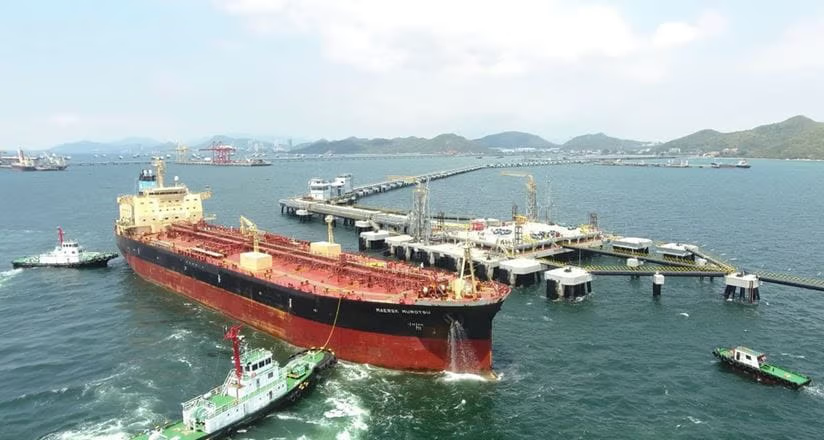
Thailand’s Current Oil Import Mix
Thailand has long bought much of its crude from Gulf producers such as the United Arab Emirates and Saudi Arabia. The United States and Malaysia have also supplied oil in recent years. Still, the overall pattern remains heavily tied to the Middle East.
At times in 2025, more than 51% of Thailand’s crude and condensate imports came from Middle East sources. That level of dependence became more troubling as shipping risks increased and markets reacted to regional conflict.
Most of these imports are handled by state-owned PTT and private refiners. They turn crude into gasoline, diesel, and other fuels used across the economy. Because of that, a wider supplier base could help refiners manage risk and reduce price shocks for consumers.
A more diverse oil supply could lower the chance of sudden fuel shortages or sharp jumps in pump prices. It could also support more stable power costs, since oil and gas still shape the wider energy mix.
There is also a bargaining benefit. When Thailand has more supplier options, it has a stronger hand in price and contract talks. That matters for both the government and major energy firms.
Energy experts say diversification is a sensible step. It can soften the impact of global shocks and make long-term planning easier. Thailand has already expanded energy ties with the United States, especially for LNG. Now the country is also looking farther afield, including to Kazakhstan.
From Early Talks to Real Shipments
Foreign Minister Sihasak said the next stage will depend on the Ministry of Energy and other related agencies. Early diplomatic contact is only the start. Turning that interest into real cargo deliveries will take time and detailed work.
Several issues still need to be settled, including transport routes, crude quality, pricing, contract terms, and refinery compatibility. Those are standard steps in any new supply relationship, but they matter even more when distance is a factor.
Thailand and Kazakhstan already have growing trade ties. A 2024 agreement on economic and trade cooperation created a base for wider business links. Oil could now become one of the most important parts of that relationship.
Moving crude from Kazakhstan to Thailand is not simple. The oil would likely travel through pipelines to export ports and then continue by tanker over long distances. Cost and timing will matter, but both sides appear willing to explore workable options.
Thai refineries have also shown they can process a range of crude grades. Recent discussions about Russian oil have underlined that flexibility, and the same approach could help with Kazakh supply.

Part of a Wider Energy Security Plan
This outreach fits into a larger strategy. Thailand is also looking at more LNG imports, more renewable power, and better energy efficiency. Oil will still play a major role in transport and industry for years to come, so securing new crude sources remains a top concern.
Officials have stressed the need to protect the Oil Fuel Fund and avoid steep price rises for consumers. Suspending exports was a short-term move. Building ties with new suppliers is the long play.
Analysts say prolonged instability in the Middle East could strain oil markets across Asia. Countries like Thailand, which do not have large domestic output, need to spread their risk. Reaching out to Kazakhstan, Brazil, Nigeria, and other producers fits that approach.
Risks and Openings
There are still obstacles. Kazakhstan’s export system has faced bottlenecks before, especially around Caspian pipeline routes. Political or shipping issues could also affect flows. On top of that, Kazakh crude must stay price-competitive against other options.
Still, the upside is hard to ignore. Closer ties with Kazakhstan could lead to more than oil trade. It could also open doors in mining, farming, and technology. Both countries have already shown interest in stronger economic links.
For Thailand, a dependable new supplier with large reserves offers more peace of mind. For Kazakhstan, access to Southeast Asia gives it a chance to widen its customer base beyond traditional markets.
The next signs of progress will likely come from the Ministry of Energy. Feasibility reviews, refinery testing, and commercial talks are expected to follow the first diplomatic contacts. Any deal would need approval at several levels before the first cargo arrives.
Meanwhile, the Thai government is watching global oil markets and domestic stock levels closely. The goal is clear: keep fuel moving, support businesses, and protect households from sudden price pressure at the pump.
Thailand’s interest in Kazakhstan reflects practical planning during a tense period for global energy markets. By looking for options now, the country puts itself in a stronger position if supply risks grow worse.
This story is still unfolding. As the talks move forward, more details should emerge on volumes, delivery timelines, and commercial terms. For now, Bangkok’s message is steady: energy security comes first, and Central Asia may become part of the answer.


