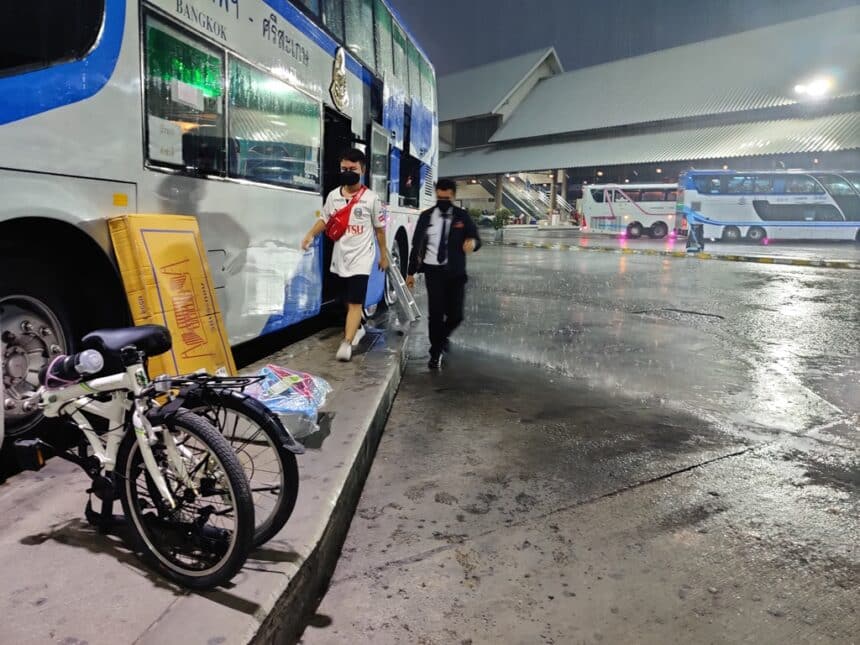
Can you take a bicycle on a bus in Thailand? Sometimes, but the answer depends on the operator, route, vehicle, available luggage space, and how the bike is packed.
Because those details can vary even between departures on the same route, confirm arrangements with the company running your exact trip before buying a ticket or heading to the station. This guide will help you ask the right questions, prepare your bike, and plan for a change in travel arrangements if needed. For broader advice on checking transport access before your Thailand trip, check the details for each service rather than assuming they’re the same.
Key Takeaways
- Bicycle acceptance varies by operator, route, and vehicle, so confirm the rules for your exact departure before booking.
- Ask whether your bike must fold or be boxed, where it will travel, whether space is available, and what fees apply.
- Some policies are strict: TravelBusAsia accepts only folding bicycles and lists special-baggage fees starting at ฿700 in its bicycle terms.
- Remove loose accessories and secure your bike for handling, but follow the operator’s packing instructions instead of assuming one standard applies.
- Keep a backup plan. During busy periods, booking northern Thailand bus trips early may help you secure a seat, but it doesn’t confirm bicycle space.
Taking a Bicycle on Thailand’s Buses: What to Expect
There isn’t one nationwide yes-or-no rule for taking a bicycle on a bus in Thailand. Policies and available space can vary by operator, route, vehicle, and travel date, so confirm your specific trip before you book.
Intercity coaches and local buses may handle bikes differently
A long-distance coach may have a luggage compartment beneath the passenger cabin, which can make carrying a bicycle possible. However, an empty-looking hold doesn’t mean the operator allows bikes. The compartment may be reserved for passenger bags, or the crew may require a bicycle to be folded or boxed.
Local and regional buses can have less room for baggage, and some vehicles may not have an enclosed hold at all. Space can also depend on how many passengers and bags board at each stop. A bus that carried a bike on one trip may not have room on another departure.
Some bicycle-travel accounts describe informal variation in bus practices, but those reports don’t establish a rule for your journey. One overview of bicycle transport on Thai buses also discusses the lack of consistent published procedures. Treat general advice as background, then ask the operator about the exact vehicle and the station or stop where you’ll board.
Check the operator’s rules before you buy a ticket
The company that sells your ticket may not run the bus. Check the booking confirmation or ticket details for the actual operator, then contact that company directly. If you can’t identify it, ask the seller to provide the operator’s name and contact information.
When you ask, give the travel date, departure time, route, and bicycle type. Explain whether the bike is full-size, folding, or boxed, and include its approximate dimensions if you know them. A general answer about a route may not apply to your departure, especially if the operator uses different vehicles or assigns space based on that day’s luggage load.
Ask where the bicycle will travel, whether you need to pack it, whether a fee applies, and whether staff will accept it at your boarding point. Request confirmation in writing when possible, and keep it with your ticket. If the answer is uncertain, don’t assume the driver or station staff will make an exception. Get clear approval before paying, or compare another departure with rules that fit your bike.
How to Book a Thailand Bus Trip With a Bicycle
Book the passenger seat only after you know how the operator will handle your bicycle. Policies can differ by company and vehicle, so ask about the exact departure before paying. If you’re planning a northern route, check the bus and minivan options from Chiang Rai to the Golden Triangle, then confirm bicycle arrangements with the company running your service.
Ask about bike size, packing, fees, and space
Contact the bus operator with your route, travel date, departure time, and bicycle type. Give the bike’s approximate dimensions, especially if it’s boxed or folded. Then ask whether the bus accepts a standard bicycle and whether you need to remove the wheels or pedals.
Confirm what packaging the operator accepts, whether the bicycle counts toward your luggage allowance, and whether an extra charge applies. Ask how much space is available and whether you need approval or a separate booking for the bike. Don’t assume an online seat reservation also reserves room in the luggage compartment.
Luggage rules vary. For example, Thai Bus baggage conditions specify limits for ordinary passenger bags, but those limits don’t establish that a bicycle will be accepted. Some operators also ask passengers to report oversized items so staff can check whether they fit, as Phantip Travel explains in its oversized baggage FAQ.
Electric bicycles may have separate restrictions, and the battery can raise additional questions. Ask whether the e-bike itself is allowed and whether its battery must be removed or handled separately. Get the operator’s instructions before you travel.
You can send a message like this:
Hello, I’m booking the [route] on [date] at [time]. Can I bring one standard bicycle? Its approximate dimensions are [dimensions]. Does it need to be boxed or partly dismantled? Is there an extra fee, and how much space is available? Does the bike need a separate booking or approval? Please also let me know any luggage or battery rules.
Keep proof of the operator’s answer
Save the written reply, booking note, or reference number with your ticket. If you speak by phone, write down the date, the staff member’s name if available, and what they confirmed. Then ask for written confirmation when possible.
Before departure, check that the approval matches your booked service, not just the route in general. If you change the date, departure time, operator, or route, contact the new operator and ask again. An earlier answer may not apply to a different bus or travel day.
Prepare Your Bicycle for the Bus Luggage Hold
Once the operator approves your bicycle, pack it to fit the space available and protect parts that could be knocked or scratched during loading. Follow the company’s instructions first: some buses may accept a partly dismantled bike, while others require a bag or covering. A box isn’t automatically necessary.
Pack the bike to reduce size and prevent damage
Remove water bottles, pumps, bags, bike computers, and other loose accessories. If the operator asks you to reduce the bike’s size, remove the pedals and turn the handlebars sideways. Keep any small parts, such as pedals, axles, and bolts, together in a labeled pouch so they don’t disappear in transit.
Protect the chain and derailleur from impact and grease. You can wrap them in cloth or use suitable padding, taking care not to put pressure on the derailleur. If you need a bike bag or covering, choose one that matches the operator’s requirements. A soft cover may be enough for one service, while another may specify a box or particular dimensions. Cycling Weekly’s guide to bike bags and boxes offers additional packing considerations.
Before you hand over the bike, label the package with your name and contact details. Take a quick photo of the packed bicycle and any existing damage, then keep the pedals and small-parts pouch somewhere easy to find when you arrive.
Use this checklist before loading:
- Remove loose accessories and items that could fall off.
- Secure or remove the pedals if the operator requires it.
- Cover the chain and derailleur to reduce dirt transfer and impact.
- Use a bag, cover, or box only as required by the bus company.
- Label the package and gather small parts in one pouch.
Keep valuables and essential gear with you
A shared luggage hold can shift during a trip, and loose items attached to a bicycle may come off or get separated. When the operator allows it, carry your tools, lights, computer, documents, and other small valuables in your cabin bag. Keep essentials accessible, but check the bus company’s rules for tools or restricted items before packing them.
E-bikes need an extra check. Contact the operator directly about whether it accepts e-bikes, how staff handle them, and whether the battery must be removed or carried separately. Battery rules can differ from standard bicycle arrangements, so get clear instructions before departure.
Boarding, Loading, and Backup Plans on Travel Day
A bicycle can be approved in advance and still require a final check at the station. Arrive with enough time to speak with staff, confirm where the bike goes, and adjust your plans if the crew cannot take it. Keep your ticket and any written approval easy to show.
Arrive early and confirm where the bike will be loaded
Check in with the operator’s staff before boarding starts. Show your ticket and written confirmation, if you have it, then ask whether the bicycle is cleared for this specific departure. Staff can confirm where to wait and whether the bike goes in the luggage hold or another designated area.
Ask how the bicycle will be tagged or identified, especially if it will travel with other baggage. Keep any claim ticket or tag stub with you, and note where staff place the bike. Practical accounts of taking a bike on Thai buses describe day-of handling that can vary, so follow the instructions from the crew on your own service.
Wait until the bus has stopped fully before approaching it or moving your bicycle. Then follow staff directions while loading, and don’t enter the luggage area or lift the bike into position unless they ask you to. Once aboard, keep your ticket and valuables with you. At your destination, watch for the bicycle to come off the bus and check that you have the right package before leaving the station.
Plan what to do if the bicycle is refused
If staff can’t take the bike, stay calm and ask what options are available. The operator may be able to move you to a later service, but that depends on its schedule, bicycle rules, and available space. Ask whether it can confirm a place for the bike before you agree to wait.
You can also ask about separate bicycle transport, such as a parcel or luggage service, if one is available on that route. Confirm the cost, drop-off and collection points, and expected timing before handing over the bicycle. If neither option works, changing your route or arranging another form of transport may be more practical.
Check these possibilities before departure, particularly if you have a connection, accommodation booking, or fixed arrival time. Don’t assume another bus will accept the bike or have room in its luggage hold. A backup plan should include enough time to contact the operator and make a different arrangement without rushing.
Frequently Asked Questions
A few details can affect a trip even after you’ve checked the operator’s bicycle policy. These answers cover connections, boarding points, and other transport choices that may shape your plans.
Does bicycle approval cover every leg of a connecting trip?
No. If your itinerary uses buses run by different companies, ask each operator to approve the bicycle separately. Also confirm that the transfer gives you enough time to collect and recheck the bike, especially if you need to move between stations or terminals.
Can I board with my bicycle at a roadside stop?
Don’t assume a roadside pickup point can handle a bicycle, even if the operator accepts bikes at its main terminal. Staff may need space or equipment that isn’t available at a smaller stop. Confirm the exact boarding location with the company and ask where to wait with the bike.
Can I bring the bicycle into the passenger cabin?
Don’t count on it. The operator may require bicycles to travel in a luggage compartment or another designated area, and a crowded cabin can create safety and access problems for other passengers. Ask where your bike will go, and follow the crew’s instructions at boarding.
Are Thai trains a possible alternative for traveling with a bicycle?
Some Thai trains may carry bicycles in a freight carriage, but arrangements can depend on the train and station. Check the specific service with the State Railway of Thailand before changing your plans. Seat 61’s Thailand train guide offers background on taking bicycles on trains, but confirm current details directly with the railway.
Should I plan extra time to collect my bicycle after the trip?
Yes, especially if you have a tight connection or a scheduled pickup at your destination. The crew may unload the bicycle separately from passenger bags, so wait until staff direct you to collect it. If someone is meeting you, tell them the bus may take extra time to unload.
Conclusion
Taking a bicycle on Thailand’s buses can be manageable when you confirm the rules for your exact operator and departure before booking. Prepare the bike as instructed, keep the operator’s approval handy, and allow enough time to sort out another option if plans change.
Above all, confirm the details for your specific trip rather than relying on a general rule. That small check can help you and your bicycle reach the destination with less stress.