BANGKOK — More than two years after a 21-year-old Swedish university student was found dead outside a luxury Bangkok high-rise, his mother is demanding that Thai and Swedish authorities reopen an inquiry she says ignored major forensic discrepancies.
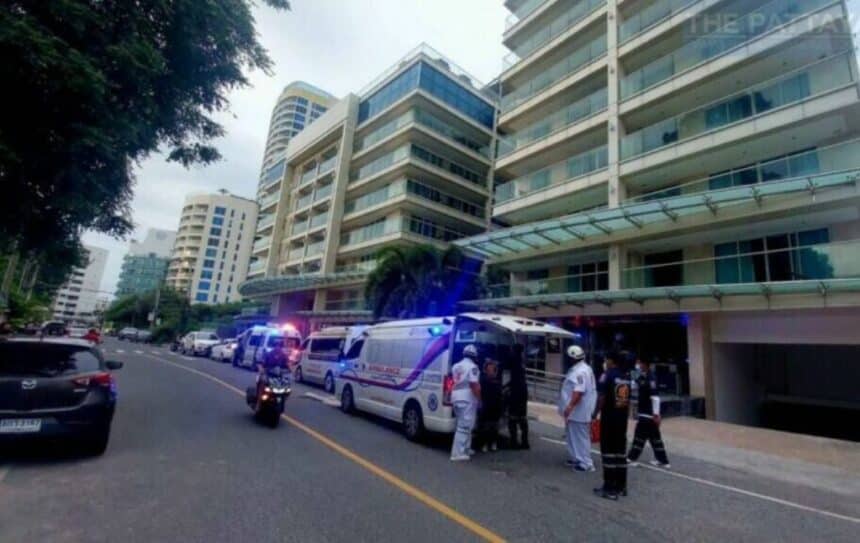
Lowe Engström, an education student from Arvika, Sweden, died around 2 a.m. on Oct. 11, 2024, outside Lebua at State Tower in Bangkok’s Bang Rak district, roughly 40 hours after arriving in Thailand on an unannounced trip. Police in both countries closed their investigations after ruling out foul play, leaving parents Camilla and Oskar Engström without access to full hotel surveillance footage, keycard logs or DNA verification.
Key Takeaways• Lowe Engström, 21, was found dead outside a 56th-floor luxury hotel in Bangkok on Oct. 11, 2024, less than two days after flying to Thailand without telling relatives. • Camilla Engström says Thai autopsy records list a shorter, heavier body wearing a suit and missing her son’s distinct thigh tattoo. • Thai and Swedish police closed their murder inquiries, highlighting broader transparency hurdles foreign families face when relatives die in Thailand. |
Autopsy Discrepancies Fuel Family’s Doubts
Thai investigators concluded that Engström fell from his 56th-floor balcony and that no one else entered his room. His mother, Camilla Engström, disputes every pillar of that account.
According to a family fundraising statement detailing records obtained through legal counsel, the Thai autopsy report listed the deceased at 168 centimeters tall with a heavy build. Lowe Engström stood 175 centimeters tall and had an athletic frame. The report also omitted a smiley-face tattoo on his thigh and noted that the body wore a suit, clothing his parents say he did not own.
Identification relied solely on Thai fingerprint analysis rather than dental records or DNA testing, according to the family. An independent fingerprint specialist hired by the parents could not confirm a match because the print images supplied by Thai police were too degraded. Thai authorities buried the remains after four days without notifying the family, and Swedish officials later advised against viewing the casket before cremation due to decomposition.
Location records add another contradiction. Police told relatives the body was recovered on the east side of the building, while hotel documentation placed Engström’s room on the west side. Investigators gave the family only two still surveillance frames, and lawyers retained in Bangkok were barred from reviewing keycard entry logs.
Unanswered Digital Trails and Final Hours
Questions also surround who interacted with Engström during his final evening. Hotel receipts listed two guests registered to his room, and Camilla Engström said an investigator showed her a photograph of a used condom recovered inside containing her son’s DNA alongside genetic material from an unidentified person.
The family contacted a woman named Kat who exchanged Snapchat messages with Engström on Oct. 10. Camilla Engström said the woman initially acknowledged visiting the hotel room, then deleted the chat thread and blocked her once told of his death. Meanwhile, Engström’s Messenger account registered activity hours after the official time of death, and an older mobile phone remains missing.
Swedish investigative journalists revisited the timeline in 2026 on the documentary podcast Spår, renewing public scrutiny in Sweden. Still, neither the Royal Thai Police nor Swedish prosecutors have reopened the case, and Thai police have issued no public response to the family’s latest statements.
Hurdles Facing Foreign Families
The Engström family’s struggle mirrors a recurring pattern across Thailand, where tens of millions of international visitors arrive annually and sudden tourist deaths frequently end in rapid administrative closures. Under Thai civil registration law, unnatural deaths trigger immediate police jurisdiction, yet district registrars and local precincts operate under strict 24-hour reporting timelines and intense pressure to clear backlogs without prolonged forensic holdovers.
Consular limits compound the information gap. Foreign embassies in Bangkok can liaise with local precincts and translate death certificates, but diplomats lack legal authority to compel Thai police to release raw CCTV footage, subpoena telecom tower records or halt rapid burials of unclaimed remains. Families must hire private Thai attorneys under power of attorney to petition courts for basic case files, often weeks after physical scenes have been sanitized.
In major tourist hubs such as Bangkok, Pattaya and Phuket, high-rise balcony falls involving foreign nationals are routinely classified early as suicides or accidents when obvious signs of forced entry are absent. Without mandatory DNA cross-checks or bilateral police protocols, bereaved relatives abroad are frequently left piecing together private investigations thousands of miles away.