




Last Updated on March 24, 2026 by Jeff Tomas
CHIANG RAI – On March 21, 2026, Ban Pangkhon in Chiang Rai filled with the smell of fresh coffee, the sound of visitors talking, and the pride of local growers. The first Pangkhon Coffee Festival was more than a tourism event or a meetup for coffee fans. It was a clear message from a close community that wanted to tell its real story in its own voice.
Set high in the mountains at about 1,250 to 1,600 meters above sea level, Pangkhon is home to roughly 300 families, many of them Akha. These farmers are not chasing attention with rare coffee types made for elite auctions.
Instead, they focus on careful work at every step, from growing and picking to processing and roasting. Because of that steady effort, their coffee has earned respect far beyond the village. It shows that consistency, skill, and shared purpose can stand beside the best coffees anywhere.

Why the Pangkhon Coffee Festival Means More Than a Celebration
For the people behind the event, the festival was about openness and honest storytelling. Visitors walked through coffee farms, watched live cherry picking, and saw both natural and washed processing in action.
They also learned about Kenyan-style methods that local farmers have adapted to fit Pangkhon’s conditions. In the cup, those choices showed up as bright acidity, jam-like sweetness, cranberry notes, and soft floral tones.
Unlike large coffee shows in major cities, this festival happened in the village itself, around the school grounds and nearby farms, with green hills and mountain mist all around. That setting mattered. It brought visitors close to the daily life of the people growing the coffee. It also showed how communities in former opium-growing areas have built steady coffee economies through royal support programs and local cooperation.
One farmer put it simply: “We don’t just grow coffee. We live with it every day, tending the trees, turning the cherries on drying beds, and making sure every bean tells our story.” During the event, guests joined farm tours, cupping sessions, local food tastings, and a coffee drip contest that attracted baristas from across the region.

Coffee in Chiang Rai, From Royal Project to Global Recognition
Chiang Rai produces around 60% of Thailand’s Arabica coffee. The province benefits from cool weather and high elevations in places like Doi Chang, Doi Tung, Mae Salong, and rising areas such as Pangkhon, also called Doi Pangkhon. The local mix of rich soil, foggy mornings, and shifting temperatures helps coffee cherries ripen slowly. As a result, the beans often develop layered flavors, from chocolate and nuts to tropical fruit and black tea.
Coffee farming in northern Thailand grew quickly in the 1980s through the Royal Project started by King Rama IX. The goal was practical and life-changing: replace opium poppy fields with legal crops that could support mountain communities over the long term. Akha, Lahu, and other hill tribe farmers received Arabica seedlings, including Catimor, Typica, Caturra, and Bourbon, along with training in modern farming methods.
Today, many farms are still small family plots. Farmers often use organic or low-chemical methods, hand-pick ripe cherries, and test new ideas in processing. Some now work with anaerobic fermentation, honey processing, and Kenyan-style washed methods. In many cases, they learned these techniques through direct contact with other farmers abroad, often through social media.
Key facts about coffee in Chiang Rai:
- Elevation: Most farms sit between 1,200 and 1,600 meters, a strong range for specialty Arabica.
- Main varieties: Catimor is common in Pangkhon because it handles local conditions well and gives a bright cup, while Typica, Bourbon, and other hybrids are also grown.
- Processing methods: Farmers use raised-bed natural drying, Kenyan-style double fermentation, and yeast-led anaerobic methods to build sweetness and texture.
- Community focus: Cooperatives and younger growers care more about quality than volume, and they support direct trade and fair pricing.
Because of this hands-on work, Chiang Rai coffee has moved well beyond local markets. Beans from the province now appear in Bangkok’s specialty cafes, at roasters in Europe, and on competition tables around the world.
How Chiang Rai Specialty Coffee Is Drawing Global Interest
Thailand’s specialty coffee market has grown fast, with yearly increases of about 15% to 20%. Chiang Rai sits at the center of that growth. Doi Chang is still the best-known name, and the farmer-owned Doi Chaang Coffee brand has built a strong export business around single-origin beans known for citrus, chocolate, and a smooth, full body. At the same time, smaller places like Pangkhon are building their own identity.
Over the past few years, Thai coffees have posted strong results in the Cup of Excellence and the Thai Specialty Coffee Awards. Lots from Chiang Rai have often scored above 85 points. International roasters like the balance they find in these coffees. They may not be as sharply fruit-forward as some Ethiopian beans, but they offer clean cups, dependable sweetness, and strong value.
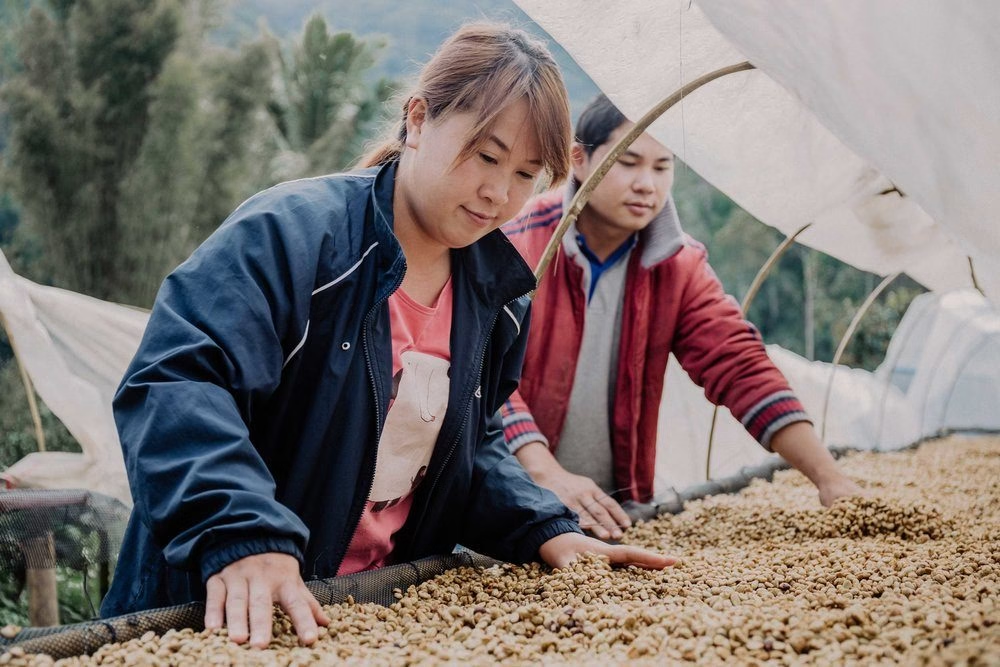
Pangkhon’s coffee, often processed by younger farmers who care deeply about quality, can show notes such as jam, cranberry, candy-like sweetness, tropical fruit, black tea, and light florals. Those flavors do not happen by chance. Farmers turn drying cherries several times a day, watch fermentation closely, and sort with care.
Much of Pangkhon’s growing reputation comes from direct relationships. Roasters from Bangkok, including Roots and Beanspire, work closely with farmers in the village. These partnerships help improve processing while also supporting better returns for growers. At the same time, social media has made knowledge sharing much faster. Akha farmers can study methods from producers in Kenya and apply what fits their own harvests.
Why more buyers are paying attention:
- Sustainability: Many farms support biodiversity, tree cover, and careful land use.
- Traceability: Small lots make it easier to follow coffee from the farm to the cup.
- A strong story: Hill tribe heritage paired with new ideas speaks to buyers who care about where coffee comes from.
- Better quality: Many coffees now score above 85 in cupping contests.
- Fair value: Prices often stay more competitive than famous origins in Central America or Africa.
As one roaster said during the festival, “Pangkhon coffee competes globally not because it’s the rarest variety, but because every step is done with heart and precision.”

Highlights From the First Pangkhon Coffee Festival
Visitors spent the day taking part in activities that brought them closer to the work behind the coffee:
- Guided farm walks through shade-grown coffee planted under native trees
- Live roasting sessions using both traditional tools and modern machines
- Cuppings that compared natural, washed, and experimental processing styles
- Akha cultural performances and local handicraft stalls
- Food pairings with sticky rice, herbal drinks, and mountain vegetables
- Youth barista contests featuring Pangkhon coffee beans
The festival welcomed hundreds of guests from Chiang Rai, Chiang Mai, Bangkok, and a number of overseas coffee travelers. Many left with fresh beans in hand and a much clearer view of the work behind each cup.
Organizers want the festival to become a yearly event. At the same time, they want to keep the focus where it belongs, on farmers, their skills, and their voices, not on empty promotion.

The Future of Pangkhon and Chiang Rai Coffee
The strong response to the first Pangkhon Coffee Festival points to a larger change taking place across Chiang Rai. Coffee communities here are moving away from anonymous bulk production and toward origin-based specialty coffee with clear stories and local pride. Younger farmers are stepping into larger roles, bringing fresh ideas while still respecting the knowledge passed down to them.
There are still real challenges. Climate change affects harvests. Labor can be hard to find. Market prices can shift quickly. Still, Pangkhon offers a hopeful example. By managing each stage of production with care, farmers can produce coffee that tastes great while also supporting income, protecting culture, and caring for the land.
For coffee drinkers around the world, Chiang Rai now offers more than beautiful mountains and famous temples. It offers the chance to meet the people behind the beans, learn how much work goes into every harvest, and taste the result of that effort.
Whether you drink a natural-processed Pangkhon Catimor in a Bangkok cafe or travel to the village yourself, the message is clear. This small part of northern Thailand is shaping a new place for itself in global coffee, one thoughtful, flavorful cup at a time.


