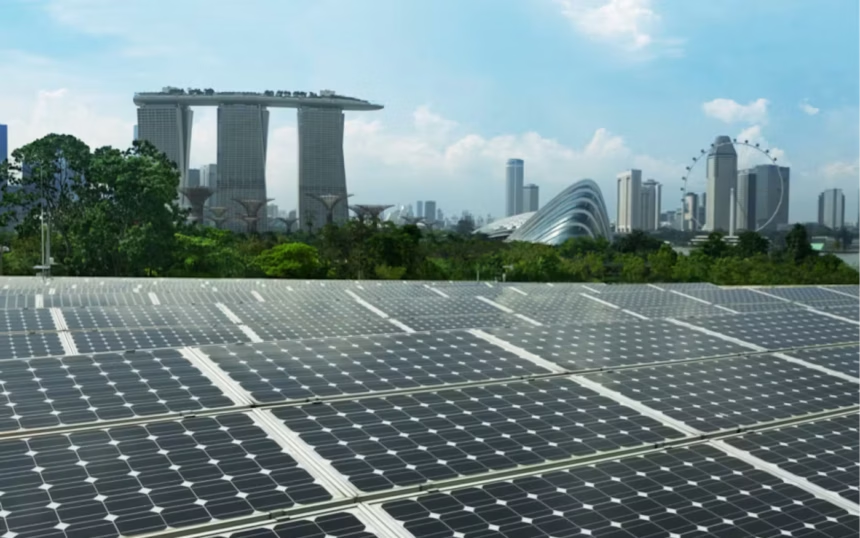
BANGKOK – Singapore is actively expanding its renewable energy footprint across the island to successfully meet the rapidly growing electricity demands of future generations. The nation recently raised its solar deployment target to an impressive four gigawatts by the time we reach the year 2035. This massive strategic shift will completely transform public infrastructure and daily life across the bustling island state over the next decade.
Minister Gan Siow Huang recently revealed this ambitious energy objective during an engaging presentation at the latest Asia Clean Energy Summit. Government officials are now actively eyeing highly unconventional public spaces to safely host these newly planned advanced solar panel installations. This innovative strategy includes utilizing large building facades, sprawling public carports, and various vacant urban lots throughout the entire city.
Key Takeaways
- Singapore firmly aims to hit an impressive 4 gigawatt-peak of cumulative solar energy capacity by the pivotal year of 2035.
- Advanced solar panels will soon cover highly unconventional public infrastructure spaces, including large neighborhood carports and towering building facades.
- Local power plants are currently developing rapid changeover technology to instantly switch operations to emergency backup fossil fuel reserves.
Maximizing Limited Urban Spaces for Power
The latest solar initiative completely redefines how city planners approach available physical spaces across heavily populated modern metropolitan environments today. Engineers are carefully evaluating virtually every single available rooftop to determine optimal positioning for the newest generation of photovoltaic equipment. This thorough spatial assessment ensures that even the most densely packed neighborhoods can actively contribute to the national renewable grid.
Integrating renewable technology into existing public infrastructure presents several unique engineering challenges for local city planners and experienced construction crews. However, the government strongly believes that maximizing these non-traditional spaces remains absolutely essential for achieving long-term environmental sustainability targets soon. Consequently, upcoming public housing projects will seamlessly incorporate integrated solar designs directly into their foundational blueprints from the very beginning.
By utilizing vertical building facades alongside traditional flat rooftops, the city effectively multiplies its total available surface area for generation. This creative architectural approach allows the island to significantly bypass its natural geographic limitations regarding large-scale traditional solar farm developments. Experts predict that this comprehensive urban integration could eventually become a global standard for other land-scarce nations seeking clean energy.
Local authorities are also actively encouraging private commercial developers to voluntarily join this nationwide push toward distributed renewable energy generation. Generous financial incentives will likely help offset the initial installation costs associated with outfitting older commercial buildings with modern panels. Ultimately, this collaborative public and private effort promises to reshape the iconic skyline while simultaneously shrinking the overall carbon footprint.
Navigating the Challenges of Grid Integration
As more intermittent solar energy enters the main electrical system, operators must heavily invest in sophisticated grid management software solutions. These advanced digital systems continuously monitor power flows to instantly balance dynamic supply with constantly fluctuating consumer electricity demand levels. Upgrading the existing network infrastructure requires substantial capital investment from both government agencies and private sector utility management partners today.
Singapore is currently planning to expand its extensive underground transmission cable network by roughly eighteen percent before the year 2030. This vital physical expansion will successfully accommodate the increased electrical load generated by numerous decentralized solar arrays across the island. Furthermore, specialized energy storage systems will play a crucial role in capturing excess midday sunshine for reliable evening consumer usage.
The national target for advanced battery storage capacity has recently been increased to just over one gigawatt-hour for upcoming years. These massive industrial battery banks essentially act as a giant buffer against sudden drops in solar generation during cloudy afternoons. Maintaining this delicate balance between renewable supply and consistent consumer demand remains the primary focus for dedicated grid network engineers.
Without these critical infrastructure upgrades, the sheer volume of new solar power could potentially overwhelm localized distribution nodes during peak times. Therefore, a synchronized approach coordinating panel installation with simultaneous grid enhancement is absolutely vital for ensuring uninterrupted daily power delivery. This careful synchronization highlights the meticulous planning required to successfully execute such a massive nationwide transition toward cleaner renewable energy.
The Push for Rapid Fuel Changeover Tech
While solar energy adoption rapidly accelerates, the nation must simultaneously ensure absolute reliability across its traditional power generation facilities today. The Energy Market Authority recently announced a massive seventy-five million dollar funding initiative dedicated to advancing crucial power decarbonization technologies. A major focal point of this generous grant involves creating highly efficient rapid fuel changeover systems for modern power combustors.
These innovative technological solutions will allow critical power plants to seamlessly transition between advanced hydrogen-based fuels and traditional backup sources. Developing the mechanical ability to safely execute this fuel switch within just ten minutes is a primary objective for engineers. This impressive operational agility guarantees that unexpected supply chain disruptions will not plunge the bustling city into sudden total darkness.
Currently, most local power stations possess the standard mechanical capability to physically toggle between utilizing natural gas and liquid diesel. However, the next generation of power generation turbines must effortlessly handle completely new sustainable fuel blends alongside these legacy options. Upgrading these massive industrial facilities requires incredibly precise engineering to prevent any disastrous mechanical failures during high-stress emergency transition periods.
This strategic technological evolution perfectly illustrates the dual approach Singapore is utilizing to successfully navigate the complex global energy transition. They are aggressively pursuing promising green innovations while pragmatically maintaining robust fail-safes built upon proven legacy industrial power generation infrastructure. Ultimately, these advanced changeover systems will establish a new international benchmark for maintaining grid stability during turbulent global energy crises.
Securing Essential Backup Fuel Reserves Now
Maintaining a continuous and uninterrupted flow of electricity is a fundamental cornerstone of national security for the thriving economic hub. To guarantee this vital stability, the government strictly mandates that all power generation companies maintain substantial physical emergency fuel reserves. Specifically, these private operators must securely stockpile at least sixty days worth of natural gas or diesel at all times.
This stringent regulatory requirement provides a robust emergency buffer against unpredictable geopolitical events that might suddenly sever international supply lines. Furthermore, the city consistently houses approximately fifty to seventy million barrels of raw oil and various refined petroleum derivatives locally. These massive strategic stockpiles can easily sustain essential national operations for up to six months during severe global crisis scenarios.
The recent sudden reduction in natural gas exports from neighboring Indonesia heavily underscores the sheer necessity of these strict mandates. While that specific supply cut accounts for a relatively small percentage of daily demand, it highlights ongoing regional resource vulnerabilities. By rigorously enforcing these backup requirements, regulators effectively insulate domestic consumers from the immediate shocks of international energy market volatility.
Between now and 2031, exactly five brand new natural gas power plants will become fully operational across the island nation. These modern facilities will significantly expand the total domestic electricity generation capacity by approximately twenty-six percent over current baseline levels. This calculated expansion deliberately relies on natural gas as a necessary transitional bridge toward a truly sustainable future energy economy.
Balancing Decarbonization With Everyday Affordability
Transitioning an entire national grid away from cheap traditional fossil fuels inherently involves massive structural costs and significant financial investments. However, government ministers have repeatedly emphasized that they will absolutely not pursue ambitious decarbonization goals regardless of the ultimate price. Ensuring that essential electricity remains highly affordable for ordinary working households and small local businesses remains a top legislative priority.
Striking this delicate economic balance requires incredibly nuanced policy decisions regarding domestic taxation, industry subsidies, and long-term utility price regulations. If basic energy costs rise too rapidly, it could severely damage the broader national economy and heavily burden lower-income families. Therefore, the transition strategy deliberately utilizes a phased approach to steadily spread out the massive required infrastructure capital investment over time.
By carefully blending relatively cheap imported natural gas with increasingly affordable domestic solar power, authorities aim to stabilize consumer pricing. Additionally, actively exploring various regional electricity import agreements could potentially unlock access to vast hydroelectric resources located in neighboring countries. This diversified portfolio approach actively mitigates the inherent financial risks associated with relying too heavily on any single generation technology.
Ultimately, the true success of this monumental green transition will be measured by both environmental impact and sustained economic stability. Citizens must continue to feel confident that their everyday livelihoods will never be sacrificed at the altar of environmental idealism. Through calculated pragmatism, Singapore actively hopes to demonstrate that aggressive climate action and robust economic growth can successfully coexist together.
Exploring Geothermal Energy as a Future Option
While solar power currently dominates the immediate national renewable agenda, researchers are seriously studying alternative possibilities deep beneath the surface. Preliminary geological surveys suggest that the island might actually possess surprisingly significant untapped geothermal energy potential buried deep underground today. In fact, some optimistic estimates indicate this hidden resource could potentially provide roughly sixty times the total annual energy usage.
Extracting this deep subterranean heat would provide a truly consistent round-the-clock low-carbon energy alternative that solar panels simply cannot match. Unlike solar generation, which completely stops during rainy weather and nighttime hours, a geothermal plant would operate continuously without interruption. This incredible baseload reliability makes it an incredibly attractive prospect for grid managers desperately seeking stable green power generation sources.
However, physically reaching these deep heat reservoirs requires implementing highly advanced drilling technologies that remain somewhat experimental and quite expensive. The government is currently funding comprehensive exploratory drilling projects to accurately map the underlying bedrock and accurately assess temperature gradients. If these early feasibility studies yield positive results, commercial geothermal extraction could potentially become a massive game-changer for the nation.
Until then, officials will pragmatically continue to maximize the proven reliability of sprawling solar arrays and advanced backup fuel networks. This comprehensive, multi-faceted approach guarantees that no potential stone is left unturned in the endless quest for sustainable energy independence. Singapore remains fully committed to testing every viable technological boundary to secure a prosperous and completely green future for everyone.