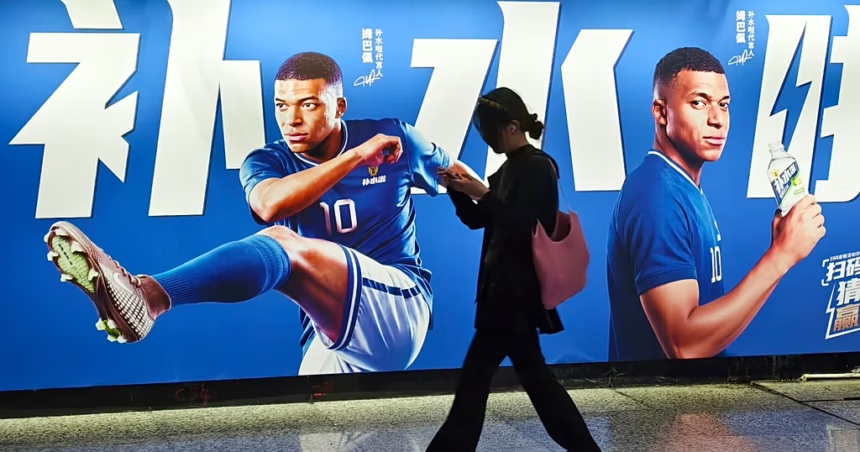
BEIJING – Kylian Mbappé recently found himself at the center of an unexpected geopolitical storm in China that nobody saw coming. A casual, seemingly harmless comment about an internet meme has triggered a massive commercial backlash across China.
The French football star mistakenly referenced Mao Zedong as a dictator during a recorded interview released online. This brief moment of cultural ignorance has quickly exposed the deep economic and political risks international brands face today.
Key Takeaways
- Chinese state media and major domestic brands swiftly severed ties with Mbappé following his viral internet meme comments.
- The controversy highlights the fragile nature of global sports partnerships amid growing EU-China trade tensions and economic uncertainty.
- China’s domestic demographic decline is shifting consumer behavior, making local markets highly sensitive to perceived foreign disrespect.
The High Cost of a Careless Joke in China
The entire controversy stems from an interview clip that recently surfaced and quickly went viral on social media. Mbappé was asked by the host to identify his favorite internet meme featuring himself from recent years. He pointed to an edited image placing his face on a Chinese dictator, completely unaware of the historical weight.
That figure was Mao Zedong, the revered founding father of the People’s Republic of China who remains culturally significant. Football fans often use the dictator label playfully to describe Mbappé’s dominant, overshadowing presence on the football pitch. However, translating this specific internet joke directly to a Chinese context proved to be a disastrous miscalculation.
Mao remains a highly sensitive historical figure within Chinese society and modern political discussions across the nation. While some revere his foundational leadership, his policies also caused immense suffering during the tragic Great Leap Forward. Mocking his legacy, even unintentionally through an internet meme, crosses a strict red line for Chinese authorities and citizens alike.
The public reaction on major social media platforms like Weibo was immediate and relentlessly hostile toward the player. Hashtags calling for a swift boycott of the Real Madrid forward dominated the trending charts within a few hours. Many angry users demanded a formal public apology, while others aggressively urged the football star to never visit their country again.
Navigating the Minefield of Chinese Commerce
The resulting corporate fallout moved with a speed that genuinely shocked many Western observers and sports industry experts. Mengniu, China’s largest dairy producer, abruptly cut all commercial ties with the previously beloved athlete without any hesitation. Other major sponsors, including Milkground, quickly followed suit to protect their own domestic market shares from the growing outrage.
State media intervention dramatically escalated the situation beyond mere brand boycotts and angry social media commentary. The China Media Group boldly suspended all broadcasts of La Liga matches featuring the famous French superstar. This aggressive move directly threatened the Spanish football league’s highly lucrative broadcasting agreements and overall commercial presence in the region.
Real Madrid and La Liga executives immediately scrambled into intense damage control mode to salvage the situation. La Liga president Javier Tebas rushed to meet with China’s ambassador to Spain to protect their long-term strategic partnership. Tebas emphasized that one individual episode should absolutely not destroy years of careful commercial bridge-building between the two nations.
Foreign brands have repeatedly faced similar massive public backlashes within the highly profitable Chinese consumer market. Companies like Dior, Coach, and Nike have all navigated grueling consumer boycotts over perceived cultural slights in recent years. However, the unprecedented speed of this specific cancellation highlights a rapidly shrinking margin for error for global businesses operating today.
Managing severe reputational risk in China is becoming increasingly difficult for multinational corporations and global sports entities. You do not necessarily need to think exactly like a Chinese citizen to succeed in this vast, lucrative market. You do, however, need a foundational, working understanding of what explicitly offends local sensibilities and state-backed historical narratives.
Trade Tensions and a Shifting Economic Landscape
This dramatic sporting controversy unfolds against a tense backdrop of severe economic friction between Europe and Beijing. EU-China trade tensions are currently boiling over, featuring aggressive tit-for-tat tariffs on electric vehicles and imported European brandy. These broader geopolitical disputes create a hostile environment where cultural missteps are heavily penalized by opportunistic state actors.
The European Union is actively trying to protect its domestic manufacturing industries from waves of cheap Chinese imports. In retaliation, Beijing is actively demonstrating its willingness to weaponize consumer access against high-profile European exports and personalities. European football, a massive cultural export, suddenly looks incredibly vulnerable in the middle of this ongoing international trade war.
China’s economy is also facing unprecedented internal pressure from a rapidly aging population and slowing birth rates. Domestic demographic decline is severely tightening consumer spending and fundamentally altering long-term economic growth projections for the country. When economic anxiety inevitably rises, nationalistic sentiment often surges to fill the cultural void and unify the domestic population.
A significantly shrinking youth demographic means global brands must fight harder for every single consumer dollar available. Chinese shoppers are increasingly favoring local domestic brands over international names out of a renewed sense of national pride. A sudden controversy involving a foreign sports icon provides the perfect cultural catalyst for this inward commercial shift.
Authorities sometimes subtly amplify these public controversies to distract citizens from pressing domestic economic concerns and rising unemployment. Experts continuously debate how much of the Mbappé outrage is genuine anger versus manufactured state-sponsored indignation. Regardless of the actual origin, the severe financial consequences for Western entities remain incredibly real and devastatingly immediate.
The Future of Global Sports Partnerships
Mbappé eventually issued a comprehensive, carefully worded apology across multiple social media platforms in several different languages. He acknowledged that his comments were poorly judged and explicitly expressed deep respect for the Chinese people. The Chinese Foreign Ministry formally noted the public apology, subtly signaling a potential cooling of the official diplomatic rhetoric.
Despite the formal apology, the long-term structural damage to his personal brand in Asia remains highly uncertain. Athletes are no longer just competitors; they are sprawling multinational corporations with massive, complex global footprints. A single cultural misstep during an interview can wipe out millions of dollars in sponsorship revenue almost overnight.
European football clubs will likely implement much stricter communication protocols for their star players moving forward. Protecting lucrative television broadcasting rights in Asia will increasingly require extensive cultural sensitivity training for all public-facing personnel. The freewheeling days of casual, unfiltered interviews for global superstars may be rapidly and permanently coming to an end.
The modern intersection of professional sports, global politics, and international trade has never been more incredibly volatile. Brands and athletes must navigate this complex web with extreme caution, constant vigilance, and deep cultural awareness. Understanding the invisible red lines of the Chinese market is now an absolutely mandatory cost of doing international business.