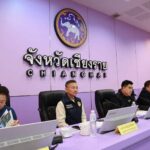
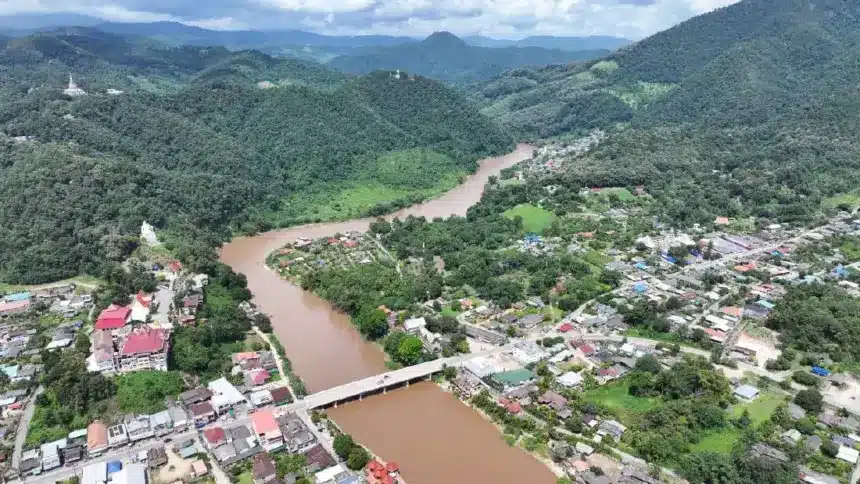
CHIANG RAI — Thai Deputy Prime Minister Yodchanan Wongsawat announced plans to designate a 150-kilometer stretch of the Kok River as a formal pollution control zone after state laboratories confirmed unsafe arsenic levels in ten aquatic species. The emergency push pairs strict domestic chemical export curbs with cross-border demands to publicly name the upstream mining operators contaminating northern Thailand’s waterways.
The crisis threatens local food supplies, tap water safety and river livelihoods across Chiang Rai province. Yodchanan said authorities will launch a public risk map and a one-stop data center on Nov. 27, giving residents real-time contamination alerts while Bangkok works with the Defense Ministry to choke off mining chemical supplies flowing across the border.
Key Takeaways• Toxic Contamination: Thailand’s Department of Fisheries detected unsafe arsenic levels in ten Kok River species, including freshwater shrimp, river snails, basa fish and green catfish. • 150-Kilometer Control Zone: Authorities are moving to place 150 kilometers of the Kok River under a formal pollution control zone alongside a risk map and one-stop data center launching Nov. 27. • Export Curbs and Transparency: Yodchanan is coordinating with the Defense Ministry to block mining chemical exports and insists there is no reason to keep the names of polluting mines secret. |
Supply Chain Curbs and Public Mine Naming
Bangkok is moving to cut off the industrial inputs fueling the contamination. Yodchanan, who also serves as minister of higher education, science, research and innovation, said he is coordinating with the Defense Ministry and security agencies to restrict exports and transit shipments of chemicals used in rare-earth and gold extraction.
Transparency sits at the center of the new strategy. Yodchanan rejected calls for diplomatic secrecy regarding the companies operating upstream, stating plainly that there is no reason to keep the names of the mines secret. Thai officials took chemical fingerprint evidence from the Kok and Sai rivers to trilateral talks with Myanmar and China on Nov. 24 to demand mine ownership records and halt further wastewater discharges.
Upstream Mining Drives Cross-Border River Crisis
The Kok River originates in Myanmar’s Shan State before winding through Chiang Rai province and emptying into the Mekong River. Over the past two years, satellite imagery and field investigations have documented a rapid surge in unregulated gold and rare-earth mining along the riverbanks in eastern Shan State. Operators rely on heap leaching and river dredging, flushing cyanide, heavy metals and arsenic-laced tailings directly into headwaters that flow south into Thailand.
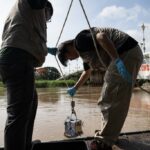
The fallout has disrupted daily life across northern Thai communities. Recent public health screenings detected elevated arsenic in the urine of 31 out of 549 tested Chiang Rai residents, while the Department of Fisheries warned locals against eating contaminated river catches. Fishermen have watched markets collapse overnight, and provincial water agencies are scrambling to tap ten alternative groundwater sites for 14 communities.
Public skepticism remains high after months of murky water and conflicting agency advisories. A Suan Dusit Poll released Nov. 22 found nearly 86% of respondents lacked confidence in the government’s handling of the river crisis.
The Nov. 27 rollout aims to close that credibility gap. Alongside launching the unified data center and village-level risk map, the Ministry of Natural Resources and Environment will submit the 150-kilometer pollution control zone proposal to the Pollution Control Committee the same day. Final approval from the National Environment Board on Dec. 2 will unlock emergency remediation budgets and legal enforcement powers across the watershed.