BANGKOK — Thai police launched a nationwide manhunt on Monday for a 21-year-old Myanmar man suspected of killing and dismembering his wife before dumping her remains 20 meters from his Bangkok apartment.
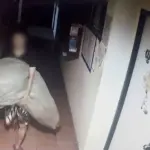
Investigators from the Metropolitan Police Bureau identified the suspect as Banyar Soe Hlaing after reviewing security footage from Nov. 18 showing him hauling heavy sacks out of his residence in Soi Lat Phrao 109. Immigration officers are now monitoring border checkpoints and transit hubs to prevent him from fleeing Thailand while forensic teams confirm the victim’s identity.
Key Takeaways• Police named 21-year-old Myanmar national Banyar Soe Hlaing as the prime suspect after CCTV captured him carrying sacks from his apartment on Nov. 18. • Residents discovered the dismembered remains inside a green fertilizer sack and nearby bags at an illegal garbage dump in Soi Lat Phrao 109 on Sunday night. • Forensic specialists are working to verify whether the victim is the suspect’s wife while immigration authorities track his movements nationwide. |
Grim Discovery and Security Camera Trail
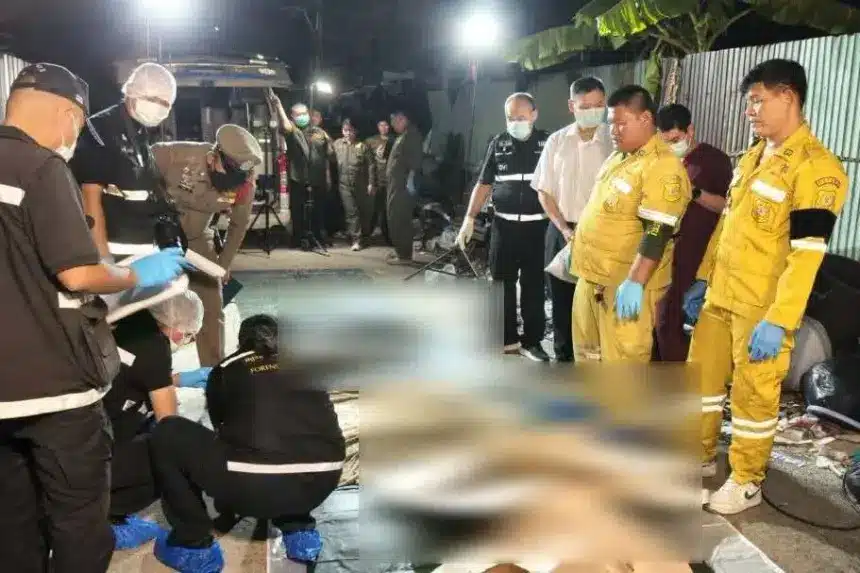
The investigation began late Sunday when an apartment manager in Lat Phrao asked a local resident to inspect a foul odor rising from a garbage heap at the dead end of Soi Lat Phrao 109, Sub-soi 5. Cutting open a green fertilizer sack, the resident spotted a human leg protruding from smaller plastic bags inside. Police soon recovered a second black bag holding a torso wrapped in a blue blanket, along with a red plastic bag discarded in nearby brush containing the victim’s head.
Officers immediately canvassed neighboring apartments and reviewed closed-circuit television cameras lining the narrow lane. Footage recorded in the early hours of Nov. 18 showed a young man in a yellow long-sleeved shirt and blue jeans carrying sacks matching those found at the dump site. Police Lt. Gen. Siam Boonsom, commander of the Metropolitan Police Bureau, confirmed Monday evening that detectives traced the suspect to a rental room just 20 meters from the rubbish pile.
Witnesses told investigators that the young couple frequently argued over suspected jealousy. Coworkers last spoke with the victim, known to friends as Dan or Pyo, around Nov. 14 and Nov. 15, when she sounded unwell and missed work. Banyar Soe Hlaing last reported to his job on Nov. 17, one day before cameras captured him hauling the sacks outside.
Forensic Hurdles and Border Alerts
Forensic doctors estimate the woman died five to seven days before her remains were uncovered. Investigators noted that the victim’s right hand, wrist and several internal organs remain missing, complicating rapid identification. Police believe the killer removed the right hand deliberately to obstruct fingerprint matching, and forensic teams are now conducting DNA comparisons to confirm she was Banyar Soe Hlaing’s wife.
Detectives returned to the residential building on Monday to collect trace biological evidence from the suspect’s room and drains. Camera logs indicate the suspect fled the neighborhood shortly after residents discovered the bags on Sunday night. Authorities alerted the Immigration Bureau and provincial police units along Thailand’s western border with Myanmar to watch for the 21-year-old.
Urban Blind Spots in Bangkok
The dumping ground in Soi Lat Phrao 109 highlights a recurring urban security challenge across Bangkok’s densely packed residential sub-sois. Older low-rise apartment blocks housing migrant workers often sit beside overgrown vacant lots and unmonitored informal waste piles, creating blind spots where illegal dumping goes unnoticed for days until foul odors alert neighbors.
High tenant turnover in budget walk-up buildings also slows early missing-person reports. Because many migrant laborers work shifting schedules across construction, retail and service sectors, absences of several days rarely trigger immediate alarms among landlords. For local residents in Bang Kapi district, the discovery has prompted calls for municipal officials to clear derelict lots, install brighter street lighting and expand public camera coverage along dead-end lanes.