
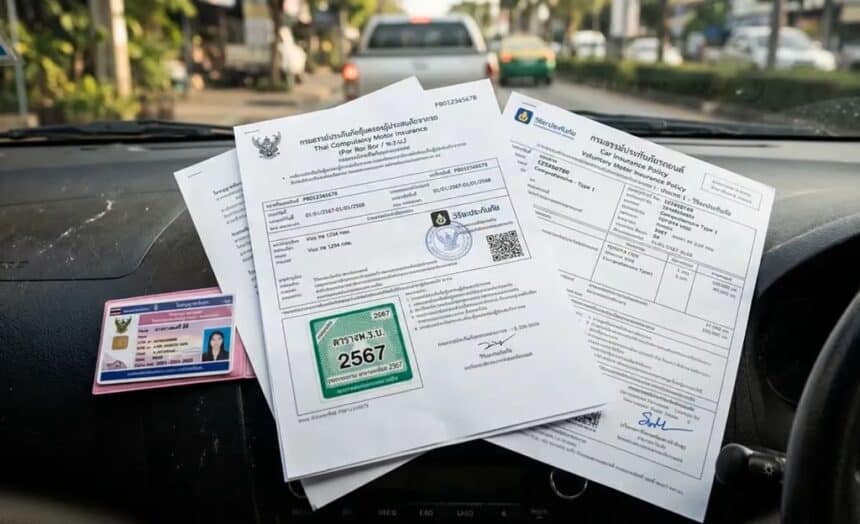
Por Ror Bor is Thailand’s required car insurance, and you’ll generally need a valid policy to renew your annual vehicle tax. It covers eligible injuries to people in road accidents, but it doesn’t pay to repair your car or replace its belongings.
The policy is separate from voluntary insurance, which can provide broader protection. Read on to see how Por Ror Bor works, what it costs, and how to renew or make a claim, starting with what the policy covers and how it differs from voluntary insurance.
Key Takeaways
- Por Ror Bor is compulsory motor insurance in Thailand, and you need an active policy for annual vehicle tax renewal. See Chiang Rai vehicle registration fees.
- The policy pays eligible injury benefits, including preliminary medical expenses of up to ฿30,000 per person before fault is determined, as explained in this Thailand road accident guide.
- If the victim qualifies for higher benefits, medical costs can reach ฿80,000 per person, while death or total permanent disability benefits can reach ฿500,000.
- Annual premiums depend on vehicle class; a passenger car costs ฿645.21, while motorcycle rates vary by engine size.
- Por Ror Bor does not pay for damage to your vehicle or theft, so consider voluntary insurance for those risks.
Thai Compulsory Car Insurance (Por Ror Bor) Explained: What It Covers
Por Ror Bor, written พ.ร.บ., is compulsory motor insurance under Thailand’s Protection for Motor Vehicle Victims Act B.E. 2535 (1992). It provides statutory benefits to people injured or killed in road accidents, including eligible medical expenses and compensation for death or permanent disability. The amount a person can claim depends on the applicable benefit and, for some payments, fault.
This policy protects people, not the insured vehicle. It won’t pay to repair your car, replace belongings, or cover theft. Voluntary motor insurance is separate and may cover vehicle damage and other risks, depending on the plan. For a side-by-side look at these costs and protections, see Thailand Por Ror Bor and annual road tax costs.
Why every registered vehicle needs a current policy
Vehicle owners need valid Por Ror Bor as part of the annual vehicle-tax and registration renewal process. The policy certificate provides proof of compulsory insurance when you apply to renew. Thailand’s compulsory motor insurance requirements explain the legal basis for requiring this coverage.
The insurance premium and vehicle tax are separate payments. Renewing one doesn’t pay the other, so budget for both and check each due date. Renewing Por Ror Bor before applying for annual tax helps avoid delays if your policy has expired.
Por Ror Bor is also distinct from voluntary coverage. If you cause an accident, compulsory insurance may pay eligible benefits to injured people, but it won’t cover repairs to your own car. A voluntary policy may add protection for your vehicle, third-party property damage, or theft, depending on its terms. Check the policy details before relying on it for a particular type of loss.
What Por Ror Bor Pays After a Crash
Por Ror Bor pays eligible injury benefits, not vehicle repairs. The amount depends on the benefit tier: preliminary compensation may be available before fault is decided, while higher limits apply when the injured person qualifies as not at fault. Check the insurer’s current policy wording when making a claim, since eligibility and payment depend on the circumstances.
Preliminary benefits before fault is decided
An injured person may receive preliminary compensation without waiting for authorities or insurers to determine fault. AXA’s published Por Ror Bor benefit limits list up to ฿30,000 per person for medical expenses and up to ฿35,000 per person for death, bodily injury, dismemberment, or permanent disability.
These are preliminary limits, not the higher benefits available to people who qualify as not at fault. They also do not guarantee that every claimant will receive the maximum. The insurer assesses the claim under the applicable rules and policy terms, so keep medical records, receipts, and accident documentation.
Higher benefits for people who are not at fault
When the injured person qualifies as not at fault, the published limits rise to ฿80,000 per person for medical expenses and ฿500,000 per person for death or total permanent disability. For certain other permanent disabilities or dismemberment, compensation ranges from ฿200,000 to ฿500,000, depending on the injury and the applicable benefit schedule.
A person treated as an inpatient may also qualify for ฿200 per day for up to 20 days, for a maximum daily allowance of ฿4,000. AXA’s English motor policy wording describes this allowance as additional to the specified medical benefit.
The higher tier depends on the injured person’s entitlement, rather than applying automatically to everyone involved in a crash. Ask the insurer to explain which tier applies and what documents it needs. For context on injury claims involving rented vehicles, see this guide to Por Ror Bor benefits after a rental-car crash.
How Much Does Por Ror Bor Cost?
Por Ror Bor premiums depend on vehicle type, engine size, and passenger capacity. The examples below are reported standard annual totals, including stamp duty and 7% VAT. Rates can change, so confirm the amount for your exact vehicle class with your insurer or Thailand’s Office of Insurance Commission (OIC) before buying.
Typical annual premiums for cars, pickups, and vans
For a passenger car with up to seven seats, the reported standard premium is ฿645.21 per year. This class includes electric vehicles. A pickup weighing no more than three tonnes costs ฿967.28, while a van with up to 15 seats costs ฿1,182.35.
These figures are standard totals, not guaranteed prices from every provider. An insurer may advertise a discount, but that’s a provider-specific offer rather than a reduction to the standard premium. Check the final amount at checkout, and compare it with the published Por Ror Bor rate examples.
If you’re purchasing a used vehicle, include the compulsory policy in your transfer costs and confirm that the car has valid coverage. This guide to buying a second-hand vehicle in Chiang Rai covers insurance as part of the process.
Motorcycle premiums vary by engine size
Motorcycle rates increase across engine-size bands. Reported annual totals are ฿161.57 for motorcycles up to 75 cc, ฿323.14 for more than 75 cc and up to 125 cc, ฿430.14 for more than 125 cc and up to 150 cc, and ฿645.21 for motorcycles over 150 cc.
The correct class depends on the motorcycle’s registered engine size, so check the registration book rather than relying on a broad price range. Also verify the current rate with the insurer or OIC before purchase, since a quote may reflect a discount or other provider-specific terms.
How to Buy, Renew, and Claim Por Ror Bor
Keep the process in order: arrange the right Por Ror Bor policy, save its schedule, then use valid insurance as evidence when renewing vehicle tax. After an accident, contact the insurer promptly and keep records of treatment and costs.
Renew your policy before paying annual vehicle tax
You can buy or renew Por Ror Bor through an insurer or insurance agent. Before paying, check that the policy matches the vehicle’s registration details, including its type and other identifying information. Then save the policy schedule, which records the coverage and policy period.
Once the policy is active, use the schedule as supporting evidence during annual vehicle-tax renewal. Insurers may provide it electronically, but don’t assume every office or online service accepts the same format. Confirm the current Department of Land Transport requirements and accepted documents before submitting your renewal. For additional guidance, see this overview of online tax renewal for older vehicles.
Keep a copy of the schedule where you can access it easily, and check the expiration date before the next tax renewal. The policy and vehicle tax are separate payments, so completing one doesn’t renew the other.
What to do and what to prepare for a claim
After a crash, seek medical help first, then notify the insurer as soon as practical. Keep medical receipts, treatment records, and a clear record of the accident, including the date, location, vehicles involved, and any police report. These details can help the insurer assess the claim.
Insurers commonly request documents such as:
- The claimant’s identification document.
- The vehicle registration document.
- A police report or other accident record.
- Medical records, bills, and receipts.
The insurer may also ask for additional paperwork based on the accident and the type of benefit claimed. Contact the claims department to confirm its current checklist, and keep copies of everything you submit.
Some published sources report a 180-day claim filing period and a seven-day timeline for preliminary payments. Treat these as figures to verify, not guaranteed deadlines. Check the current rules with the insurer or the relevant official authority, and ask the insurer to confirm the applicable filing period and payment process for your case.
Frequently Asked Questions
Por Ror Bor is straightforward once you separate the legal requirement from the practical details of buying and renewing a policy. These answers cover common points to check before paying.
Can I buy Por Ror Bor without voluntary car insurance?
Yes. Por Ror Bor and voluntary car insurance are separate products, so you can buy the compulsory policy on its own. However, Por Ror Bor pays eligible benefits for injuries or deaths, not repairs to your car, theft, or damage to someone else’s property. If you want protection for those costs, compare voluntary policy terms separately.
Can I use an electronic policy for vehicle-tax renewal?
Some insurers send the policy schedule electronically, but don’t assume every renewal channel accepts the same format. Requirements can depend on current Department of Land Transport procedures and whether you renew online or in person. Before applying, confirm which document format the service accepts; this Thailand road-tax renewal guide outlines common renewal requirements.
Does a car’s engine size change its Por Ror Bor premium?
For a standard passenger car, the premium is generally based on its vehicle class, rather than engine size. Motorcycle premiums, by contrast, are grouped into engine-size bands. When requesting a quote, give the insurer the vehicle’s exact registration details and confirm its category, especially if it’s a pickup, van, or modified vehicle.
Are the premiums and benefit limits the same with every insurer?
Compulsory cover follows statutory requirements, so insurers don’t set different legal benefit limits for the same type of policy. However, the amount shown at checkout may reflect a provider-specific discount or service option. Compare the final premium and policy schedule, then verify the current rates and benefit limits before buying.
What should I do if I’m unsure which vehicle class applies?
Check the vehicle registration details, then ask the insurer or agent to confirm the class before you pay. Engine size, passenger capacity, and vehicle type can affect which premium applies, so don’t rely on a quote based only on a broad label such as “car.” If the registration details and quote don’t match, ask the provider to correct the classification first.