Ordinary personal VPN use is not expressly prohibited by the Thai laws identified, including the Computer Crime Act. For residents, visitors, and expats asking, “Is using a VPN legal in Thailand?”, that supports a qualified yes, rather than an official government guarantee that every use is lawful or risk-free.
The important distinction is between using a privacy tool and what you do through it, because posts, messages, downloads, and forwarded material remain subject to Thai law. A protected connection can be useful for hotel Wi-Fi or a work account, but it doesn’t settle the legality of sensitive content or override a service’s account restrictions.
Start with what Thai law regulates, then separate that from website blocking and private access rules.
Key Takeaways
- The Thai laws reviewed do not expressly prohibit ordinary personal VPN use by residents, tourists, or expats.
- Thailand’s Computer Crime Act regulates specified online conduct and data, including knowingly forwarding certain prohibited material.
- A blocked website and a criminal offense are separate questions; neither automatic criminality nor risk-free access should be assumed.
- Political speech, royal-related content, online gambling, and pornography require particular care because different laws and restrictions may apply.
- Use VPNs for sensible privacy needs, follow workplace and account rules, and get advice from a Thailand-licensed lawyer for sensitive situations.
Is Using a VPN Legal in Thailand?
The laws reviewed do not expressly ban ordinary personal VPN connections. That applies to the question of VPN use by Thai residents, foreign visitors, and expats; the identified provisions do not establish a separate prohibition based on those categories.
However, this conclusion rests on the absence of an identified ban. It isn’t an official statement approving VPNs or every activity carried out through them.
What Thailand’s Computer Crime Act says
The Computer Crime Act B.E. 2550 (2007), amended in 2017, regulates computer systems, data, and conduct. The Council of Europe’s Thailand cybercrime law summary identifies unauthorized system access among the activities criminalized by the Act.
Section 14 covers specified categories of data. These include dishonest or deceptive entry of false or distorted data likely to harm the public, and false data likely to harm national security or cause public panic.
It also covers data involving specified national security or terrorism offenses, obscene data accessible to the public, and knowingly disseminating or forwarding material within the listed categories.
The cited general maximum is five years in prison, a fine up to THB 100,000, or both. That is a maximum for the relevant offenses, not an automatic sentence for every disputed post.
A VPN does not make illegal activity legal
Routing a connection through a VPN doesn’t change the legal character of a post, message, download, or other action. If conduct meets the elements of an offense, using a different connection route doesn’t provide immunity.
The forwarding provision also matters. You don’t necessarily have to create material yourself for its distribution to raise legal concerns; knowledge of its character matters under Section 14.
A VPN should never be treated as proof that an account or its activity cannot be connected to you.
Blocked websites and sensitive content: what expats should know
Website blocking and criminal liability are related but separate questions. Section 20 provides a mechanism for restricting specified computer data; legal commentary on Thailand’s online content removal process explains its court-order framework.
The available legal material doesn’t establish that reaching every blocked URL through a VPN is automatically a standalone offense. Equally, it doesn’t establish that all such access is lawful or free of legal risk.
Take extra care with political and royal-related content
Online speech can raise issues under laws beyond the Computer Crime Act. Criminal Code Section 112 concerns defaming, insulting, or threatening the King, Queen, Heir-apparent, or Regent.
The U.S. State Department’s 2024 Thailand human-rights report describes penalties of three to 15 years in prison for each offense. Secondary descriptions often express this as “per count.”
Don’t treat those figures as a complete analysis of a particular statement, repost, or discussion. Political and royal-related material can involve serious legal questions that a general VPN guide cannot resolve.
For a specific concern, speak with a Thailand-licensed lawyer before deciding how to handle the material.
Do not assume every restricted site has the same legal status
Online gambling and pornography illustrate why broad claims are unreliable. Restrictions can apply, but that doesn’t mean every website visit, image, transaction, or act of distribution has identical legal status.
Section 14’s reference to obscene data accessible to the public doesn’t, by itself, settle every question about private viewing. Likewise, a website’s availability says little about whether a particular gambling activity is permitted.
Understanding internet censorship in Thailand provides background on access restrictions, but a block doesn’t supply a complete legal explanation. The underlying content and your actions still matter.
For sensitive cases, qualified legal advice is more useful than a VPN provider’s broad claim that access is safe.
How expats can use a VPN more carefully in Thailand
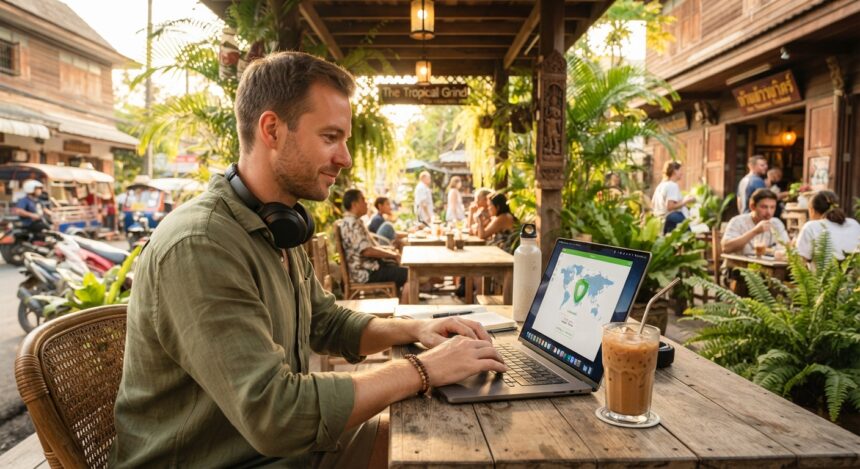
A VPN can support routine privacy needs, including protecting a connection on hotel or cafe Wi-Fi and connecting to a workplace network. These uses are distinct from publishing unlawful material or carrying out another prohibited activity.
Keep that distinction practical: choose the tool for a defined privacy need, follow Thai law, and avoid treating a successful connection as permission to do anything online.
Keep work, banking, and service-provider rules in mind
An employer, bank, or streaming service may impose its own access and account conditions. Those private rules are separate from whether Thai law expressly prohibits personal VPN use.
For work, follow your employer’s approved remote-access policy. A company VPN and a personal consumer VPN may have different purposes, and permission to use one doesn’t automatically authorize the other.
Similarly, access to a banking account or subscription service remains subject to that organization’s security procedures and terms. A VPN connection doesn’t override them.
You can therefore encounter an account or access problem without having committed a VPN-specific offense under Thai law. Keep those two issues separate when deciding what went wrong.
Keep ordinary account security in place
A VPN protects one part of a connection. It doesn’t fix a compromised device, a weak password, or a fraudulent message that persuades you to disclose account information.
Continue using unique passwords and multifactor authentication where available. Also keep devices updated, and treat requests for passwords or one-time codes with caution.
Practical cybersecurity habits for Thailand complement connection privacy. They address risks that switching on a VPN cannot solve.
Legal judgment needs the same attention. If your situation involves sensitive content, a disputed publication, or a specific legal concern, get advice from a Thailand-licensed lawyer. A technical support agent or privacy app cannot provide a reliable answer about your individual legal exposure.
Frequently Asked Questions
Can tourists and expats use a VPN in Thailand?
The reviewed laws do not expressly prohibit ordinary personal VPN use by tourists or expats. However, that conclusion isn’t an official government guarantee. Your nationality or visitor status doesn’t turn a VPN into an exemption from laws governing online conduct, and a foreign account doesn’t change that distinction.
Can I use a VPN on hotel or cafe Wi-Fi?
Using a VPN on public Wi-Fi is a common privacy measure. It can protect the connection between your device and the VPN server, but it doesn’t protect against every online threat. You still need ordinary account security, and unlawful conduct remains unlawful regardless of the network you use.
Does a VPN let me access blocked websites without risk?
No blanket assurance is supported by the available legal material. It doesn’t establish that every instance of reaching a blocked URL is automatically a standalone offense, but it also doesn’t establish that all access is risk-free. Consider the content and activity separately from whether the connection works.
Can a VPN hide my online activity from Thai authorities?
A VPN shouldn’t be treated as a guarantee of anonymity or protection from investigation. Its privacy features don’t establish that an account, device, or action cannot be linked to you. Avoid making sensitive legal decisions on the assumption that routing traffic through a VPN makes you untraceable.
Could I face a penalty for something I post through a VPN?
Yes, if the content and conduct fall within an applicable offense. The Computer Crime Act and other laws can apply regardless of how you connected. A penalty depends on the relevant law and circumstances, rather than simply whether you used a VPN when you published or forwarded material.
Use a VPN for privacy, with clear legal limits
Ordinary personal VPN use is not expressly prohibited in the Thai laws reviewed, but that finding supports a limited conclusion: you can distinguish the privacy tool itself from the legality of the activity carried out through it.
For everyday needs, use a VPN as one part of sensible online security, alongside strong account protection and compliance with workplace or service rules. Keep legal responsibility in view whenever you post, forward, download, or access sensitive material, because a protected connection doesn’t settle those questions.
If a particular situation involves political or royal-related content, restricted material, or another concrete legal concern, advice from a Thailand-licensed lawyer is the appropriate next step. A VPN can protect a connection, but it cannot supply legal permission.