



Last Updated on April 16, 2026 by Jeff Tomas
An EPF account is an important part of an employee’s financial life. It helps build savings over time and offers support during retirement or in times of need. Many employees are aware that money is deducted from their salary each month, but they may not fully understand how this account works or what details are linked to it.
Knowing these details can help in better financial planning and avoid confusion later. Let us understand the key aspects of an EPF account and why every employee should be aware of them:
What is an EPF Account and How it Works?
An EPF account, also known as the Employees’ Provident Fund account, is a savings scheme designed for salaried individuals. Both the employee and the employer contribute a fixed portion of the salary to this account every month. Over time, these contributions build a strong financial base for the employee.
The money in the EPF account earns interest, which is added annually. This helps the savings grow steadily without requiring any extra effort from the employee. The main purpose of this account is to provide financial security after retirement, but it can also be used during specific situations such as medical emergencies or home-related expenses.
The contribution process is simple. A part of the employee’s salary is deducted automatically, and the employer adds a matching contribution. These funds are then managed under the EPF system. As long as the employee continues working, the balance keeps increasing, making it a reliable long-term savings option.
Important details linked to your EPF account
Every EPF account is connected to several important details that employees should keep track of. These include the account number, Universal Account Number, employer details, contribution history, and nominee information. Each of these plays a role in managing the account smoothly.
One common concern among employees is understanding how to find PF account number when it is not readily available. This number is usually provided by the employer and can also be found on salary slips or official employment records. Keeping this number safe is important for accessing account details and making any claims.
Employees should also ensure that their personal details such as name, date of birth, and identification numbers are correctly updated. Any mismatch in these details can lead to delays or issues when withdrawing funds or transferring the account.
Common situations when employees need EPF information
There are several situations where employees may need to access their EPF account details. One of the most common situations is when changing jobs. In such cases, employees need to transfer their EPF balance from the previous employer to the new one.
Another situation arises during financial needs such as medical emergencies, education expenses, or purchasing a home. In these cases, partial withdrawal from the EPF account may be allowed based on certain conditions.
Employees may also need EPF information when planning long-term financial goals. Knowing the available balance helps in making better decisions about savings and investments. It also gives a clearer idea of how much support can be expected in the future.
At times, individuals may explore options like a Personal Loan from a lending firm for urgent financial needs. Even in such cases, having a clear understanding of EPF savings can help in planning repayments and managing overall finances in a better way.
How the UAN System Helps Manage EPF Accounts?
The Universal Account Number, commonly known as UAN, plays a central role in managing EPF accounts. It is a unique number assigned to each employee and remains the same throughout their career, even when changing jobs.
The UAN helps in linking multiple EPF accounts under one identity. This makes it easier to track contributions from different employers without confusion. Employees do not need to maintain separate records for each job, as everything is connected through the UAN.
Another advantage of the UAN system is ease of access. Employees can log in to the EPF portal using their UAN to check account balance, download statements, and submit requests. This reduces dependency on employers for basic information.
Where Employees Can Access EPF Details Online?
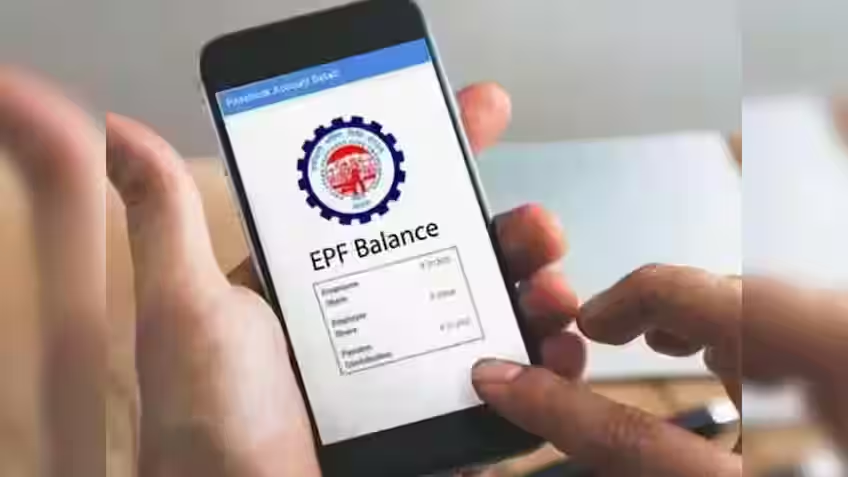
With digital systems in place, accessing EPF details has become simple and convenient. Employees can use the official EPF portal to log in with their UAN and view their account information. This includes balance details, contribution history, and claim status.
In addition to the portal, employees can also use mobile-based services to check their EPF details. These platforms provide quick access and are useful for those who prefer managing their accounts on their phones.
Another option is to receive updates through messages. Employees can link their mobile numbers to their EPF accounts and get regular updates about contributions and balances. This helps in staying informed without having to log in frequently.
Common Issues Employees Face With EPF Records
While the EPF system is designed to be simple, employees may still face certain issues. One common problem is incorrect personal details. Even a small mistake in name or date of birth can create complications during withdrawals or transfers.
Another issue is missing or delayed contributions. Employees may sometimes notice that the employer’s contribution is not reflected in the account. In such cases, it is important to raise the concern and verify the records.
Account transfer problems can also occur when changing jobs. If details are not properly linked through the UAN, the transfer process may take longer than expected. This can cause inconvenience and delay access to funds.
Employees may also face difficulty in accessing their accounts due to forgotten login details or inactive UAN. In such situations, using the available recovery options can help regain access.
Conclusion
Understanding an EPF account is important for every employee who wants to manage savings in a better way. It is not just a deduction from salary, but a long-term support system that grows over time. Knowing the key details, checking records regularly, and using available online tools can make the process simple and stress-free.
Trending News:
Thailand Pet Economy Boom in 2026, Luxury Hotels, Organic Food, and New Trends
Bangkok Named Best City in Asia 2026: Why Travelers Keep Coming Back


