



Last Updated on October 16, 2026 by Jeff Tomas
BANGKOK – The International Monetary Fund (IMF) has officially raised its economic growth forecast for Thailand. The nation’s economy is now projected to expand by 2.1% throughout 2026. This positive adjustment brings a fresh wave of optimism to local businesses and investors alike. The main catalyst behind this unexpected upgrade is the rapid global expansion of artificial intelligence.
Rising investments in AI technology are providing a crucial safety net for the Thai economy. Factories across the country are seeing increased orders for advanced electronic components. Consequently, this booming tech sector is helping to offset other areas where the economy might be struggling.
Key Takeaways:
- Thailand’s economic growth forecast has been upgraded to 2.1% for the years 2026 and 2027.
- Surging global investments in artificial intelligence and electronics are the primary drivers of this growth.
- Despite this tech-driven boost, the nation’s overall growth rate remains among the lowest in the ASEAN region.
How Artificial Intelligence Fuels Thai Business Growth
Thailand is quickly cementing its position in the global technology supply chain. Local manufacturing hubs are ramping up the production of printed circuit boards and other vital electronic parts. These specific components are absolutely essential for building and running powerful AI systems worldwide. As global tech giants expand their operations, Thai factories are reaping the financial rewards.
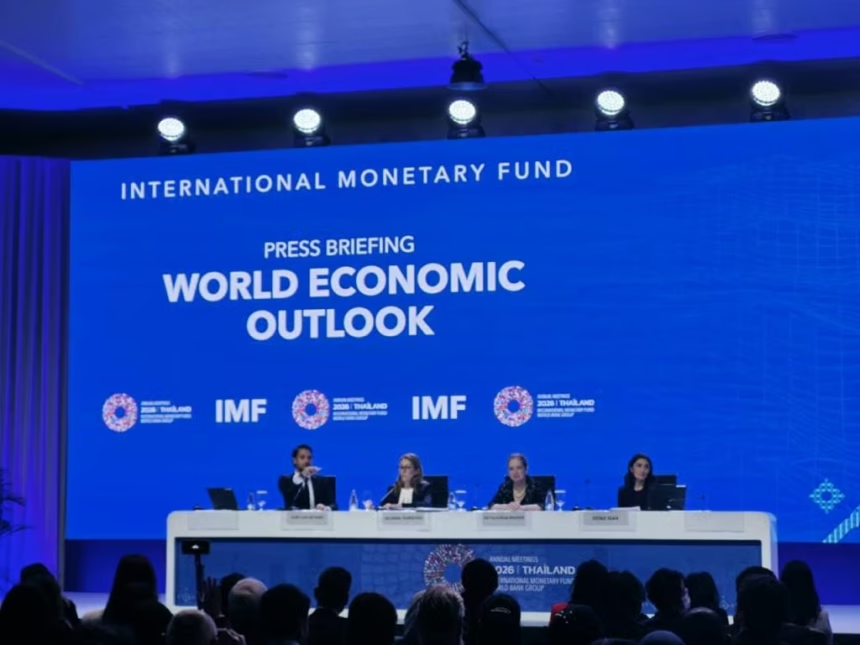
The International Monetary Fund highlighted these positive trends during its recent annual meetings. Economic experts noted that AI investments are actively helping Thailand overcome internal economic pressures. Furthermore, this influx of tech money is helping the country navigate the unpredictable nature of global energy prices. It provides a steady stream of revenue when other traditional sectors face unexpected slowdowns.
This massive global demand for electronics is completely reshaping the landscape of Thai exports. By the middle of 2026, AI-related products accounted for a huge percentage of overall export growth in Southeast Asia. This historic shift is bringing fresh capital into the country and creating thousands of new, well-paying jobs. Regular workers are directly benefiting from the world’s sudden obsession with artificial intelligence.
However, this rapid technological wave is certainly not without its risks. The IMF has clearly warned that any sudden drop in AI profitability could trigger a severe market correction. Therefore, local policymakers must remain alert and prepare for potential financial shocks. Building strong financial safeguards is essential to protect the local economy from future tech bubble bursts.
Overcoming Regional Challenges in Southeast Asia
Even with the positive impact of the AI boom, Thailand still faces significant economic hurdles. The newly projected 2.1% growth rate is actually quite modest when compared to neighboring countries. In reality, it places Thailand near the very bottom of the ASEAN economic growth chart. Nations like Vietnam and the Philippines are currently expanding at a much faster pace.
Meanwhile, the broader global economy is expected to grow by a solid 3.1% this year. This stark contrast means that Thailand is still lagging noticeably behind the global average. Stubborn issues like high household debt and an aging local population continue to weigh heavily on consumer spending. These domestic problems make it difficult for the broader economy to gain serious momentum.
To remain truly competitive, the government must work harder to attract even more foreign direct investment. Public officials are actively pushing for new policies that make it much easier for global tech companies to operate locally. Improving digital infrastructure, like high-speed internet and data centers, will be vital for sustaining this AI-driven momentum. A welcoming business environment is the key to future success.
Additionally, the nation’s education and workforce training programs must quickly adapt to these new realities. As artificial intelligence reshapes the global job market, Thai workers desperately need the right skills to thrive. Investing heavily in human capital and education is just as important as building shiny new factories. The workforce must be ready to handle the high-tech jobs of tomorrow.
Looking Forward: Sustaining the Technological Boom
The long-term future of Thailand’s economy relies heavily on maintaining this new technological edge. The government’s Board of Investment recently approved billions of baht in new advanced electronics projects. This strong pipeline of ongoing investment shows that foreign companies still trust Thailand’s manufacturing capabilities. It is a massive vote of confidence from the international business community.
Strong collaborations between the public sector and private businesses can help solidify these recent gains. Local business leaders remain highly optimistic, but they also urge the government to speed up necessary regulatory reforms. Creating a smoother, faster business environment will keep those crucial tech investments flowing without interruption. Less red tape means more room for rapid economic growth.
Ultimately, the IMF’s revised forecast offers a genuine glimmer of hope for the nation. It clearly proves that embracing modern technology can provide very real and tangible economic benefits. If Thailand can successfully manage the associated risks and capitalize on these fresh opportunities, the country will prosper. It might just find a highly sustainable path to long-term financial stability.


